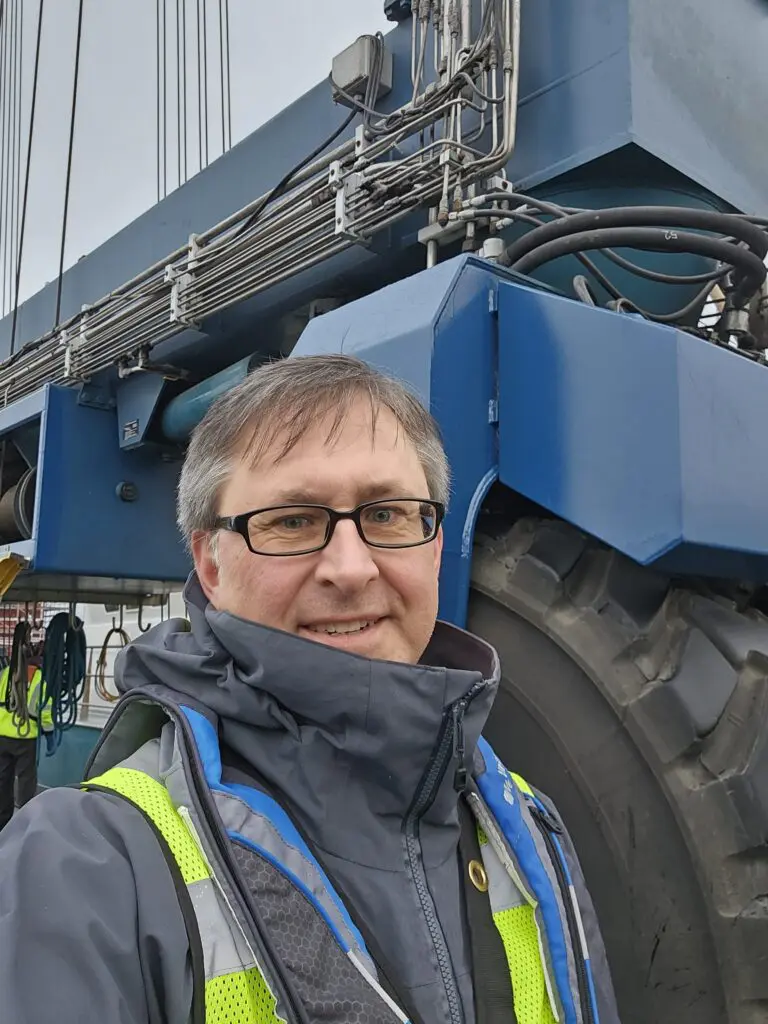
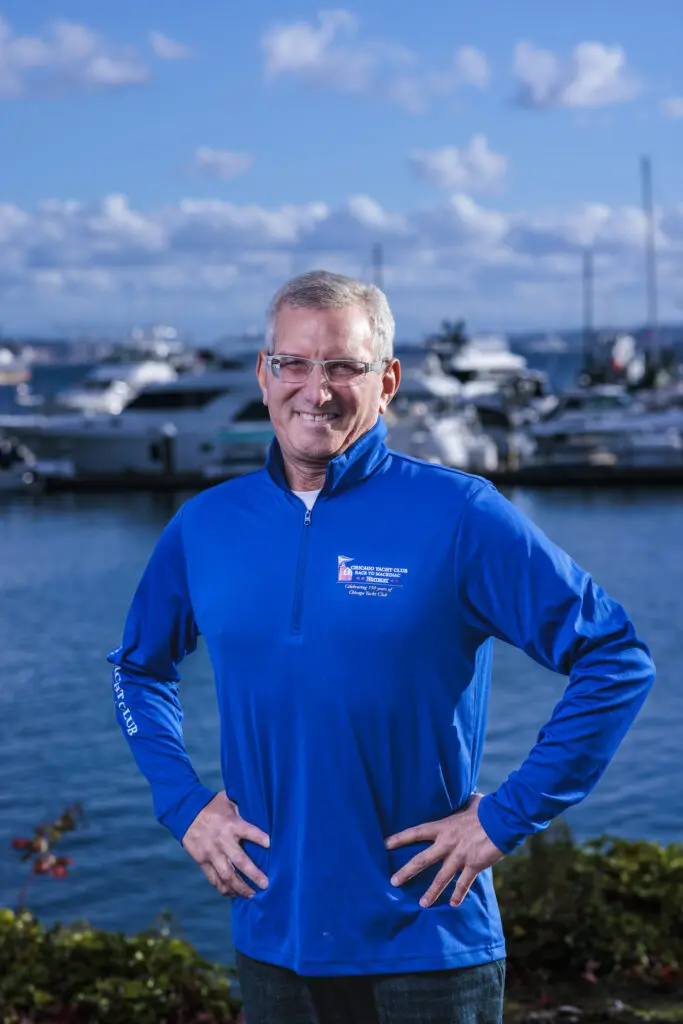
Here we stand, dear reader, in the opening month of the good year 2026. Perhaps mysterious to you, a certain Todd Feinroth is listed as the owner and publisher of this new magazine in your hands. Maybe you’re at the Seattle Boat Show fresh from the magazine’s booth that you visited out of idle curiosity. Perhaps you are unwinding on your boat in the marina, unsure what the heck this Nautical Northwest magazine that appeared out of thin air under the office corkboard is all about. It’s possible you picked it up in a Pacific Northwest pub, waterside hotel, local chandlery, Kenmore Air flight, the boatyard lobby, or any number of places. Regardless, here we are and Todd stands at the helm.
Who is Todd Feinroth?
Lake George Childhood, West Coast Career
“At heart, I’m a sailor,” says Todd, who has been sailing since he was twelve years old after his mom pulled the plug on his pilot father’s recreational flying.
“He took the kids flying four or five times and my mom said you guys are going to die out there,” Todd recalls, laughing. “’So, you know, I’m ending your flying career.’ He was kind of upset about that. ‘What else am I going to do? I’m going to take the same principle—the Bernoulli’s Principle of lift—and apply it to a boat.’ Something bad happening at six knots is safer than 120 knots.”
Dad, stripped of his wings, built an 18’ kit sailboat in the basement and brought Todd along as crew throughout the teenage years. Racing on Lake George of New York’s Adirondacks was the norm and the family pulled in club racing wins. Dad upgraded to a Pearson 26, then Pearson 30—legendary American classic plastics.
“I started singlehanding because I was living on the boat up in Lake George,” recalls Todd fondly. His first business startup: a summer season boat cleaning-operation. “I was working the fuel dock and sailing in my spare time, doing a lot of singlehanded sailing. That’s why I love singlehanded sailing. So, it started out when I was 14 years old.”
Ultimately, Todd’s career in technology pulled him to California’s Bay Area after graduating from university. After finding his footing out west, he was back to the liveaboard lifestyle in Sausalito while working the corporate grind. The first boat was a Catalina 30, another American plastic classic that took on those San Francisco Bay 30+-knot winds regularly. He eventually moved up to a Tayana 52 center cockpit, an iconic Bob Perry design that makes it, by proxy, a boat with Pacific Northwest roots.
Pacific Northwest’s Siren Song
Seattle ultimately lured Todd north in the mid-1990s and Puget Sound became his main boating playground. His various boating adventures have also taken him all over the world, including an expedition experience in the Drake Passage between Tierra del Fuego of South America and Antarctica.
“I did a lot of racing for several years out of Shilshole Bay Marina,” says Todd. Much of his early days racing out of Shilshole were on his Wauquiez 35. “[I was a member] of the Sloop Tavern Yacht Club for a number of years.” He even competed in the first ever Race to the Straits, a popular two-day race from Seattle to Port Townsend and back. “That was a blast, I did it in my [Wauquiez] Praetorian. I got a third-place trophy, but I think there was only three boats in my class.”
But as the work hours got longer and the corporate stakes higher, a new and much needed outlet for the soul emerged—wood boats. Something about them attracted Todd. He started studying them seriously, in part thanks to the Pacific Northwest’s robust and diverse wood boat scene. One part of it was that during his idyllic sailing days on Lake George, he was exposed to some of America’s most storied and treasured wood boats. Lake George-based Hacker Craft, for example, was started in 1908 and is still going strong. In some ways, the sight of an elegant wood boat plying past was a slice of home. A dose of youthful spirit.
“I had a very stressful job in the enterprise software world,” confesses Todd of the high tech, corporate pressure cooker. “I wanted a way to turn that off. Sailing a plastic boat didn’t really do that for me. Sailing a wood boat kind of took me back to the golden age of yachting… I loved hearing the wood move through the water. It sounds different than plastic moving through the water. I fell in love with that sound. It kind of turned my whole stressful technology work days off for a weekend.”
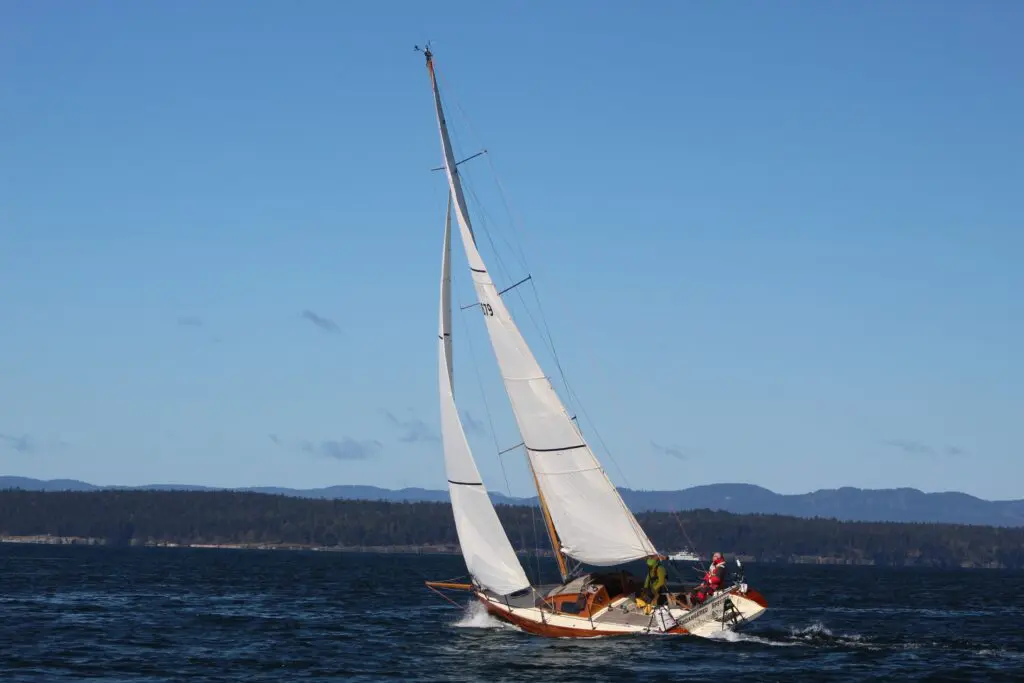
His connection to wood hulls and classic lines wasn’t about logic or maximizing efficiencies. There were no sales goals to reach nor complex systems to master. No, his bond was to the music of water passing over a wooden hull. The stories told through the builders’ visions and histories. In the sometimes-dehumanizing hustle and bustle on land, being on a sound wood boat was a portal to the real human experience.
“My love of collecting wooden boats has nothing to do with material possessions. I don’t think these boats are worth a ton of money,” says Todd. “I was looking for a way to escape my commercial life and very stressful job as a chief revenue officer. I could work 24 hours a day if I wanted to. I needed a way to escape and turn it off. I needed to have a great connection to the water even though I don’t know how to swim. My connection to these boats is very spiritual and very innate.”
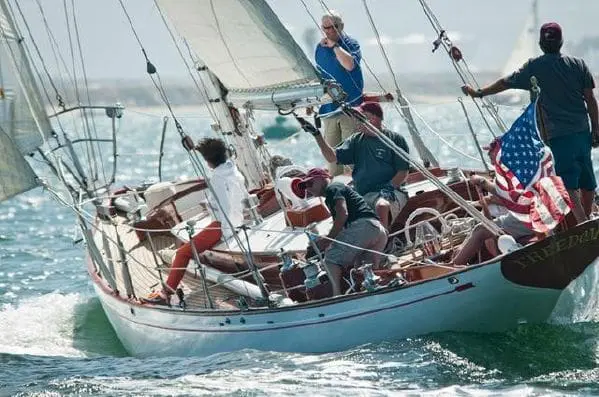
“I felt like the ancient mariner,” continues Todd, who started his wood boat collecting passion that continues to this day. At the time of this writing, he owns several boats, including the Herreshoff-designed cutter Freedom and 1910 Bowdoin B. Crowninshield-designed schooner Fame. These two beautiful wooden sailboats are appropriately homeported in Port Townsend, Washington—a community with the craftsman talent and cultural values to keep such boats alive and appreciated.
“I’ve been lucky to have been able to acquire these pieces of artwork,” he refers to his boats with a hint of pride. “My friends tell me that when they see me on these boats, I’m a different person.”
The Guzzwell Pact
Todd acquired his most prized wood boat not through writing a big check, but through an honor pact with the famous Pacific Northwest-based builder and world-sailing adventurer John Guzzwell.
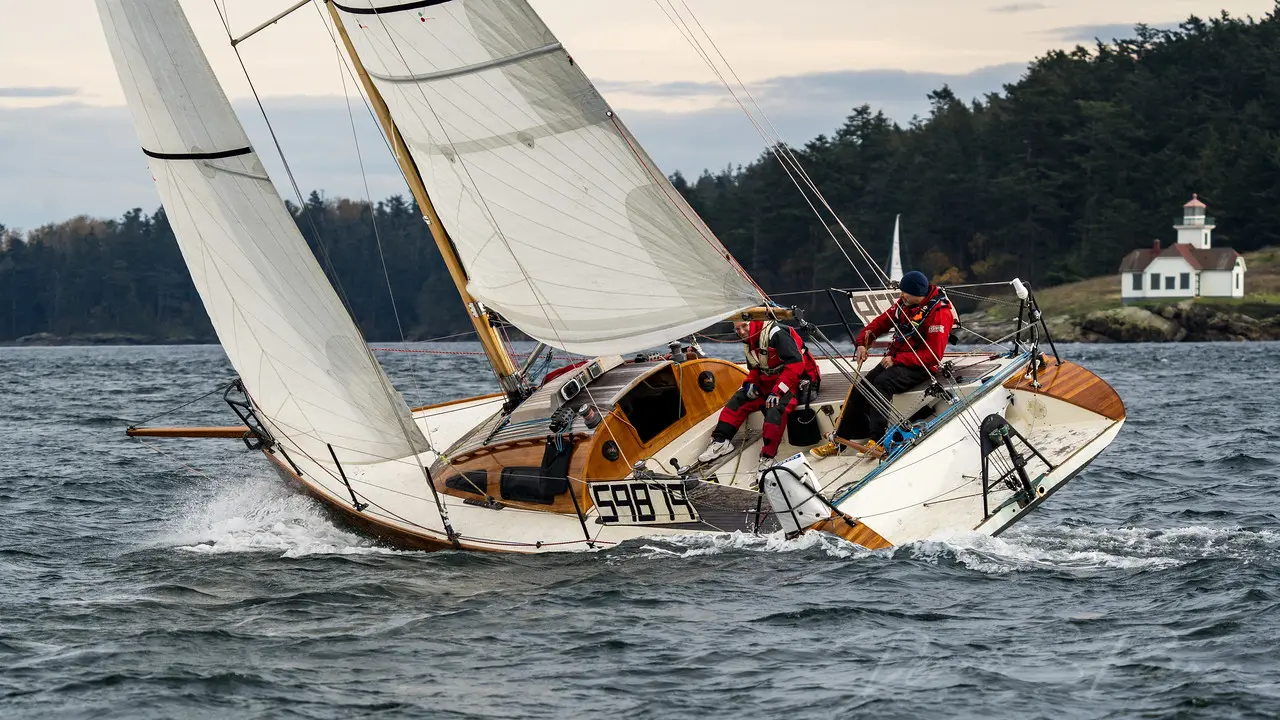
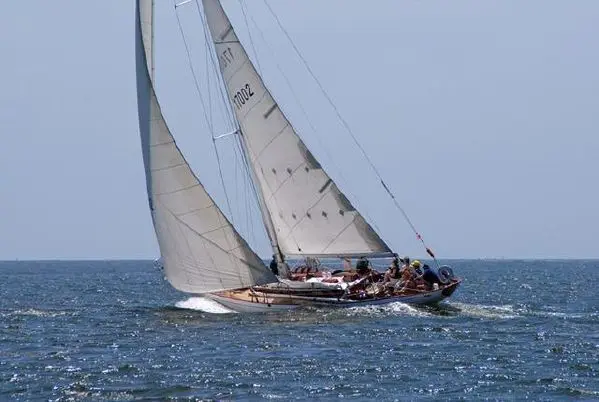
“I ended up acquiring an iconic boat in the Northwest called Endangered Species,” explains Todd. For the uninitiated, Endangered Species is a custom-built 30’ sloop designed and sailed by Guzzwell singlehanded in famous adventures and races, like the Singlehanded TransPac, even into his seventies. The Open 30 build was his final creation after a lifetime of embodying the spirit of self-reliance and adventure. Guzzwell, born in England but an immigrant to British Columbia and then Washington state, deserves his own feature. His book Trekka Round the World relates to his world-rounding, singlehanded adventures in his 20’6” yawl Trekka between 1955 and 1959. Guzzwell and Trekka were the inspiration for the iconic Mini Globe Race around-the-world, singlehanded regatta for both its founders, Don McIntyre and Grahm Cox.
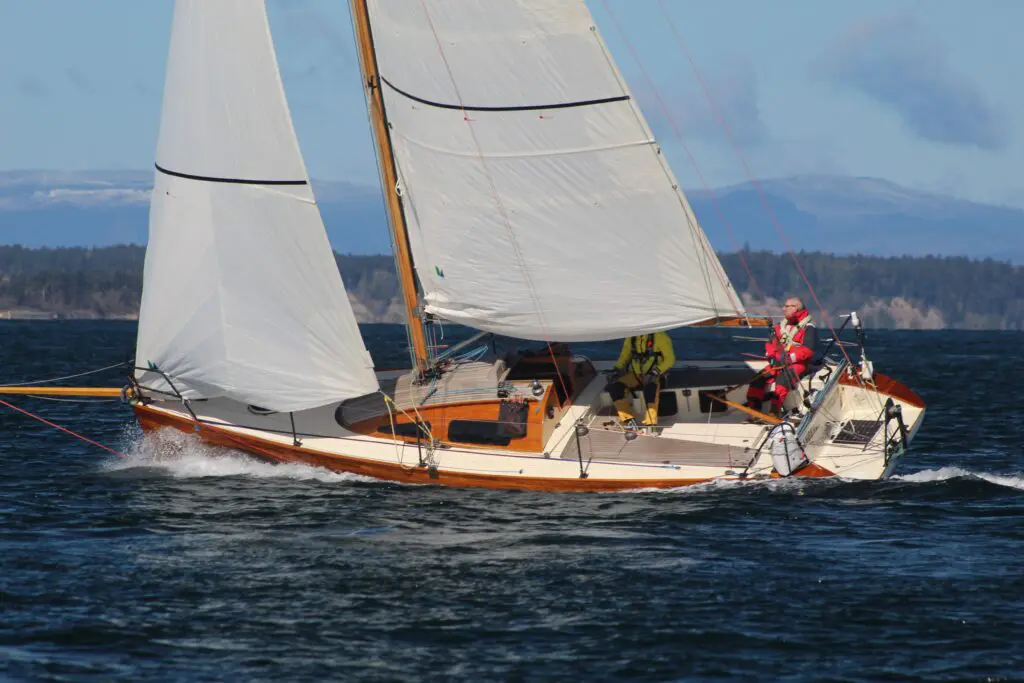
“Within this truism lies the essence of the matter, because the seeds of an adventurous spirit are more often than not sown by the stories we read or hear, which set our imaginations on fire and shape our destinies,” writes Cox on minigloberace.com in his article The Small Boat That Casts A Long Shadow. “For both Don McIntyre, founder of the McIntyre Mini Globe Race (MGR) for Class Globe 580 yachts, and myself, one of the stories that set our imaginations on fire in our youth was reading John Guzzwell’s book, Trekka Round the World.”
Originally, Endangered Species, Guzzwell’s final storied creation, wasn’t for sale. But Todd formed an ongoing relationship with the aging naval architect-adventurer.
“It’s been my dream, on my bucket list, to do the Singlehanded TransPac,” explains Todd. “I want to do it on Endangered Species.”
Eventually, a bargain was struck and Guzzwell sold Todd the Endangered Species on two conditions. The first is that Todd must do the Singlehanded TransPac with the boat. The second is that if Todd ever sells the boat, he must give Guzzwell’s family first right of refusal to buy it back.
“We had a handshake agreement there,” recalls Todd. “John passed away in August 2024 at age 96. I still keep in touch with his son, John, who helped build the boat. We still have that agreement there, if he can afford to buy it. But I need to do the race and as part of our agreement as well. Deep connection with that particular boat and I also want to do a Bay Area sponsored race with a Pacific Northwest iconic boat built in Seattle.”
It’s not often that a boat is sold as part of a knight-style honor pact, but Todd wouldn’t have it any other way.
“The boat is very special,” Todd explains. “Put a lot of time and money into it, lot of sweat equity. I just have to learn how to sail it better!”
Surprising American History Acquisition and Ash Spreading
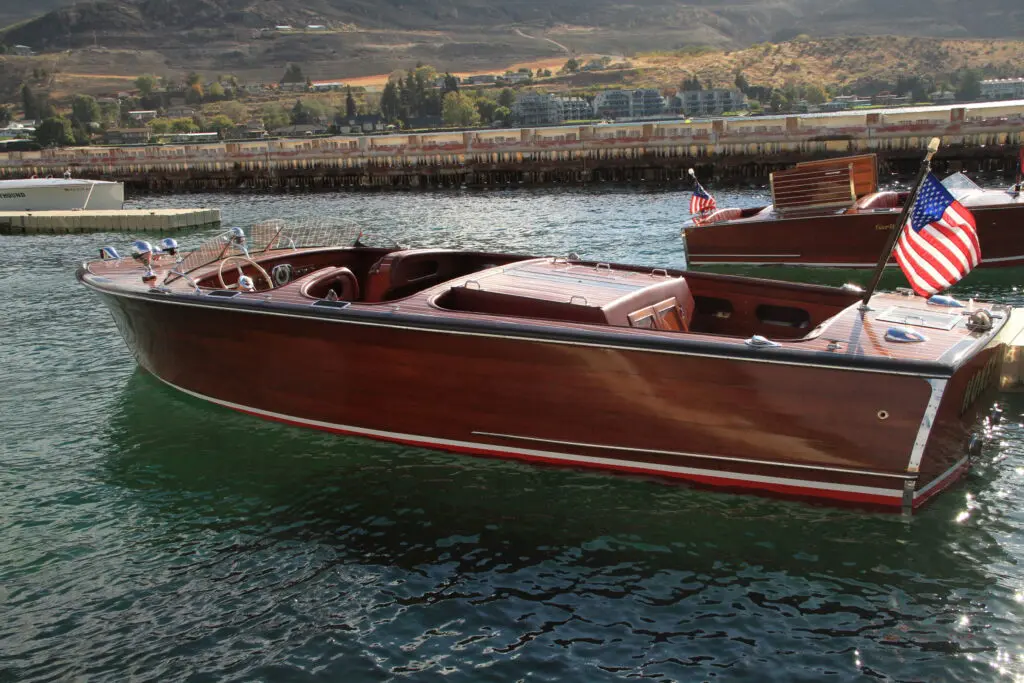
On the power side of Todd’s boat collection is a Craigslist purchase that turned out to be an American presidential artifact—Tenovus, the 1938 Hacker Craft.
“I bought it off of Craigslist, guy who had it for several years and restored it,” explains Todd. For him, having a venerable Hacker Craft was an homage to Lake George of his childhood and a perfect boat for enjoying Puget Sound and Lake Washington during the summer. Curious as to the history of his good ole boat after purchase, Todd inquired with the company about Tenovus.
“I contacted the factory to see if there is any history of this boat,” says Todd, who gave them the HIN (hull identification number). This friend of John Hacker turned out to have invaluable information about Tenovus’ origins after Todd reached out that included a commissioning slip with Tenovus’ HIN.
The client’s signature was Joseph P. Kennedy Senior, President John F. Kennedy’s father.
Turns out, the name Tenovus was a tribute to the number of family members in the senior Kennedy clan, including little Jack and Bobby. Piling the whole Kennedy crew onto Tenovus in Hyannis Port, Massachusetts likely was a highlight of the family’s early years before the kids matured into a political dynasty. The model, a 24’ Hacker Craft Runabout, is still built today. Tenovus was customized to be a foot wider than the standard Runabout.
“Nobody knew the history of the boat!” says Todd with near disbelief. “To me, it’s interesting; one, the history of the boat, but also the fact that they’re built in Lake George where I did all my summers for several years. Sailing. Working there. So, I have a deep connection to Hacker Craft.”
John F. Kennedy’s Chris-Craft speedboat Restovus is well known and on display at the Shangri-La Resort in Afton, Oklahoma. It’s thought that the name Restovus is an homage to the deceased Joseph Kennedy Senior and others of the family who once had pristine moments together during simpler times aboard Tenovus. Perhaps some of that famed cheeky, dark Irish humor at play.
While Todd obsessively keeps Tenovus in Bristol condition, he doesn’t view the boat as a museum piece. He even operated a seasonal charter company with Tenovus and a Boston Whaler out of the San Juan Islands. The business organically fell into a unique, not-often-written about sector of marine chartering: familial ash scattering.
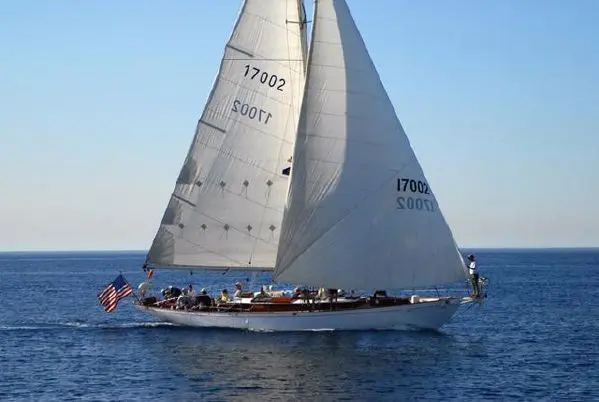
Todd originally got the idea to facilitate ash scattering ceremonies aboard the 1926 82’ Jack Alden schooner Curlew out of Dana Point, California, during a team building charter experience. The famous racing schooner was one of Alden’s last, and arguably finest, creations. Todd hit it off with the captain and learned about their ash spreading ceremonies and was impressed.
“I thought it was very well done, and so I basically mimicked that, and I got a Disposition Permit from the state of Washington for like $95,” explains Todd. “Lo and behold, a lot of demand came out of that cause nobody really offers this, rather they don’t advertise it. You have to be licensed to do it, legally.”
Inquires started flooding in from people who wanted to scatter their loved ones ashes in the beauty of the San Juan Islands. “It’s a very touching, emotional experience and you’re there. You’re on the boat. For this moment, you’re part of their family, part of this event, continues Todd.
Just like the music of water over a wood hull, facilitating such intimate moments with families during their most vulnerable moments is part of the magical power of boats.
“You feel very gratifying to be part of it, that they’d trust you to shepherd their families and conduct a ceremony with a lot of respect,” explains Todd. The experience also underscores the powerful connection people have to the waters of the Pacific Northwest.
“A lot of the people who are part of these ash scattering events, they all grew up boating with their families,” says Todd. “Their parents loved boating. They have a deep connection with boats in the Puget Sound and the waters up here. And it makes perfect sense that here would be the final resting place.”
Knowing the lore of Tenovus, a boat defined by one of America’s most history-altering families who have had to spread more than their fair share of metaphorical ashes over the years, adds a depth to the experience. Call it serendipity or kismet, something both very human and mysterious is at play.
Move to Media
“I had a desire to buy a marine-related business for several years,” Todd said, explaining his move into marine media. His exit from the tech world was formalized as of fall 2025, resignation letter and all. “I actually love to read and write. I’m not very good at it, but I actually love to write.”
The general chaos in the American marketplace also represents an opportunity. Pretty much all, if not all, the national recreational boating magazines have been consolidated under one conglomerate—Firecrown Media—over the last year or so. On the regional level, Pacific Northwest-based marine legacy media titles across both recreational and commercial sectors including Northwest Yachting, Fishermen’s News, and Pacific Maritime have all shuttered their operations, stopped the presses, and taken down their websites in the last year as well.
Yet, to Todd, something doesn’t square. The many marine sectors, while facing challenges, are also thriving with innovating, inspiring Cascadians accomplishing incredible things every day. By basic economic metrics, maritime as a sector in Washington alone is a peer with aerospace in terms of raw dollar value. Sure, sometimes local media, like The Oregonian or The Seattle Times, cover a high impact story, but for them, our aquatic world is usually a quirky little sideshow. Unlike generations in the recent past, it’s rare, if not impossible, to find a dedicated maritime reporter in any of mainstream rags ‘round these parts in the 2020s.
What’s more, “marine” or “maritime” is a core element of the Pacific Northwest that touches and intersects with so many other realms. Travel and tourism. The environment and youth education. History and art. Manufacturing and current events. Our waters connect the story of the Pacific Northwest almost like the veins and arteries of a circulatory system.
How could media be asleep at the wheel like this, largely neglecting our most impactful and interesting cultures aquatic? Just as importantly from a business perspective, why do entrepreneurs have such a blind spot when it comes to Pacific Northwest marine and aquatic-adjacent sectors? Mulling all this over, Todd became animated, assembled his dream team, and dove in (pun intended).
“There’s a big void in our ecosystem in the Northwest,” says Todd. “I did a ton of due diligence, talking to 250 people over the summer.” The overwhelming consensus from his research? There’s a need and a business here.
“I actually just recently discovered the synergy of my technology sales world and, particularly, this magazine,” says Todd, who comes from an about 30-year career in technology sales (enterprise software) and building startup teams in open-source software. Beyond sophisticated business insider talk, the foundation of it all is the people and this incredible region. A place of John Guzzwells and Craigslist Kennedy family boats. Of wood-hull water music. Ashes spread and properly mourned. Of just getting out there, maybe with the wife and dog, and being a human again.
“Now it’s all about the people. It is a way for me to connect with people who I know in the marine community,” says Todd. “People who I’ve been doing business with as a customer. And also, I think we needed to perform a service and deliver in the form of a magazine that is sorely needed. Give the Pacific Northwest boater, yachtsman, and any water lover a voice again.”
Who is Todd Feinroth? Short answer: one of us.
From our helm to yours, thank you for giving us a shot. The best has yet to come, so stay tuned.