Internationally Acclaimed and Regionally Treasured
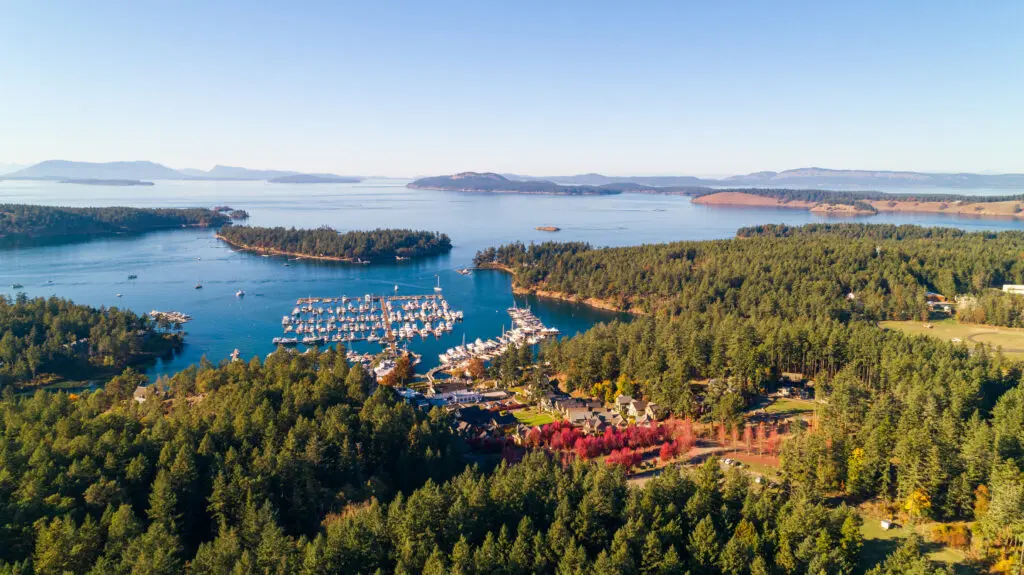
Could it be magic? A spectacular five-star marina and resort at the northwest corner of San Juan Island and near the Canadian border, Roche Harbor resort is like a siren call for boaters near and far. No matter if you are an international cruiser or a family boater, you can enjoy the same generous reception, world class hospitality, and stunning scenery in this astounding get-away where contemporary conveniences contrast with a 19th century ambience. To overuse a common phrase, “There really isn’t any place just exactly like Roche Harbor.”
But no, it isn’t magic. Roche Harbor exemplifies that if one works long enough and hard enough, there will come a day when industry can move aside to allow the pursuit of pleasure. The “work” at Roche Harbor defined the port’s first 100 years and was primarily dedicated to the extraction of an essential resource.
Roche Harbor History
Limestone. It’s indispensable in the production of cement, mortar, paint, whitewash, and the production of paper. A couple of hundred million years of tectonic activity shifted enormous deposits of limestone into locations near the surface of the earth adjacent to the Salish Sea. Beginning in the 1860s (with the Hudson Bay Company’s operation of Bellevue Farm), pioneering entrepreneurs quarried and processed limestone on San Juan Island. Our charts indicate the presence of Lime Kiln Point on the west side of San Juan Island. There were other industrial locations as well. But the most productive and enduring limestone operation in the San Juans was, indisputably, the Tacoma and Roche Harbor Limestone and Cement Company at Roche Harbor.
John S. McMillin, of Tacoma, was quarrying limestone from a deposit in Puyallup when he became aware of extensive deposits of limestone on San Juan Island. Of especial interest, the quarries were near a good harbor where product could easily be loaded aboard ships for export. In 1886, McMillin purchased property at Roche Harbor as well as a limestone quarry and a couple of kilns. His timing was perfect. Population booms in Seattle, Tacoma, Portland, San Francisco, and elsewhere fostered enormous demand for mortar and cement. While sand and gravel were commonly available everywhere, the catalytic ingredient—limestone—often needed to be imported from distant quarries. Demand surged. McMillin responded to furnish the supply and achieved an enormous fortune in the process.
Visitors to Roche Harbor today find a destination resort where shore facilities remain very much organized after the industrial model and company town established by John McMillin.
Limestone production at Roche Harbor was never substantially modernized, and by the middle of the 20th century, the limestone deposits were exhausted to the point where a capital expenditure for modernized production wasn’t feasible. In 1956, the McMillin family put Roche Harbor up for sale, including 12 miles of shoreline, Henry Island, and nearly 4,000 acres of other properties.
The Tarte family, originally from the Bellevue area, purchased the McMillen family holdings, and set about transforming the defunct company town into a boating resort.
While everything is bright, pristine, shipshape, and attractive today, back in 1956 the Tartes had acquired buildings in various degrees of disintegration. The Hotel Haro, where President Theodore Roosevelt stayed during his visit with staunch Republican supporter John McMillin, had been abandoned since the early 1940s. Conditions at the waterfront McMillin Mansion, the company store, McMillin’s Methodist church, and other structures reflected a decline in the settlement’s status from a population of about 250 people at its zenith to a near ghost town in the mid-1950s.
Undeterred by the enormity of the task, the Tartes went to work. The family replanted the fabulous ornamental gardens situated between Hotel Haro and the primary pier. From early spring through well into autumn, the gardens explode in an ever-shifting symphony of color and tantalizing aroma. Docile bees hover lazily around the blossoms, and sometimes a wary rabbit calculates the risk of grabbing off a nibble. Beaming brides pose for photos among the bursting blooms. While not enormous in scale, the gardens at Roche Harbor offer a generous return on some relaxing minutes spent enjoying their sheer magnificence.
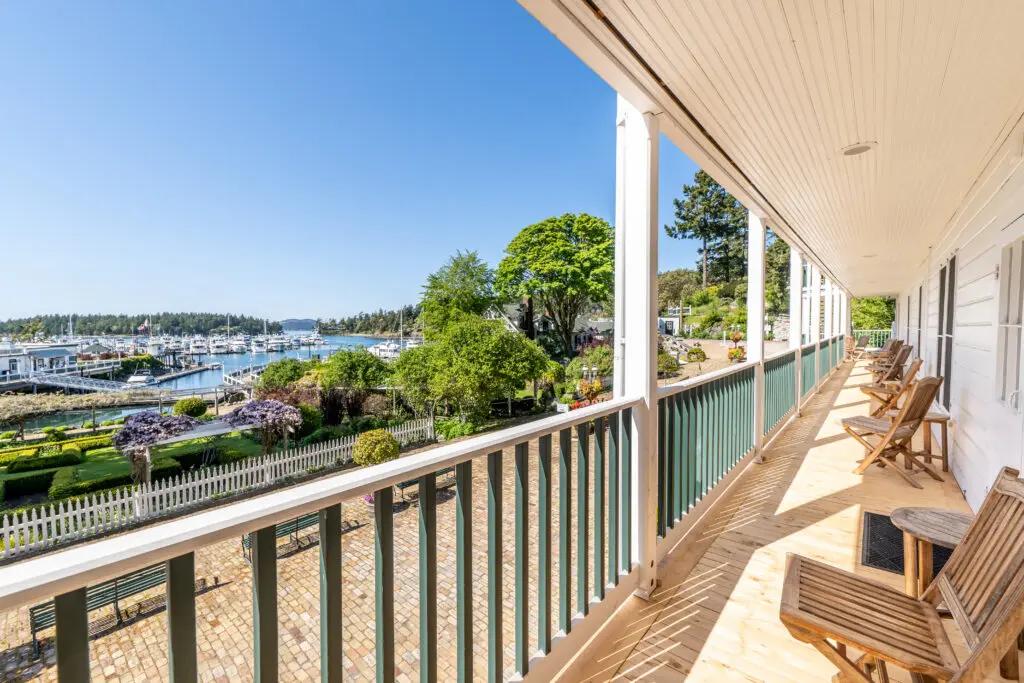
Beyond the gardens is the Hotel De Haro. McMillin built this hotel in 1886, using the existing Hudson Bay Company barracks as the lower floor. The Tartes restored the lower floor in a manner consistent with the original construction with exposed beams that frame walls of floral print wallpaper. If Teddy Roosevelt were to walk in there today, he’d likely recognize the place. The upper floors consist of comfortable rooms, with queen-size beds and updated décor. Consistent with a building of this age, not all the hotel rooms have a private bath, but all have instant access to a veranda with sweeping westward views across Roche Harbor.
Northwest Navigator Recommendations
1. Mansion Dining and Local Flavors
The McMillin Mansion, at waterside just beyond the garden, is now home to some of the best dining to be found anywhere in the Salish Sea. A visiting boater could come here for the food alone. The mansion offers a couple of options. The McMillin’s Dining Room is a dress-for-dinner spot, known for appetizers, entrees, sides, and desserts expertly paired with fine wines. The second option is the Fireside Lounge where craft cocktails and small plates are available. Reservations are recommended.
Other dining options include the Madrona Bar and Grill. Seafood dishes, cheeseburgers, a variety of beverages (including the infamous “fluffy duck”) are available here. The spontaneous polite-party atmosphere coalesces every afternoon during cruising season and carries on until closing time.
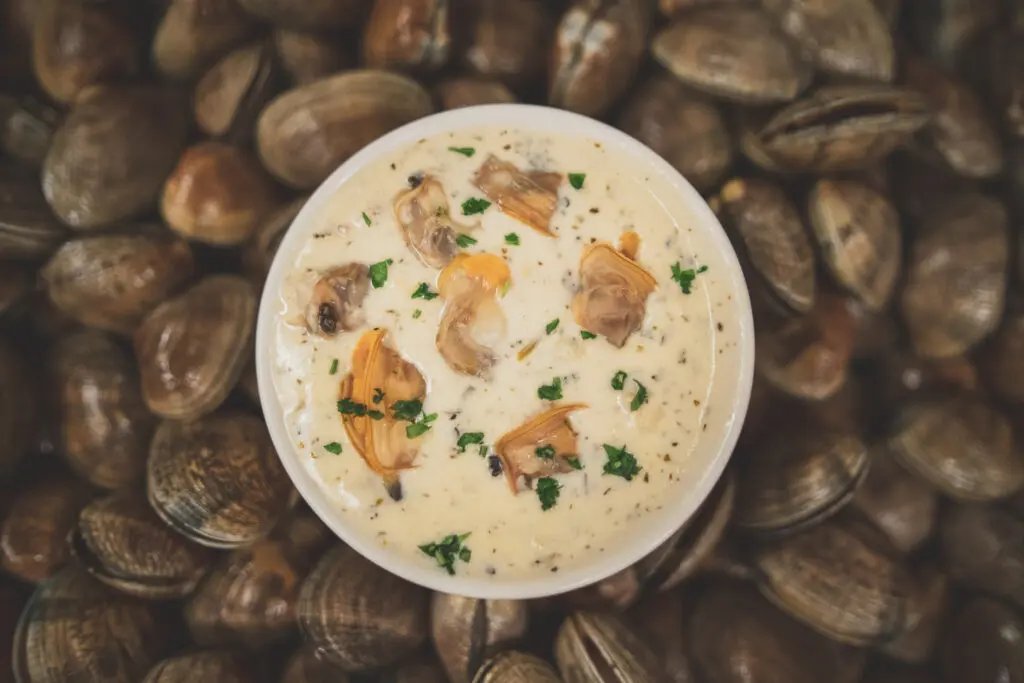
North Sound Seafood is another option within the Roche Harbor Resort during the season. Open Memorial Day to Labor Day, seven days a week, this small operation brings the freshest local seafood right from the local waters and onto your plate: oysters, live Dungeness crab, smoked salmon, and more.
Lime Kiln Café is a favorite among boaters looking for a more informal meal. Burgers, fish and chips, famous hot donuts (available mornings), and copious servings of French fries make Lime Kiln Café a popular choice. During the summer months, pop-up stands with ice cream, coffee, pastries, and the works of local craftspeople are easily located in front of the Roche Harbor store.
2. Shopping, Both Spa and Grocery
Back when John S McMillin established the company store at the head of the main pier, it was the sole source of supply for his employees at Tacoma and Roche Harbor Cement and Limestone. McMillin ensured that the store would operate without any commercial competition from (perhaps) Friday Harbor by paying his workers in scrip, which was only redeemable at the company store. The good news for modern boaters is that the store is now extremely user friendly.
If you can remember when the corner store in most neighborhoods was something other than a 7-Eleven, you’ll recognize the vibe of The Company Store. One gets the impression that management tries to keep pricing as competitive as possible, all things considered. Even better news, the selection and assortment of fruits, vegetables, general groceries, beer, wine, and some of the most essential boating and hardware items are well considered. The latest food products displayed in an antique building establishes a colorful contrast. People from neighborhoods far beyond the marina also shop at the company store.
If your shopping tastes run beyond restocking the galley or picking up picnic supplies, interesting options are available at Roche Harbor. In 1988, the Tarte family sold Roche Harbor to Vern Howard of King’s Markets and Rich Komen of Restaurants Unlimited. The new owners erected Quarryman Hall, and a hillside filled with condominiums and townhomes beyond. Quarryman Hall is filled with modern hotel and meeting rooms as well as Dominique’s House, which offers a selection of lifestyle goods.
For souvenirs and small collectibles, Louella’s Gifts may have just what you’re looking for. Afterglow Spa and Boutique stocks products addressing everything from skin care to pain relief, with an emphasis on natural ingredients. The Wine Party store hosts wine tasting sessions and sells wine by the glass as well as by the bottle. The latest in resort fashions will be found at R. H. Clothing Company.
3. The Long Stroll – Tennis Courts to a Masonic Mausoleum
Guests in the marina have access to all resort facilities, including spas, tennis courts, and swimming pool. Those looking for a bit of exercise and casual exploration might want to consider this writer’s favorite stroll from the Roche Harbor Marina. From the head of the dock, take the roadway to the left that passes behind the McMillin Mansion. A short distance beyond, on a knoll overlooking the harbor, is Our Lady of Good Voyage church.
John McMillin was a devout Methodist. When he created the company town at Roche Harbor he erected a church for the use of his family and workers. The storybook structure with prominent steeple and arched windows also served as a schoolhouse for any children living at Roche Harbor. The Tarte family were staunch Catholics and matriarch Clara Tarte arranged to have the structure reconsecrated as a place of Catholic worship. To this day it remains the only privately owned Catholic church in the United States. It’s worth a closer look but expect to find it locked when not in use.
The road continues near the swimming pool and tennis courts, and past a scattering of meticulously maintained cottages. The cottages also date from the McMillin era and once served as lodgings for married employees and their families. Today, they are popular weekend and vacation rentals, especially with resort guests arriving by air or by ferry.
At the point where the resort road intersects the county road, the Roche Island Sculpture park is a popular attraction. Strolling through the grounds and encountering the inspirations of local sculptors is an interesting way to while away an hour on a summer afternoon.
Proceeding to the left of the sculpture park, a short walk raises a corner of the pioneer graveyard. Some of the graves date from the 1800s, so there are now people born in the 21st century strolling past the resting places of people who were perhaps born as early as the late 18th century. Visitors seem to instinctively sense that one should pass quietly and respectfully through this section of the trek. Those who would prefer to avoid the graveyard and following path through the woods can proceed along the county road to a fire road, not terribly far ahead.
The improved trail beyond the graveyard winds through some quiet and contemplative forest growth, somewhat setting the mood for our ultimate destination. Turn to the right when the trail connects to the fire road, and very soon behold the McMillin family mausoleum, Afterglow Vista.
At first glance, Afterglow Vista is reminiscent of something which might be associated with medieval tales of knights and dragons. Perched on a mound, a circle of columns surround a round table and a grouping of concrete chairs. Each chair is inscribed with the name of a McMillin family member with their ashes interred within. The setting is intended to symbolize the family regathering in the afterlife.
As serene and beautiful as the structure and setting might be, it becomes more amazing when one realizes that John S. McMillin was a 32nd degree Mason. A plaque on site details the Masonic symbolism deliberately incorporated into the edifice. The smallest details, from the number of flights of stairs and the number of stairs per flight are laden with symbolism. A truncated column, for example, represents that man’s work is never finished when he passes. The other columns are identical in size and design to those used in King Solomon’s temple.
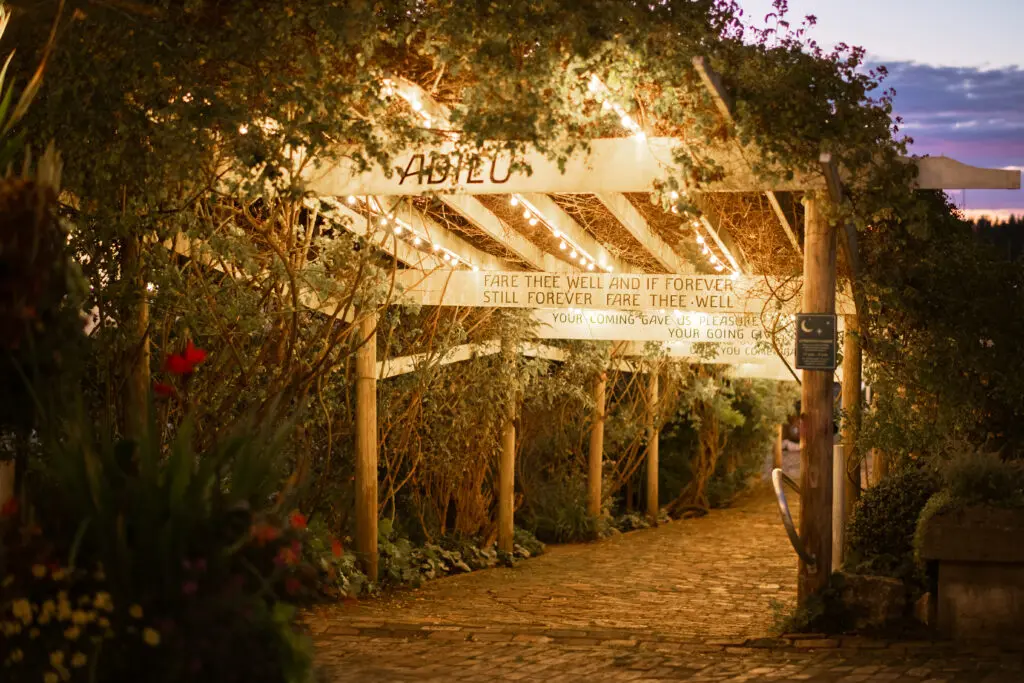
We typically follow the fire lane back to the county road after a trek to Afterglow Vista, speculating on where and what we’ll have for dinner that evening and anticipating a refreshing beverage. Enroute back to the marina, one can appreciate that the legacy of the McMillin family does indeed live on, and not merely in the afterlife. Roche Harbor is truly a world class destination marina, but without the industrial ghosts of the Tacoma and Roche Harbor Limestone and Cement Works it wouldn’t seem as authentic, genuine, and purposeful a place. Those working the McMillin family business likely never dreamed that ensuing owners would build upon their hard work to transform Roche Harbor into a magical resort and marina where boaters can enjoy the land and the sea.
4. Whale Watch
You may or may not have arrived at Roche Harbor on your own hull, but regardless, these waters are home to an amazing array of aquatic wildlife. Charters like San Juan Safaris have been around for years and offer affordable three- to four-hour whale watching adventures that are probably the best sure bet to see orcas in their natural habitat. Out of state guests especially will get a dose of nature they may never see otherwise. You can check out their offerings at https://www.sanjuansafaris.com/.
Navigator Notes
The most common entrance to Roche Harbor is around the west end of Pearl Island. Adequate depth at all tides mid channel. When setting up for approach (or departing) be aware of kelp beds between Pearl and Barren Islands. A shortcut around the east end of Pearl Island is best attempted with detailed local knowledge, with depths dropping to four feet at lowest tides. It is also possible to enter Roche Harbor from the south via Mosquito Pass. Careful attention to charts is especially important in Mosquito Pass.
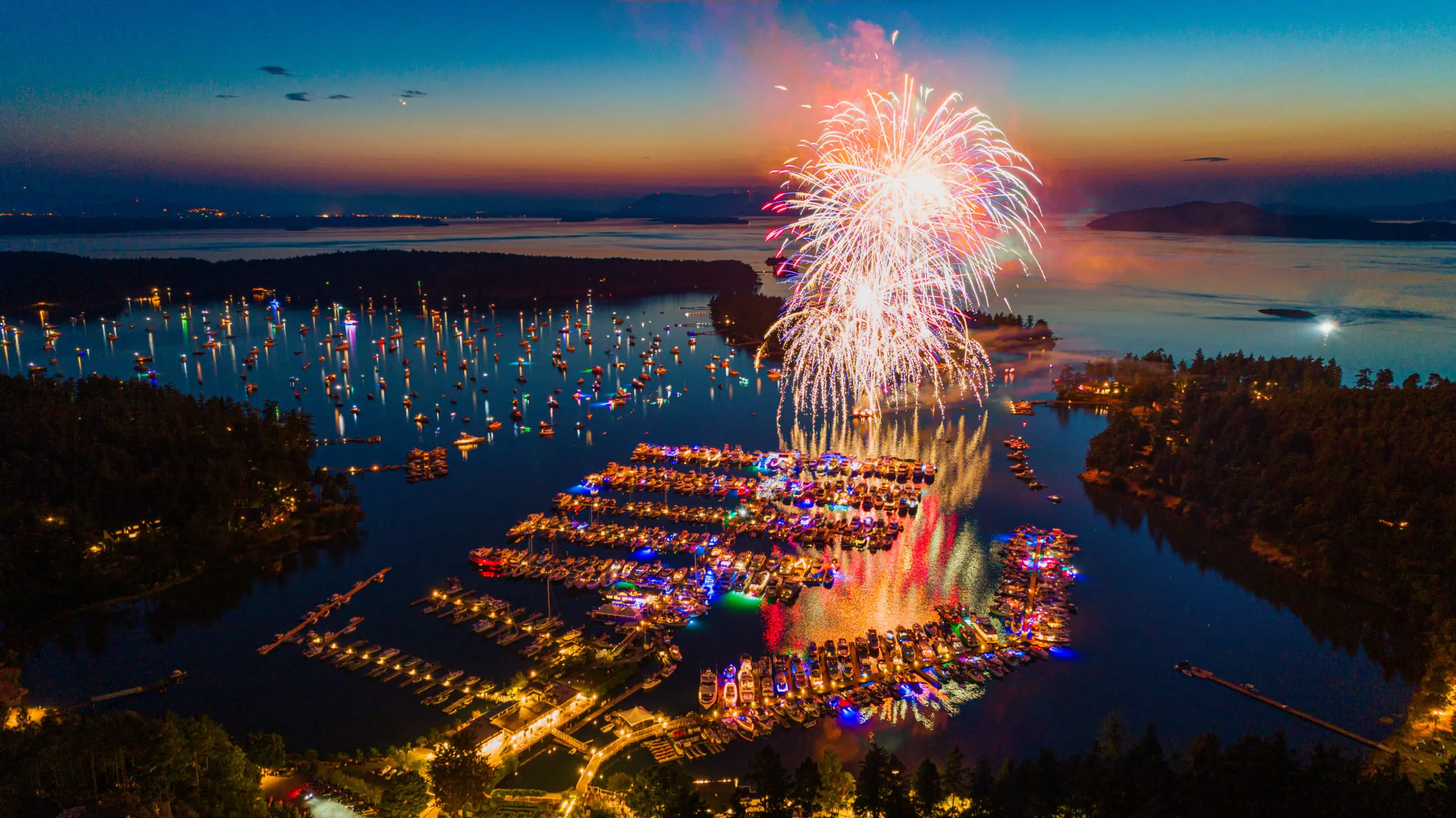
Roche Harbor is an exceptionally busy marina, with 480 slips accommodating vessels as large as 200 feet in length. As Roche Harbor is normally full each night during the summer months, reservations are always recommended. There is a daily waitlist to which any vessel within the confines of the harbor itself can be added by radioing VHF 78A. In general, major holiday weekends, and especially the Fourth of July, will be solidly booked months in advance.
Don’t be at all surprised to discover that some of the 100-plus footers docked at Roche Harbor belong to billionaires cruising from countries all over the world. Roche Harbor is internationally acclaimed.
Boaters arriving with a reservation should also radio 78A when approaching the resort. Staff will confirm slip assignment and offer directions to the assigned location and the marina will dispatch a uniformed crew of dockhands to assist with landing. The dockhands are excellent and render five-star service. (Tips always appreciated.) Marina staff will gladly accept and dispose of any bags of garbage aboard. The Phecal Preak barge (“we’ll take crap from anyone”) provides a complimentary pump out of your holding tanks.
Winter 2026 rates are $1.60/foot for vessels under 55 feet, and $2.15 for boats 55’ and over. Thirty-amp shore power is included, with a $10 charge for 50- or 100-amp power connections.
A formal Colors Ceremony, established in 1957, is an evening highlight May thru September. The pomp, ceremony, and cannon fire begins 20 minutes before sundown in the marina.
For reservations: www.rocheharbor.com/marina, or phone the harbormaster at 360-378-9816.
Roche Harbor is also home to standout marine services. Roche Harbor Marine Services, a division of Philbrooks Boatyard, is located about 400 yards south of the Roche Harbor General Store. You can learn more about them at their website https://www.rocheharbormarine.com/.