
Winter’s shorter days and grey skies don’t just affect your mood—they change your boat’s mood too! Solar panels loaf along, chargers cycle on and off, and sleeping systems sip amps all through the cold season. The off-season is the perfect time to put your boat on a power diet to ensure it is happy, healthy, and ready to go when you need it.
Most boats are almost never truly off, even if you’ve turned off a battery master switch or disconnected from shore power. Bilge pumps, monitoring systems, and other hidden items are still running in the background. It’s important to know how much power you use and how your charging systems perform to ensure a healthy boat and battery system.
Lithium batteries will usually have a Battery Management System (BMS) that you can program to ensure the best health. Storing these batteries usually means a reduced state of charge. For drop-in lithium batteries, there are recommended storage settings as well that vary by manufacturer.
Flooded and AGM batteries can be damaged by a charger topping things up too frequently. Sulfation can occur in other conditions, and keeping flooded batteries topped up with electrolyte is still important even in the winter. Ensuring you have the right charge profile set is important to avoid problems.
If your boat has multiple battery banks such as a start, thruster, or trolling battery, make sure to check those charger profiles as well. In some cases, it may be safer to put those banks into a true storage mode—charging the battery to a particular level and disconnecting them from active charging.
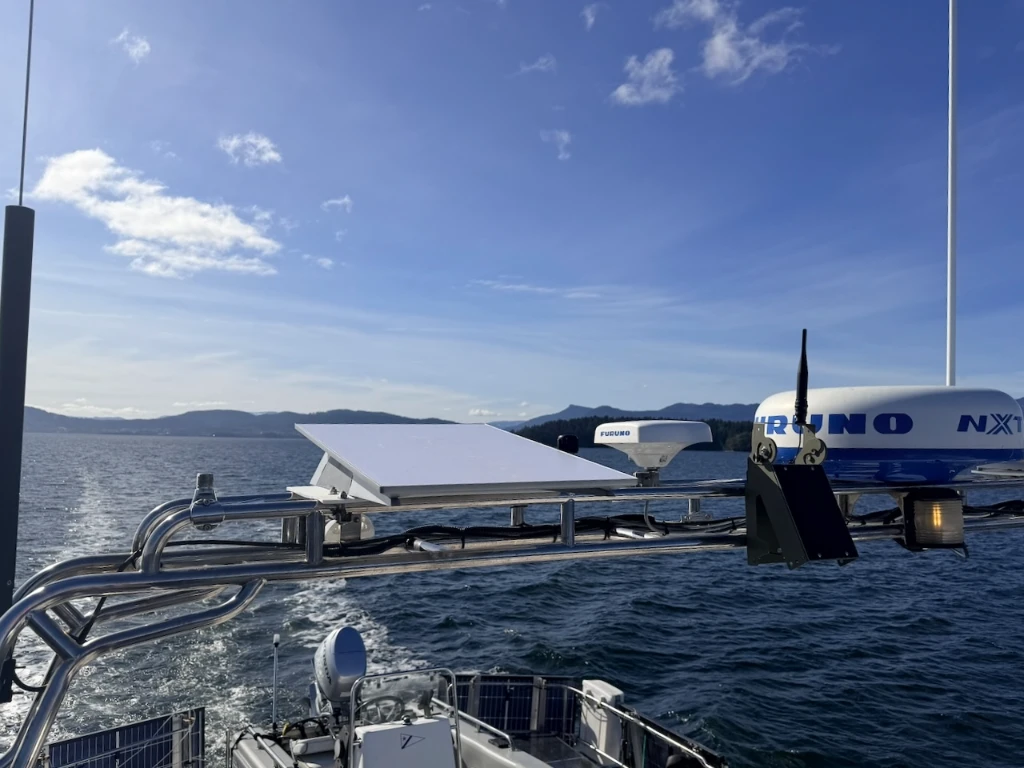
Solar panels can help cover the gaps when power goes out and can help reduce your electricity bill. There is less light with shorter days and the light is coming from a lower angle, so to help optimize them, try to tilt panels toward the light and keep them clean.
I recommend building a power profile to understand how your boat acts while in storage mode. You should also have similar information for when the boat is at anchor, underway, and at the dock normally, but that is the subject for another article.
To do this, you would either need to rely on panel or device readings to measure idle current or use a clamp meter to record the information. There are three key pieces of information to know: the AC power from your shore power connection, main battery bank DC usage, and the overall draw from your battery bank if you lose shore power. Before you take these measurements, check that the boat is “put to sleep” and that everything is in the right mode if you were to leave the boat for a while. That includes turning off the hot water tank, dropping the heat to a lower level, turning on any humidifiers, and the like.
The first measurement can be taken from your main AC panel or by using a clamp meter on the wires right at the shore power inlet on your boat. This information tells us how much power your boat is drawing from shore power. This is important to understand to make certain that we’ve truly put the boat into a storage mode. If you see much higher amp draw from shore power than expected, something is still running that shouldn’t be. Taking this measurement a few times during an hour can help build a good average and ensure you do not miss shutting off something.
The second measurement is to monitor the DC power going in and out of the main house battery bank. If your boat has a correctly installed battery shunt, you should be able to use data from this. If not, you’ll need to put a clamp meter on the negative lead going to the battery bank. Observe how much current is going in/out of the bank and record that over an hour period, checking on it a few times. If this measurement varies a lot, with large amounts coming in and out, you could have a charging issue that you need to adjust. Generally speaking, there shouldn’t be a huge amount of current coming and going from your battery bank while the boat is in this mode.
The third measurement requires that you disconnect from shore power and take measurements at the same place using your house battery monitor or a clamp meter on the battery bank. I would let the boat sit for 30 minutes in this mode, taking measurements every 5-10 minutes to build an average.
Once you have the data from the third test, you can calculate how long your boat can last on battery power while in shutdown mode. This is very important data to have so that you can understand how long you have after a major power outage or shore power breaker trip. If the batteries drain completely, not only have you affected the health of the battery bank, but any critical systems that rely on that power, such as bilge pumps, will stop functioning, potentially putting the boat in a worse situation. In addition, this final test may show you various AC devices that are using an inverter to run, further reducing your battery run time.
Many modern systems provide ways to get notifications when power events occur or allow you to connect remotely to the control system and observe real-time conditions. If your boat has a system like this, setting it up for remote monitoring with a stable internet connection is a great way to keep tabs on your power system.
Having a good power profile will help you understand if your boat is really on a power diet, provide an estimate for how long it can run on battery power in the event of an outage, and help ensure you are treating your battery bank as nicely as possible so it’s ready to wake up in the spring.