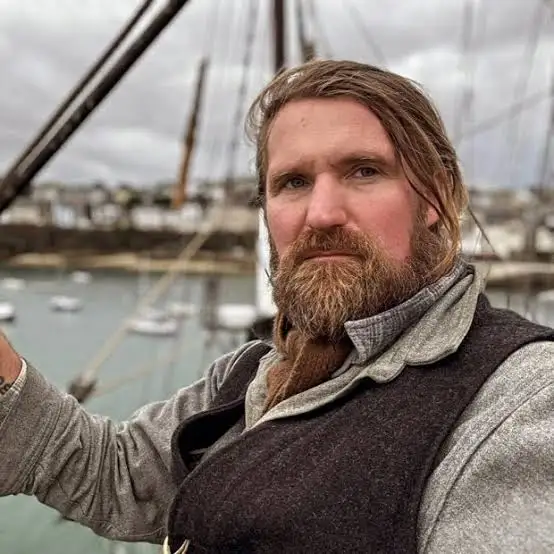
Washington-based, Guinness Book of World Records-holding Transatlantic rowing adventurer, Explorer’s Club Fellow, and author Jordan Hanssen ran rum, coffee, and cacao on an engineless tall ship, like a goddamn pirate. How did it go for this son of Cascadia? Read on for the tale, in his own words.
My story begins quayside in Den Helder, Netherlands, November 16, 2023.
Tres Hombres was the name of our vessel. Her black hull shined with swaths of new paint, sails soft and tea-stained, except for the new crisp white topsail that had just been bent on. Freshly tarred lines felt tacky in the hand and left my palm smelled like campfire. She blushed with a bit of rust—not enough and in no place that gave me cause for concern but rather assured me of her bona fides. Despite looking like she could have sailed out of a Hollywood pirate movie, she was no toy, no replica, nor a fair-weather sailor. Tres Hombres existed to work.
A familiar tune played on harmonica drifted down the fo’c’sle my first morning on the ship. The name eluded me. I pulled on my sweater and followed the shaft of light up the ladder to the deck. Sunshine and November air cleared my lungs from the stuffy atmosphere below. I heard a few more bars and it hit me: it was Beethoven’s “Ode to Joy.”
The musician was a slender young man sitting on a bench in front of a brick warehouse. A navy-blue fisherman’s cap sat jauntily on his head. It was Nils, a German I had met the night before. I nodded in appreciation. He returned an embarrassed smile.
“I’m still learning,” he apologized in English.
The moment left me verklempt. “Ode to Joy” is the European Union’s anthem. In the next few hours, 15 of us gathered, representing nine nations, many of which had been at war two generations ago. We were about to embark on a minesweeper built for that war and now refit as an engineless cargo ship. Our mission was to sail over 12,000 nautical miles along trade winds to the New World to pick up rum, coffee, and cacao, and sail it back to Amsterdam.
Some crew knew each other to varying extents, but all of them were strangers to me. We would bring skills and learn skills, but our success depended on working together.
Fair Transport History
In 2000, three men (Andreas Lackner, Arjen van der Veen, and Jorne Langelaan) met as crew on the bark Europa on a trip from the United Kingdom to the United States for the Tall Ship Festival. The captain dubbed the trio the “Tres Hombres.” They jumped ship in South Haven, Michigan, and convinced the town to help them build the Pierius Magnus—a 52’ single-mast ship based on traditional Dutch flat-bottom design with room for 10 tons of cargo.
This experience planted the seed for a bigger idea: The first sail cargo shipping company of the 21st century—but they would need a bigger boat. In 2007, they found a hull under a tarp that had already sunk and was raised twice in her former lives and was close to going down for a third time. They fixed her, replaced her engine with sails, and called her Tres Hombres.
She was ready in 2009 and sailed to Haiti in 2010 after the January earthquake. Her 35-ton cargo hold was full of donated medical supplies.
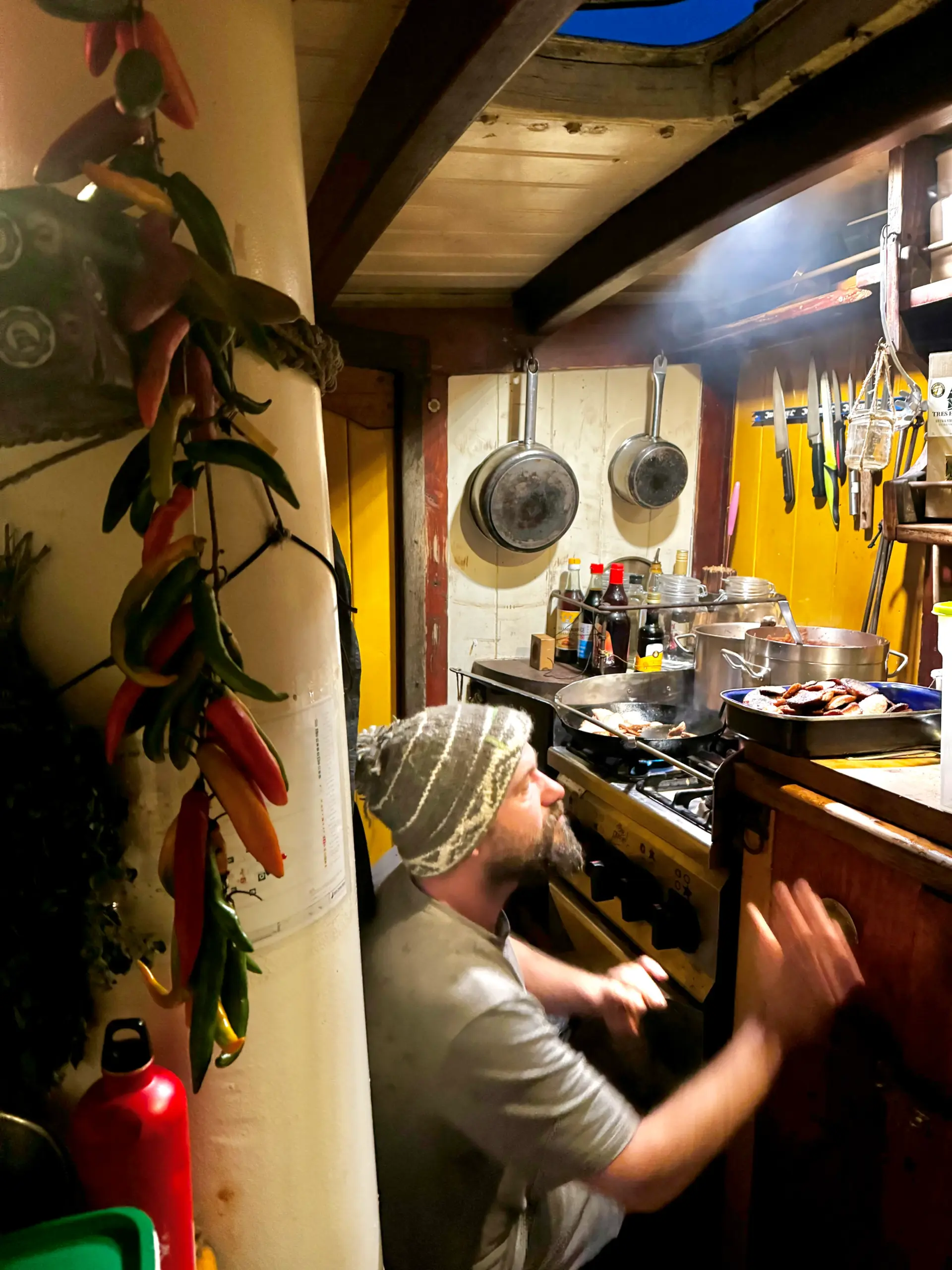
Andreas Lackner was first mate on that voyage. After delivering the supplies, he went to the phonebook, pounded pavement, and eventually found someone willing to sell rum. They sailed it back to Holland without fanfare. “Nobody cared,” said Andreas, while relating this story to me in the ship’s galley. After the journey, he went to home to recuperate with his family in rural Austria. There, he recounted the tale to a regional newspaper and the next day “woke up to 300 emails” asking about the rum.
Fair Transport shipping was born. They sold shares in the company to “friends, family, and fools.” Its mission was to deliver ethically sourced products with the lowest possible carbon footprint. By the end of 2011, their sights aimed even higher as they started doing TED Talks and looking for funding to build a new, larger hull out of modern materials.
Home port is in Den Helder, Netherlands. They have a quayside office in an old warehouse and a full shore staff as critical to the operation as the boat itself. They are flagged under Vanuatu, a port they have never been to, but a nation that will currently flag a sail cargo ship with no auxiliary motor.
Tres Hombres is their flagship. Its year is defined by a summer voyage, starting around May. They traipse from the Bay of Biscay to the Baltic, trading everything from wine, olive oil, honey, salt, wool, wood, and stockfish. Around October, she returns to Den Helder, where a small and dedicated army of volunteers and professionals refit the boat for her winter trip across the Atlantic. On this voyage, she visits five to six ports and comes home full of coffee, cacao, sometimes canned fish, and, most iconically, award-winning rum aged in French wine barrels. They also provide space for up to eight trainees. These bunks are bought in exchange for the experience, training, and sea time. This is a model from the turn of the last century—one that would be familiar to the last of the windjammers that sailed into the 1950s.
Over the years, Fair Transport has taken on other historic vessels with varying degrees of success. Others have become inspired and created their own sail cargo companies. Though niche, it has become a small but thriving ecosystem, where dreams of cleaner shipping meet the realities of commerce. Their continued existence and growth have been a victory. However, there have been tragedies, like the sinking of De Gallant in May of 2024. So far, the funding hasn’t appeared for Fair Transport to create the modern sail cargo rig. However, a French company recently built Neoliner, a 446-foot sail cargo vessel that finished its maiden voyage in October 2025 and appears to be a version of what they envisioned.
Fair Transport was the first in the 21st century to resurrect sail cargo. What future lies in wind power’s effect on global shipping has yet to be seen. What’s clear is that the idea is far more developed than it was 20 years ago, because of some dedicated dreamers who wanted to make a cleaner future and decided that sailing some rum might be a start.
My Voyage
I joined Tres Hombres as a trainee on their 17th voyage around the Atlantic.
We cast off lines in Den Helder at 11, but, by the time we’d worked through the locks and made our first tack out in into the North Sea, it was nearly dusk. The order went up for volunteers to unfurl the course on the lowest yard. My harness was on. I raised my hand, a lump in my throat.
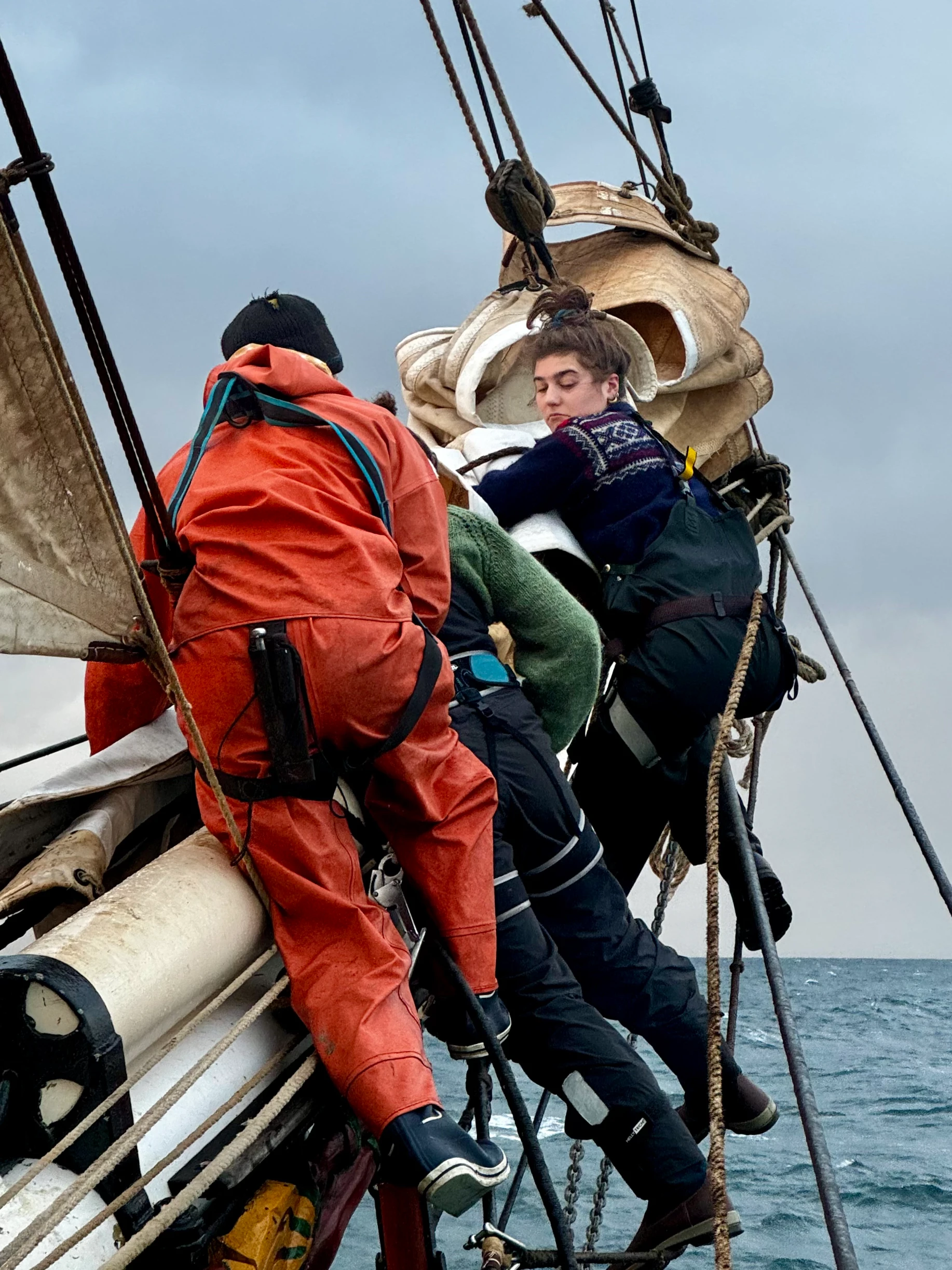
The lowest yard was still high above the grey sea below me. I immediately regretted volunteering. My height plus the shortness of the foot ropes had me leaning out at absurd angles while I unfurled the sail and clung to the yard. The job was untying and retying simple knots. A French doctor volunteering for this leg, a petite whipcord of a woman 10 years my junior and vastly more experienced, yelled at me above the wind that I was tying these simple knots in simply the wrong way.
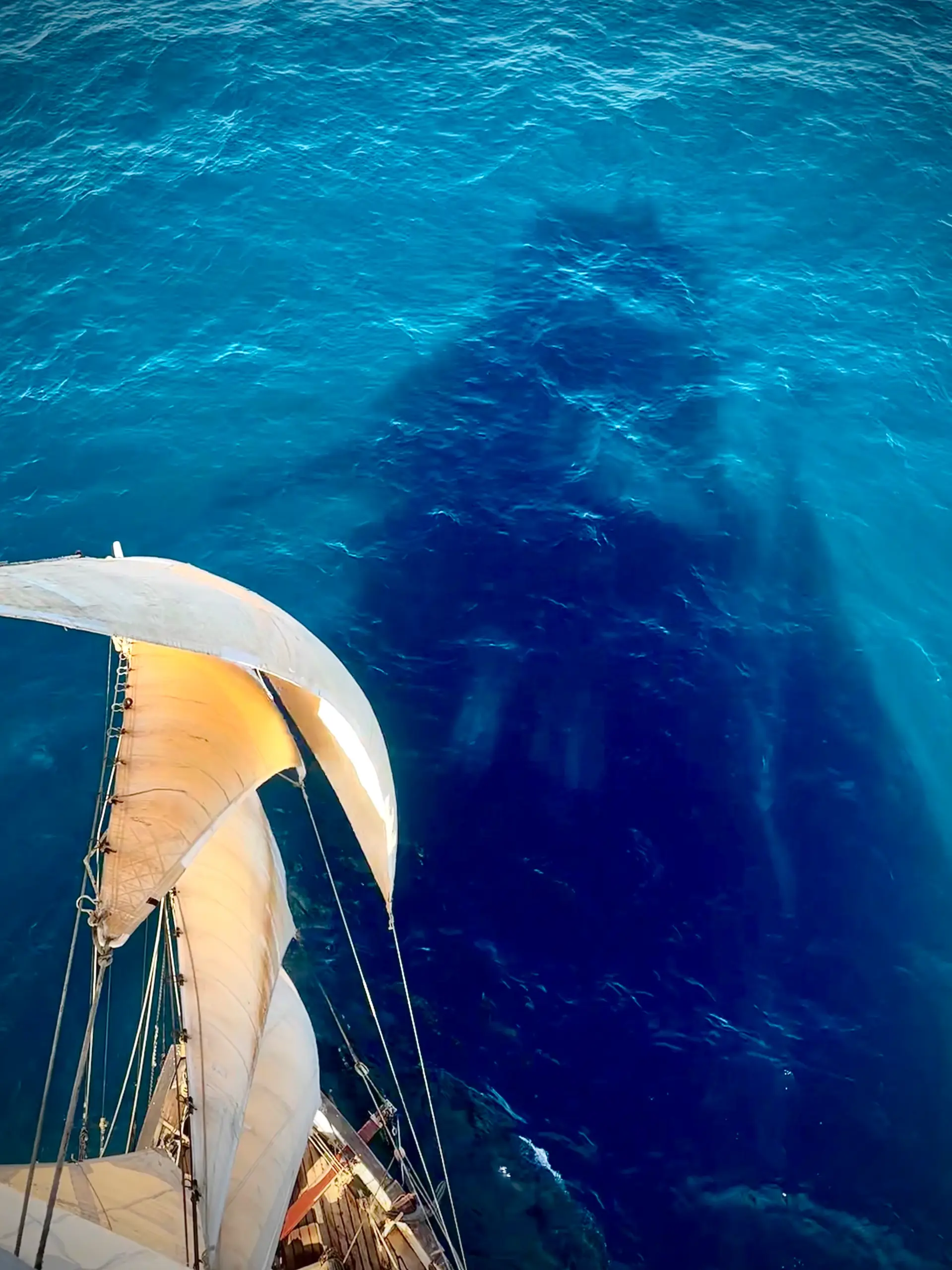
Once back on deck, the rolling ship felt steady as Gibraltar. Our watch ate and we collapsed in our bunks for four hours. At 15 to midnight, our watch was woken and informed we would be tacking—i.e., turning the boat so we would not run into England—as soon as we were on deck. The ship has a comparatively modest 109 lines to control her sails; nighttime does not make them easier to find. As we approached land, the commands began to fly. Sails flapped and, with a thump, billowed taught with satisfaction as they refilled towards France. “Teaching moments” were delivered gruffly and there was much coiling of rope.
Part of me cursed the “tres hombres” of Tres Hombres for their diabolically clever Tom Sawyeresque “pay me for the privilege of whitewashing my fence” business plan that inspired me to self-Shanghai on this rum-running racket. The other part of me… well that part loved it and would have paid twice as much for such equivalent tomfoolery.
We beat west up the English Channel for what seemed like a week but was only a few days. Names familiar from sea shanties appeared on the map. At the end of the Channel, we rounded the island of Ushant and entered the Bay of Biscay into an oil painting of a sunrise. The following morning we dropped anchor in the cover of darkness off the seaside village of Douarnenez.
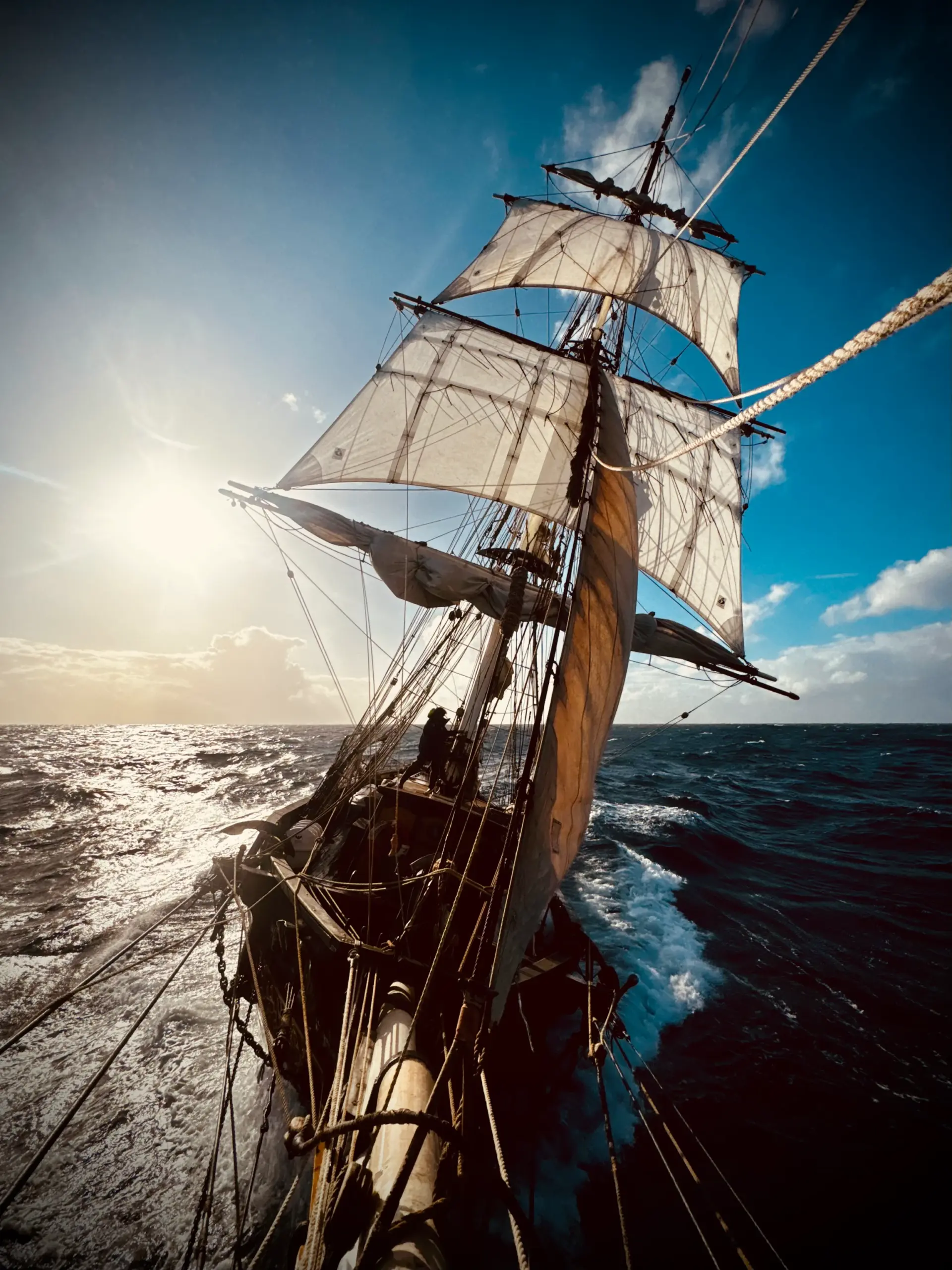
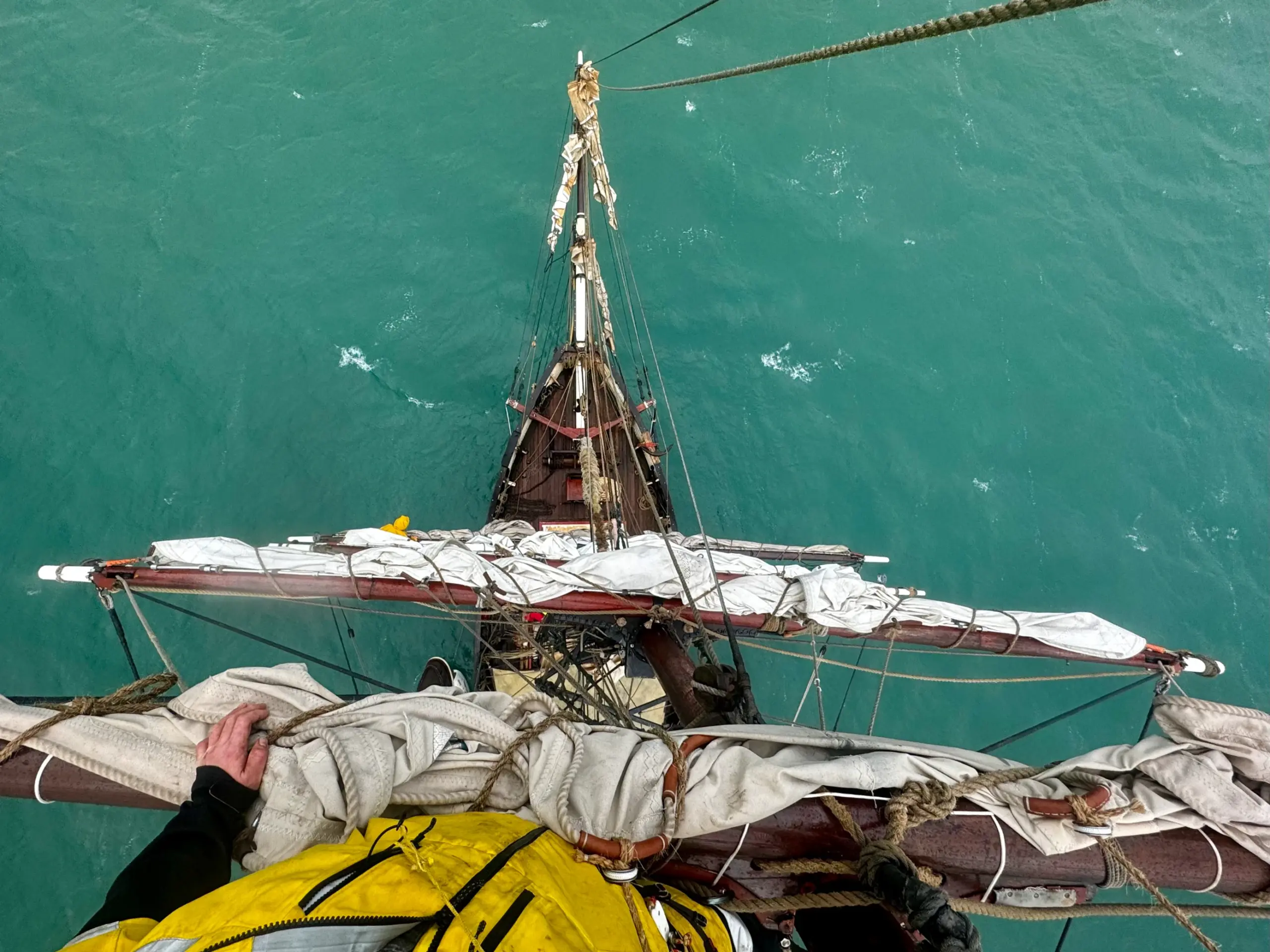
Here, I climbed up to the “royal” for the first time. This is usually, but not always, the tallest yard on a square rig. Hands and feet worked deliberately up the spiderweb of ratlines, a gut-check as I leaned back out into space to ascend over the working top and up smaller, higher ratlines, a squeeze of my shoulders to get through the crosstrees and into the top third of the mast. If the course yard was almost as big around as my chest, the royal yard I leaned over was no bigger than my neck. Below me, blue-green waves slapped the hull. From this perch lay the town, its stone buildings, cafes, and church steeples looking frozen in time.
Our first cargo was the empty wine barrels we would distribute to various distilleries to get filled with rum to age on the journey back over the roiling main. Two weeks of rainy, pleasant work passed in Douarnenez before a weather window appeared. Twelve hours after departure, 35 knots of wind beat us on the beam. Lifelines were up and harnesses were mandatory. A well-meaning gift of two kilos of frozen sardines given on the dock became the makings of first meal in our freezerless ship. When the fish began to fry, the wind began to roar and our stomachs commenced to churn. The second mate lost his lunch on the course yard and painted the deck. Only the cook and captain were unaffected. He ate them like French fries and joked that every voyage should start with a gale and small fish.
Biscay thrashed us and then the wind abandoned us off the Galician coast. A light breeze came with the sunset and we tacked a dozen times, deep into a bay next to the town of Muros to wait out the good weather. It was a late landing, but early for the Spanish disco that thumped on shore that Saturday night. It warranted an expedition. We took the dinghy to shore and joined the glammed-up Spaniards in our sailing gear and danced until early morning, when a fight broke out between some locals and we dashed back to the ship.
Our invasion the following morning was more subdued—showers, laundry, and a long stint at a café filling our bellies with scallops, croquettes, and popolo. We left with the tide the next evening. Our familiarity with the ship grew in layers as we worked together and learned new skills. Days passed swiftly with sail repair, taring rigging, and tending lines. The boat fell into a rhythm as we soared past Madeira, rugged and rocky in the distance. The captain felt so good he decided to put out the studding sails, or stuns’ls. Spars were hiked out from the course, top and t’gallant yards and three more sails, each with another five lines to add to the 109 that managed the 13 other sails. Raising them was beautiful chaos. When the wind filled them, it was hard to image the boat couldn’t fly.
The Caribbean
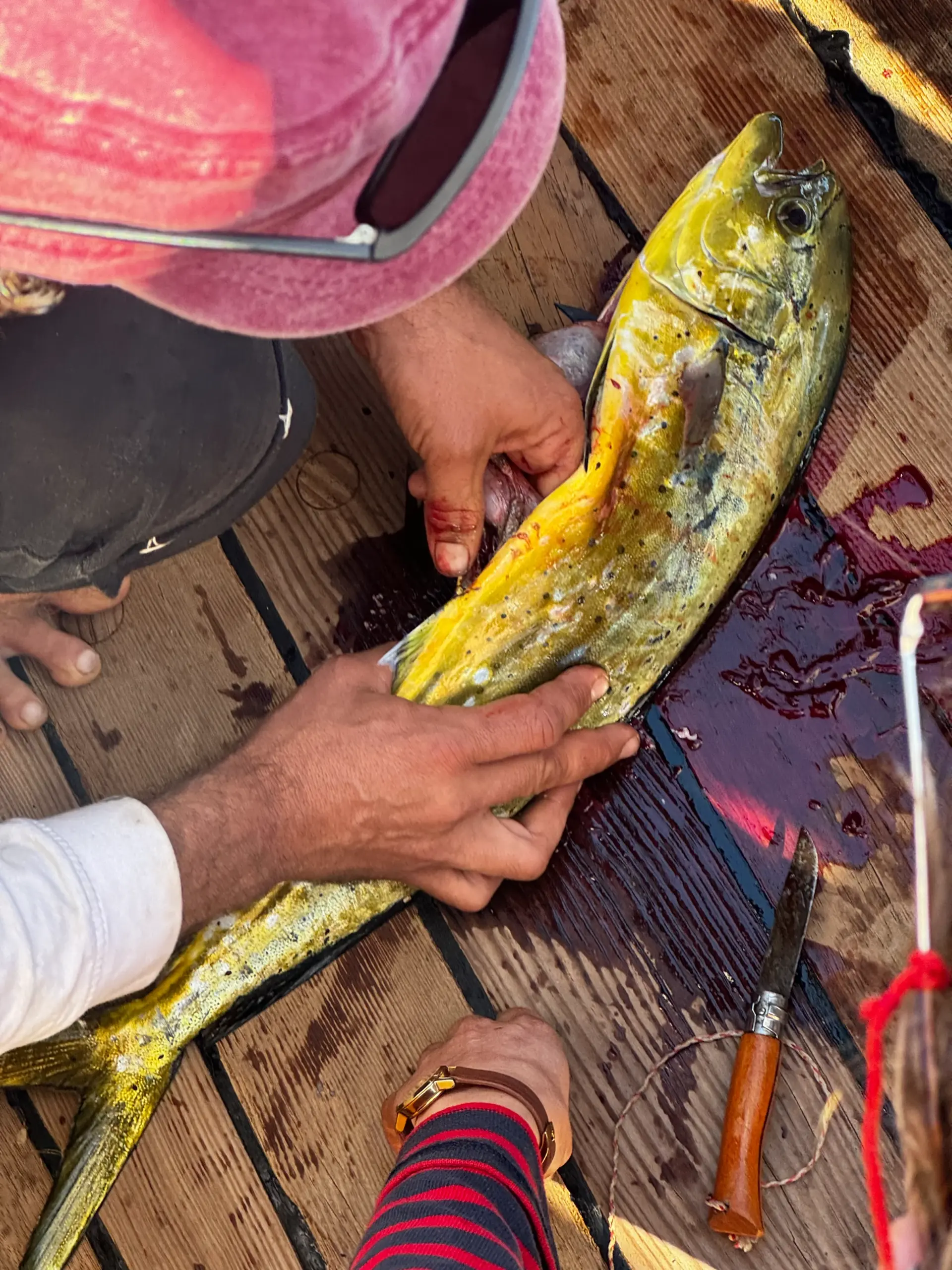
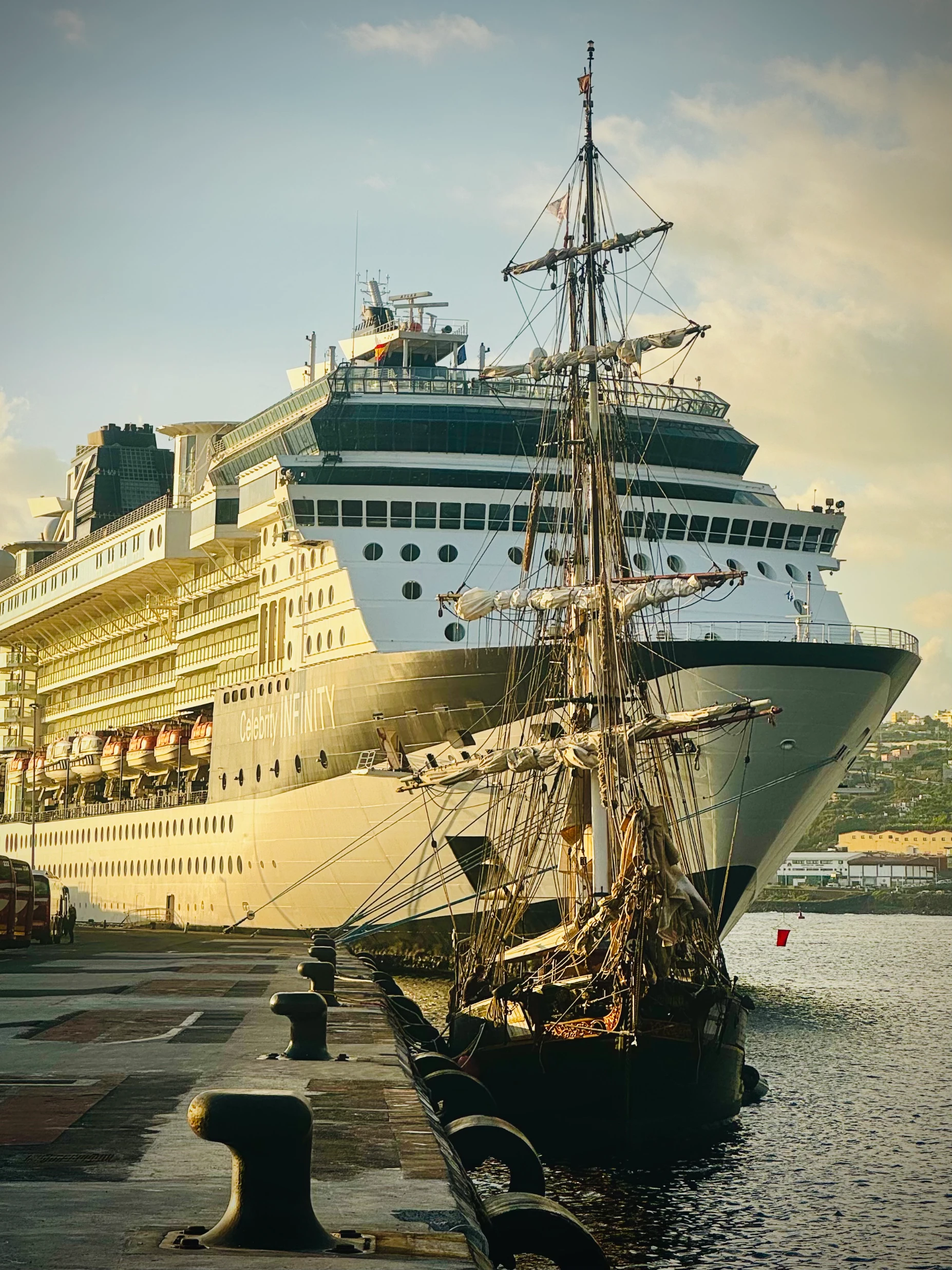
On Christmas Eve we were still at sea. The day began with lightning and rain and ended with a feast of a fresh-caught dorado and a lemon meringue pie. Landfall before Christmas seemed possible at sunset with the lights of the Island of La Palma visible in the distance. Then the wind died. Around two the next morning it picked up and blew into the island around four in the morning to a silent and deserted quay.
Christmas dinner was at a seaside bistro a few feet from the black volcanic sand beaches. Over the next days, we loaded up our first barrels of rum. Austrian ocean cowboy, Captain Andreas, bid us goodbye. French Merwoman, Captain Anne-Flore, arrived to lead us the last two thirds of our voyage across the Atlantic Ocean and back. The crossing weather was reasonable, the fishing good enough to upset the vegetarians with bloody success, and the behavior of the crew good enough that the captain only had to tell us once to “quit shitting in my blue garden.” One bone was broken, but it was small—the deckhand stoic—and landfall was the following day.
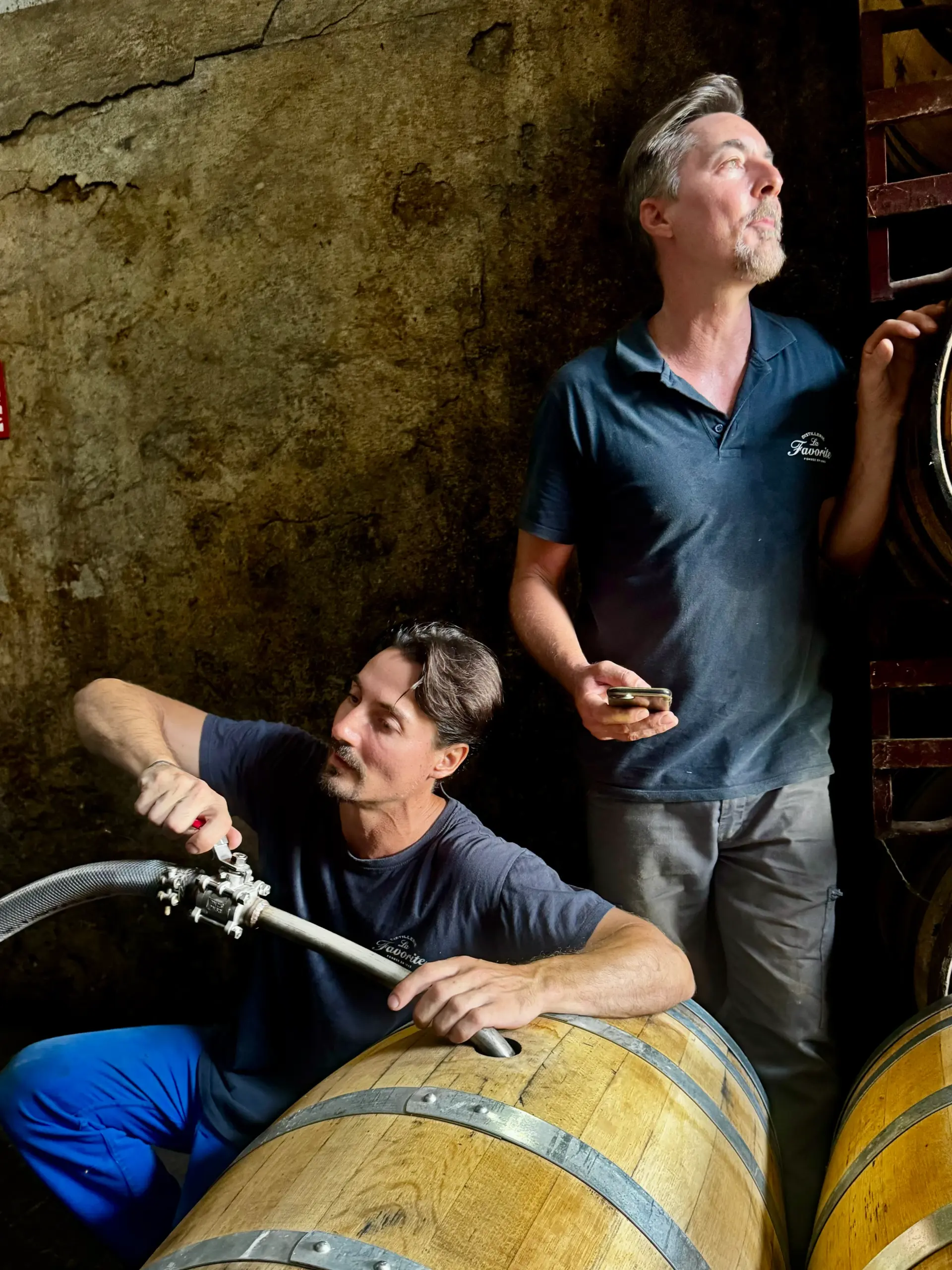
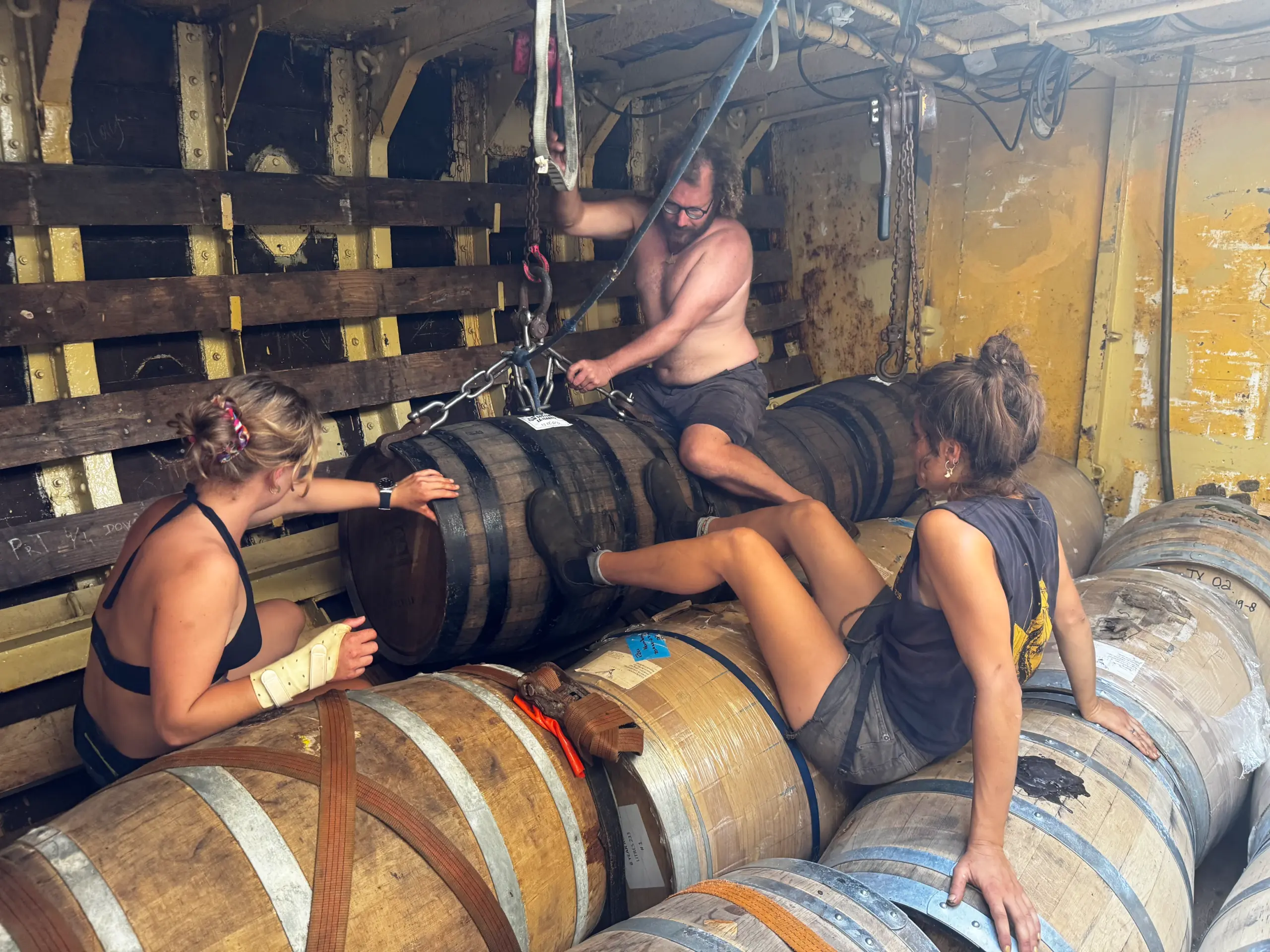
We anchored off the town of Sainte-Anne in Martinique. Locals swam us the rum barrels from the beach, and we plucked them from the water. Then it was on to Barbados, 100 miles away. With the right wind it could have been 24 hours, but it took six days of tacking to get there. On shore the paperwork was even slower, and loading four barrels took a week. At the tiny island of Marie Galante, we anchored on a jungle beach. On the first day, a trainee and I swam from the ship to shore and dined al fresco on local food prepared in the French fashion. The next day, we loaded empty barrels and rolled them through the jungle to the side of the road. There, we met a driver with a flatbed and a chest almost as big as the two empty ones we took to the distillery. On the third day, the barrels returned to the side of the road, so heavy with rum they crushed the wood pallets he set them on. We rolled them back through the jungle, past a bewildered customs inspector with clipboard in-hand standing knee-deep in the water, and swam these to the ship. Then it was time to haul anchor and sail west.
Our final stop west was in Boca Chica, Dominican Republic. The ship was tied to a crumbling quayside port with armed guards and its own pack of dogs that lived in the trash piles that littered it. It was so humid we sweated in the rain, and even more under the shade of a tarp, while we loaded dozens of barrels of rum, two tons of coffee beans, and 10 tons of cacao. Filled to the brim, we began our journey east. North of Mora Passage, where the Caribbean meets the Atlantic, a rocket launched from Cape Canaveral and arched over our sails and into space.
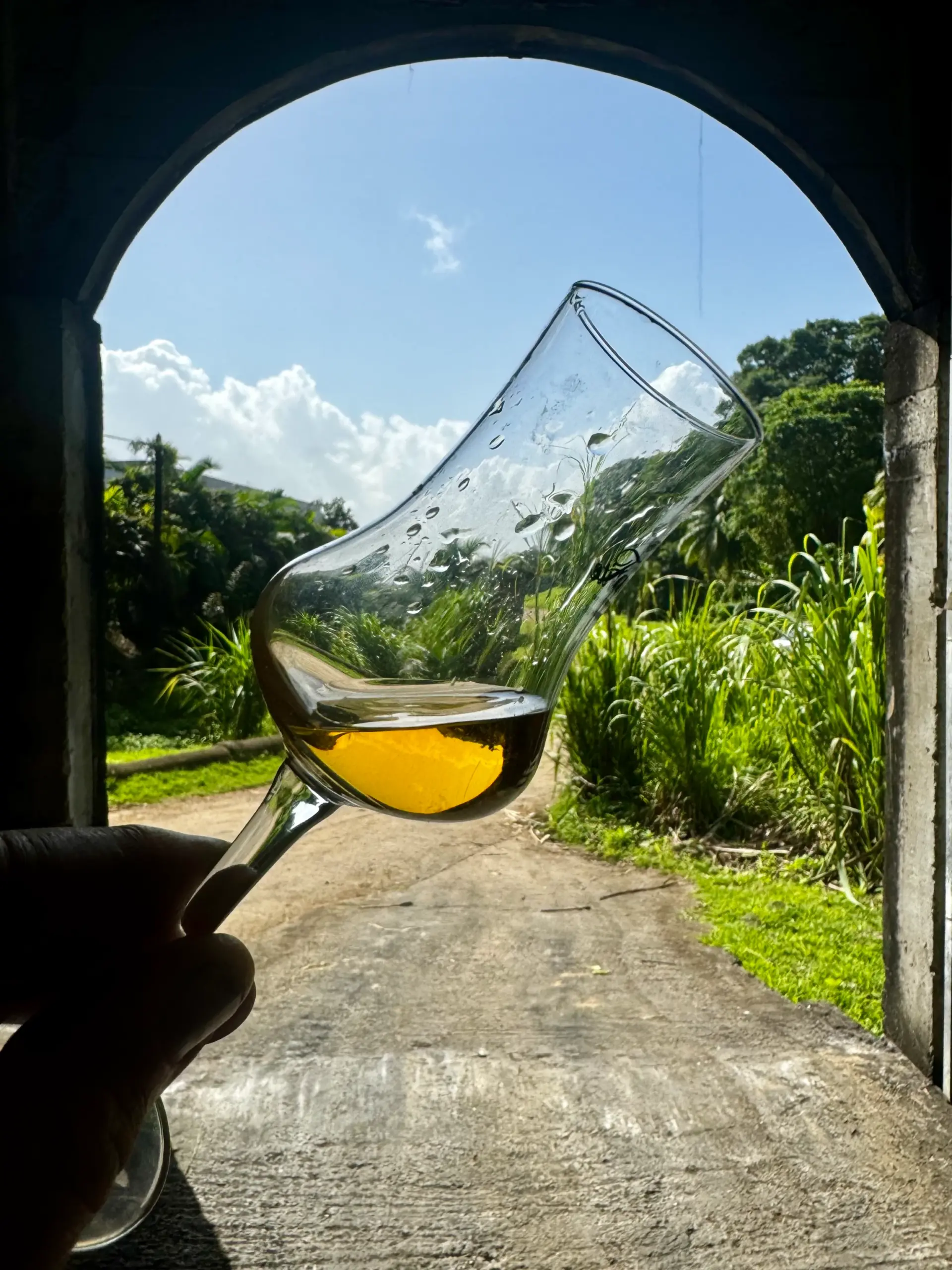
Two weeks in, the wind died and we swam in the ocean. The water was cold, azure and a gaze below the surface descended into blackness to an unseen landscape two miles beneath us.
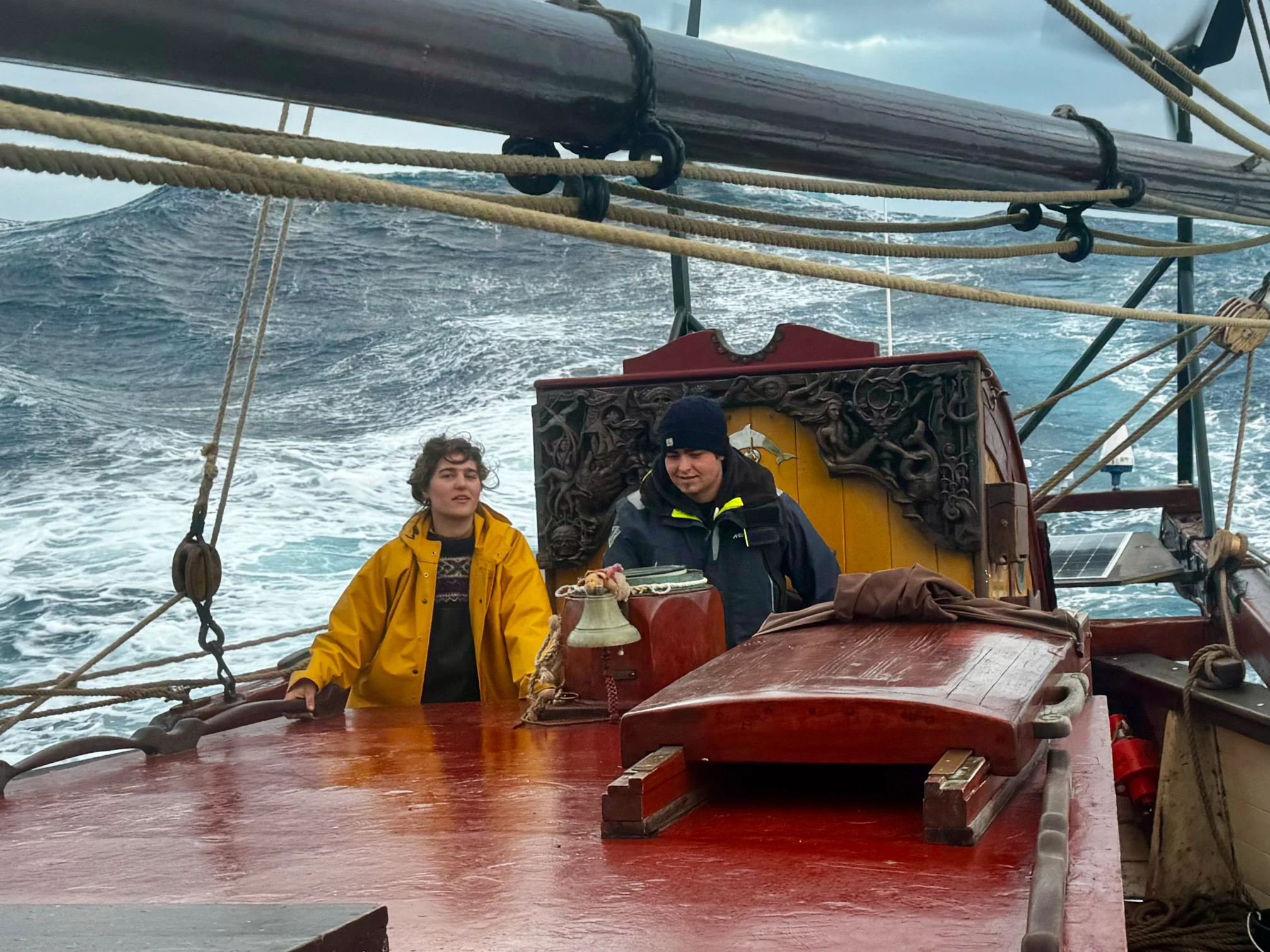
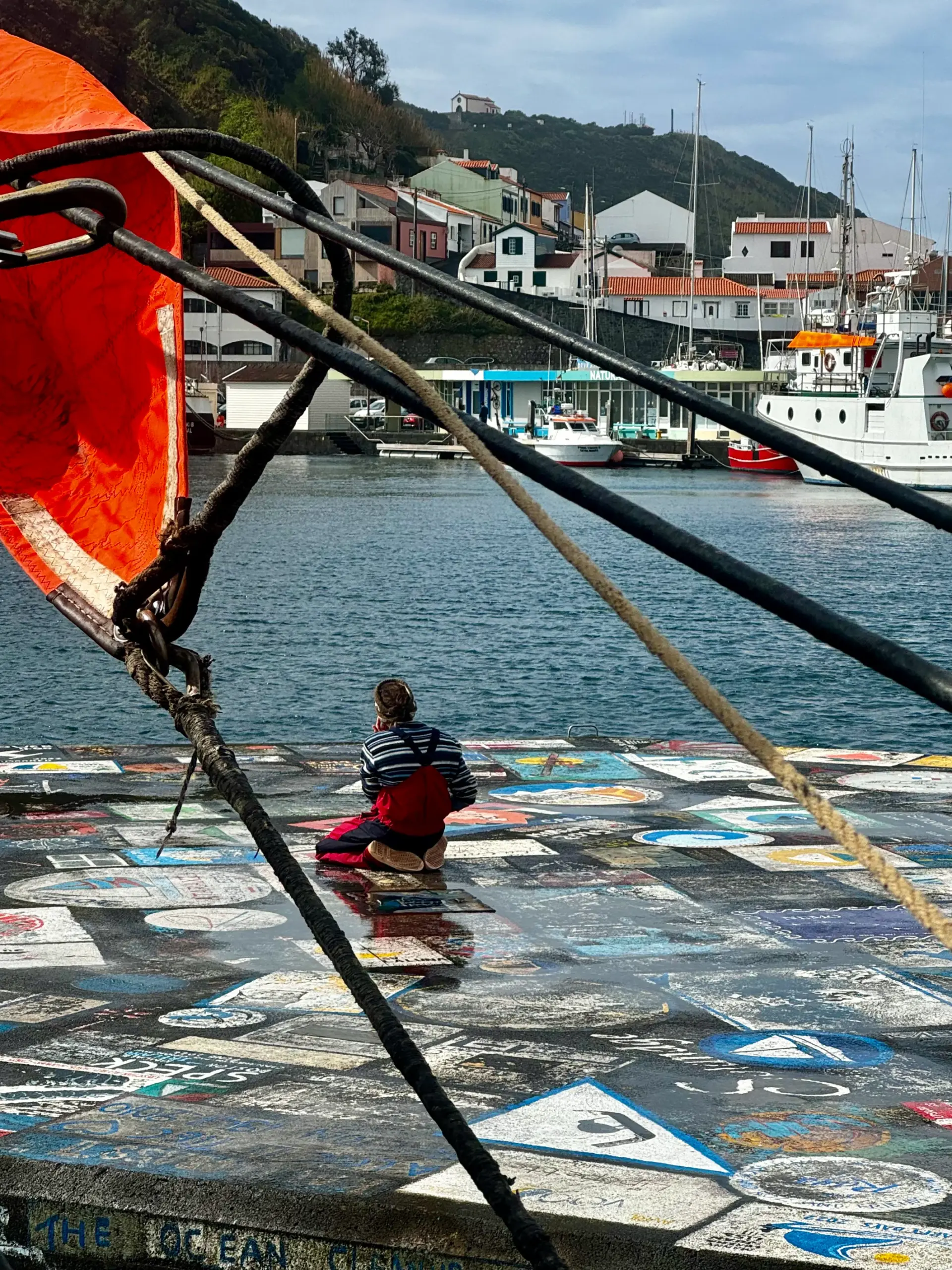
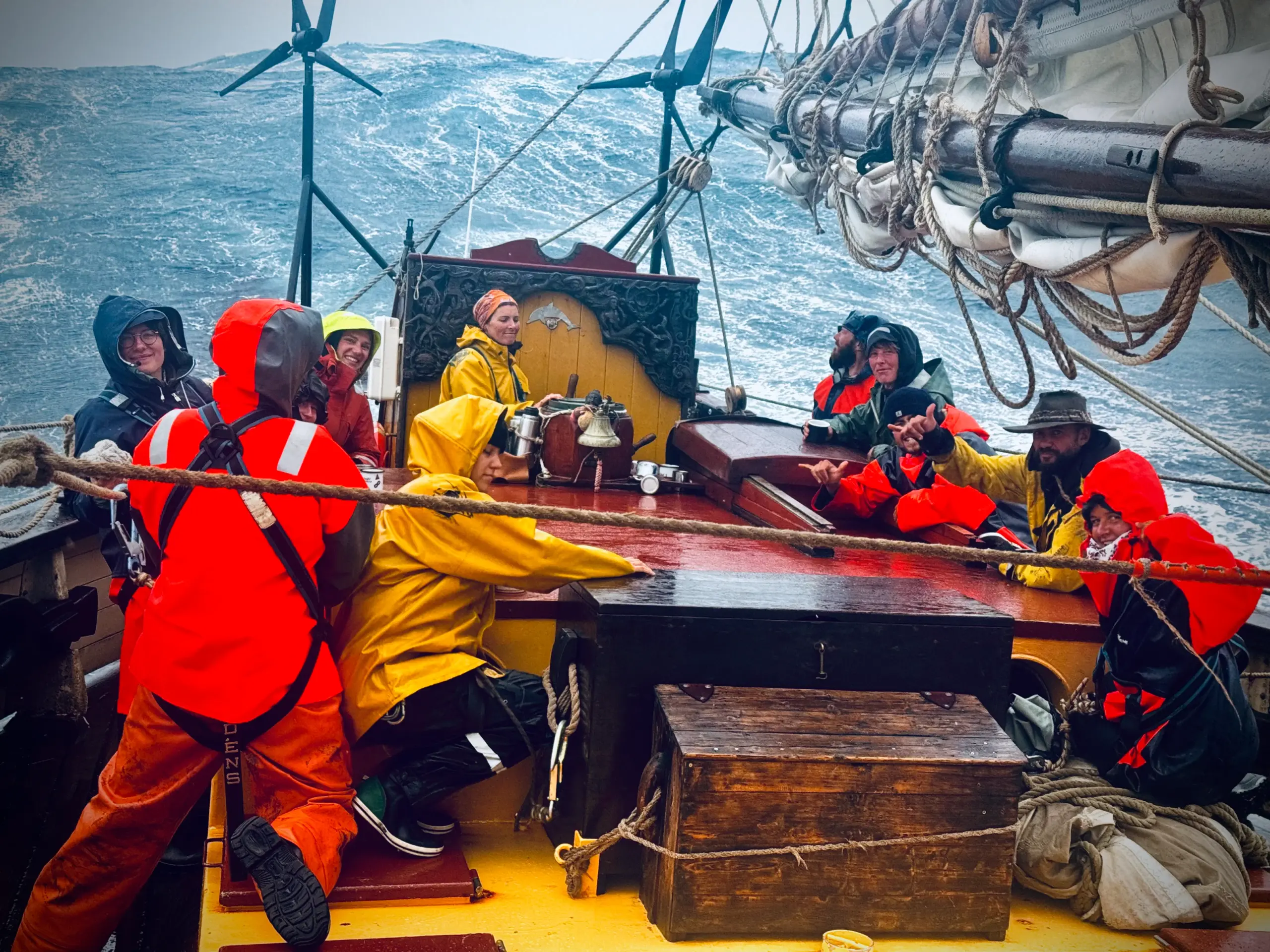
A storm blew up 300 miles from the Azores. I climbed with the bosun, first mate, and the doctor to put a double reef in the topsail. The wind blew at 55 knots and more, the waves rising to 30 feet. That night, the last scrap of topsail was struck and we sailed into the town of Horta at six knots with a storm jib, staysail, and bare poles on our fore and main mast.
The island was a whirlwind of volcanoes, abandoned lighthouses, decrepit whaling paraphernalia, steaks of tuna, and island-grown beef washed down with gin and tonics at Peter’s Bar, still catering to sailors after 105 years. Yet our arrival broke my heart. It was the last time we would disembark as the unit we created. On the next landfall we would hand the ship that felt like home to its next crew.
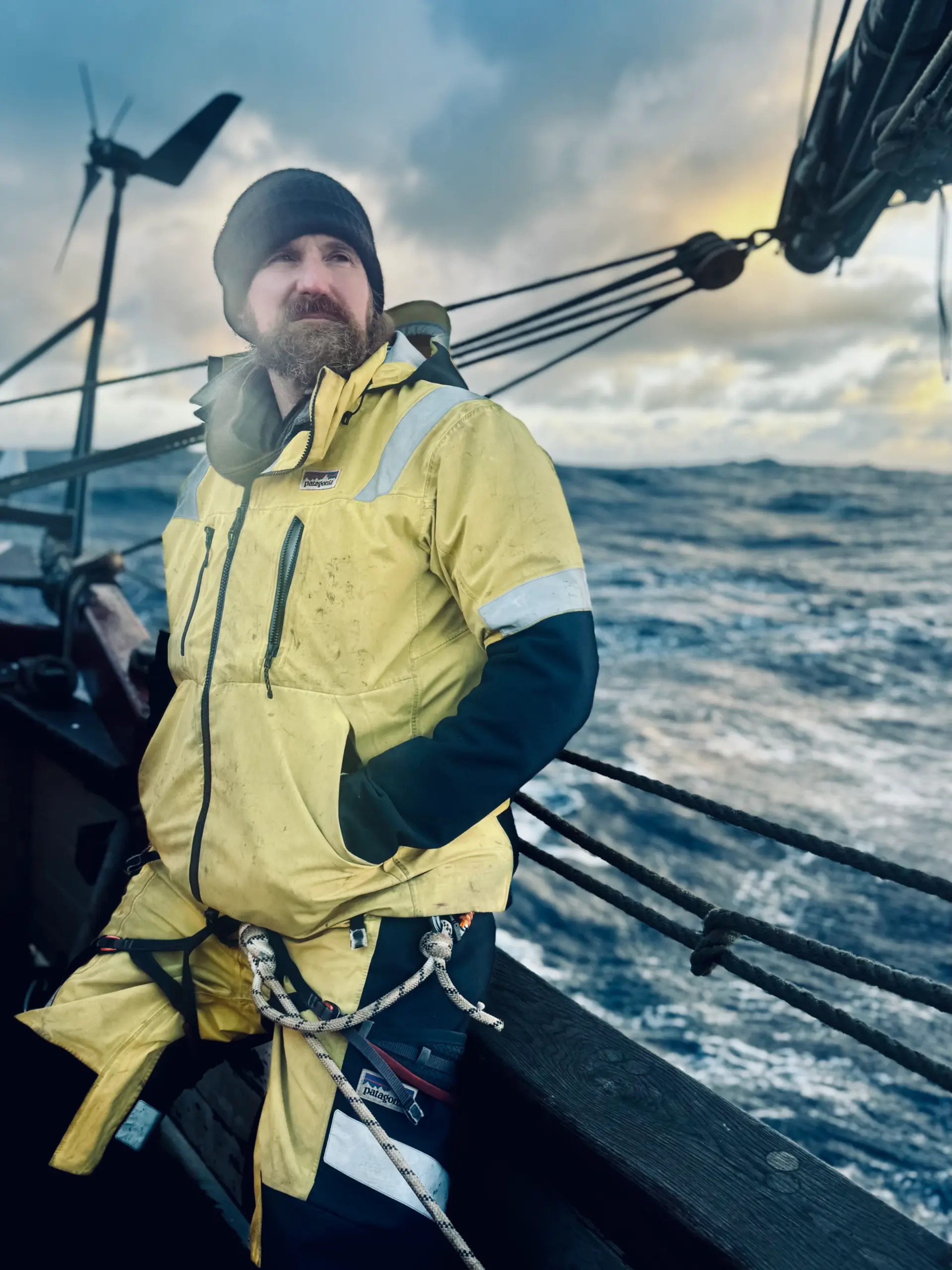
On that last leg, I spent a lot of time aloft looking at the blue world under billowing sails. I tarred, sanded, and put in chafe gear, savoring the sea air and ready to furl and unfurl as the weather changed and the captain commanded.
We landed at a chocolate factory in Amsterdam. For three days and two nights, it was steady action of unloading, cleaning, fixing, and feasting. When the new crew arrived, we began to disappear, one by one, to the sound of farewell made on an antique hand-cranked foghorn.
A few months later, I would embark on the bark Europa around Cape Horn for a total of eight months at sea. I’ve been back for over a year now. The language of the ship grows dusty with disuse, but I’m heading back. For two months, I’ll sail on Tres Hombres for their summer voyage from the Baltic to the Biscay. A new crew, same boat, and a whole new adventure.
Tres Hombres History
Tres Hombres’ hull evolved out of the Reichsfischkutter shipbuilding program in Weimar Germany. The concept was to create a standard design vessel based on a Baltic seining hull and sized in classes denoted as A through K. The vessels were subsidized by the government, privately built with a civilian use. In time of war, they could be easily militarized.
After the Nazi regime took over Germany, their navy rebooted the program in 1942 as Kriegsfischkutter, “War Fish Cutter,” and commissioned 1,072 of them of sized G (24 meters). Six hundred and twelve were built in 17 shipyards from the Baltic to the Mediterranean. It was the largest shipbuilding program in series in the history of the German Navy. They were powered with diesel engines and saw service as gunboats, minesweepers, and submarine hunters.
The historical details of the hull before she became Tres Hombres are vague but dramatic. Her keel was laid down in 1943 and launched in 1944 as Kriegsfischkutter 368 (KFK 368). After serving as a minesweeper she was sunk in the Oslofjord in 1945. She was raised for the first time and converted to a fishing cutter, renamed Seeadler (Seaeagle) and evenly returned to Germany in 1963. She continued life as a fishing vessel until 1979, when she became a ferry on the west coast of Ireland. She sank again in 1984 and was looted. Raised again, she was sold to a Dutch interest, which towed her to Delft in the Netherlands, with intentions of converting her to a yacht.
In 2007, the “tres hombres” found her unfinished and almost sinking. With an army of 150 volunteers from 25 countries, they tore out her diesel heart to make room for cargo and turned her from a warship into a “peace-ship.” For propulsion she was rigged as a brigantine (two masts, square sails on the foremast, and a gaff rig on the main).
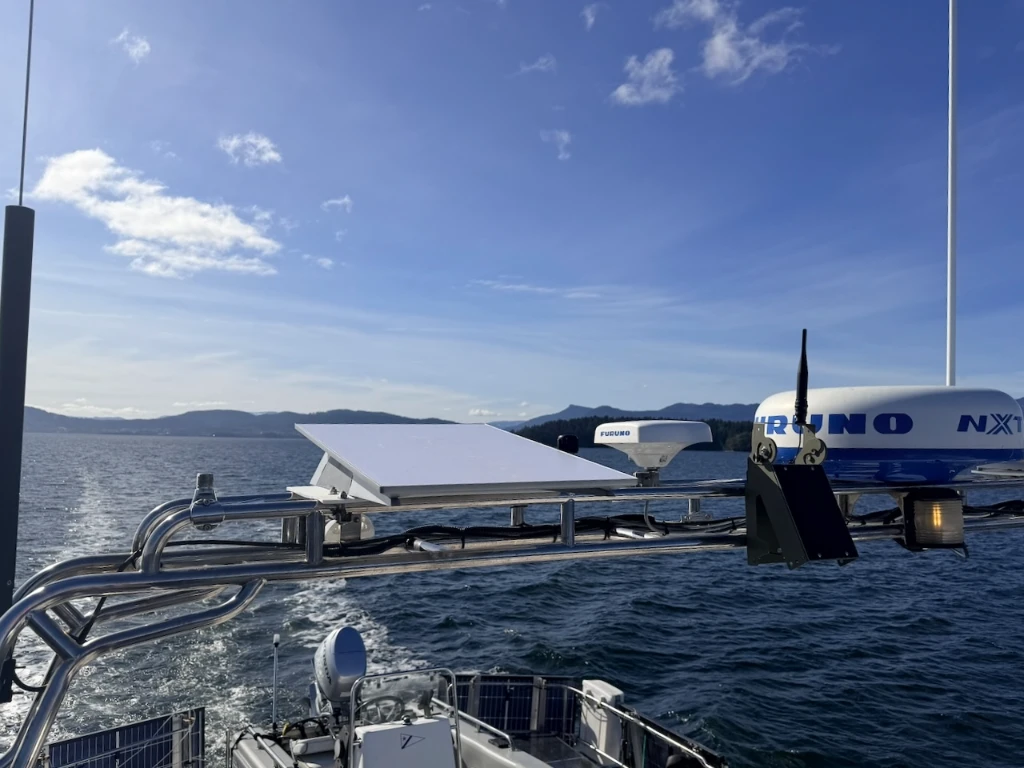
Solar panels and wind generators in the stern power radar on the main mast, navigation computer in the wheelhouse, and navigation lights. Heating is blankets, wool sweaters, and foul-weather gear. She carriers her own water and has no refrigeration. Food lasts because its mostly vegetarian, sourced from each port and dry stored.
This year, 2026, she’s on her 19th trip around the North Atlantic.