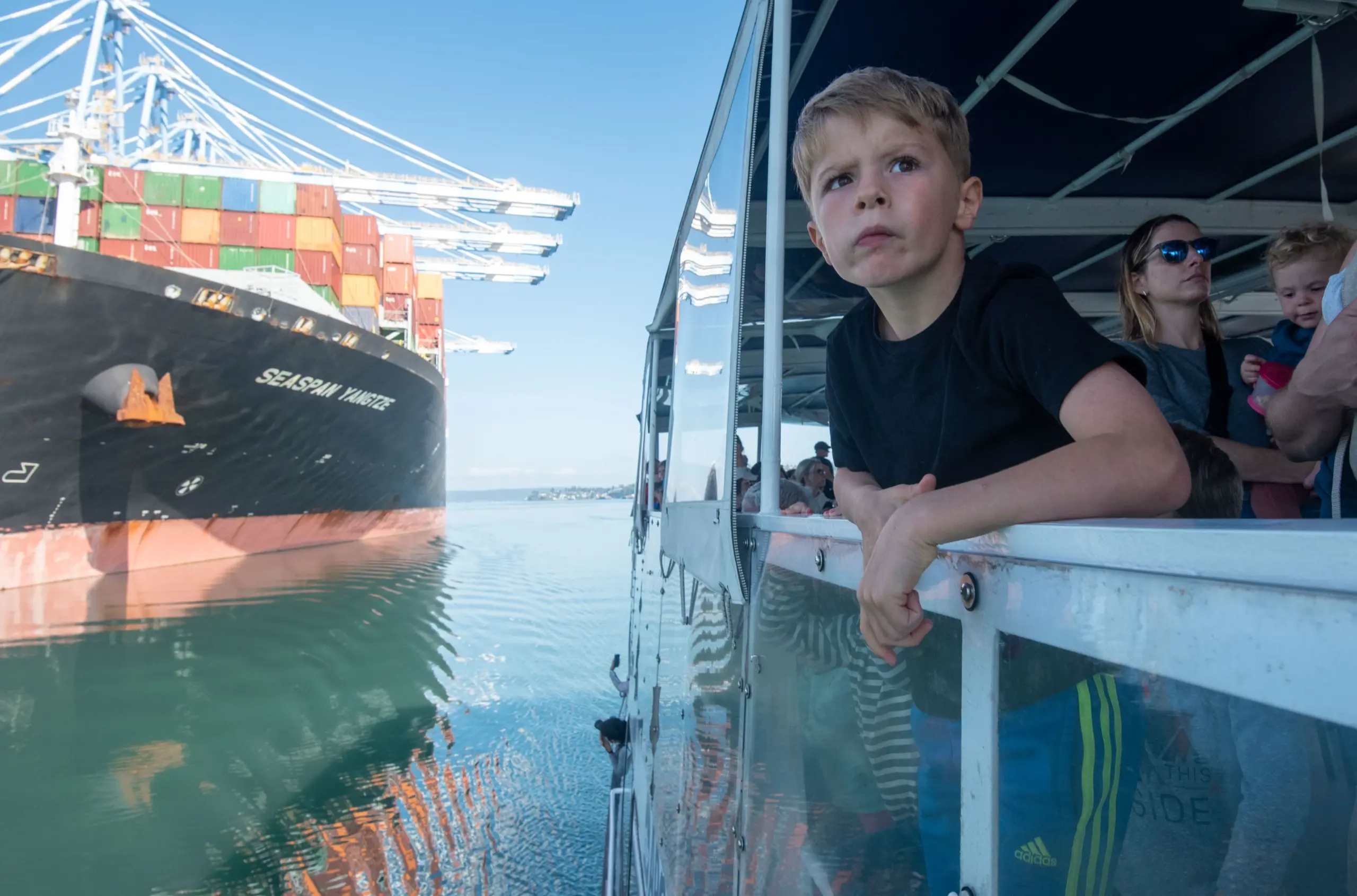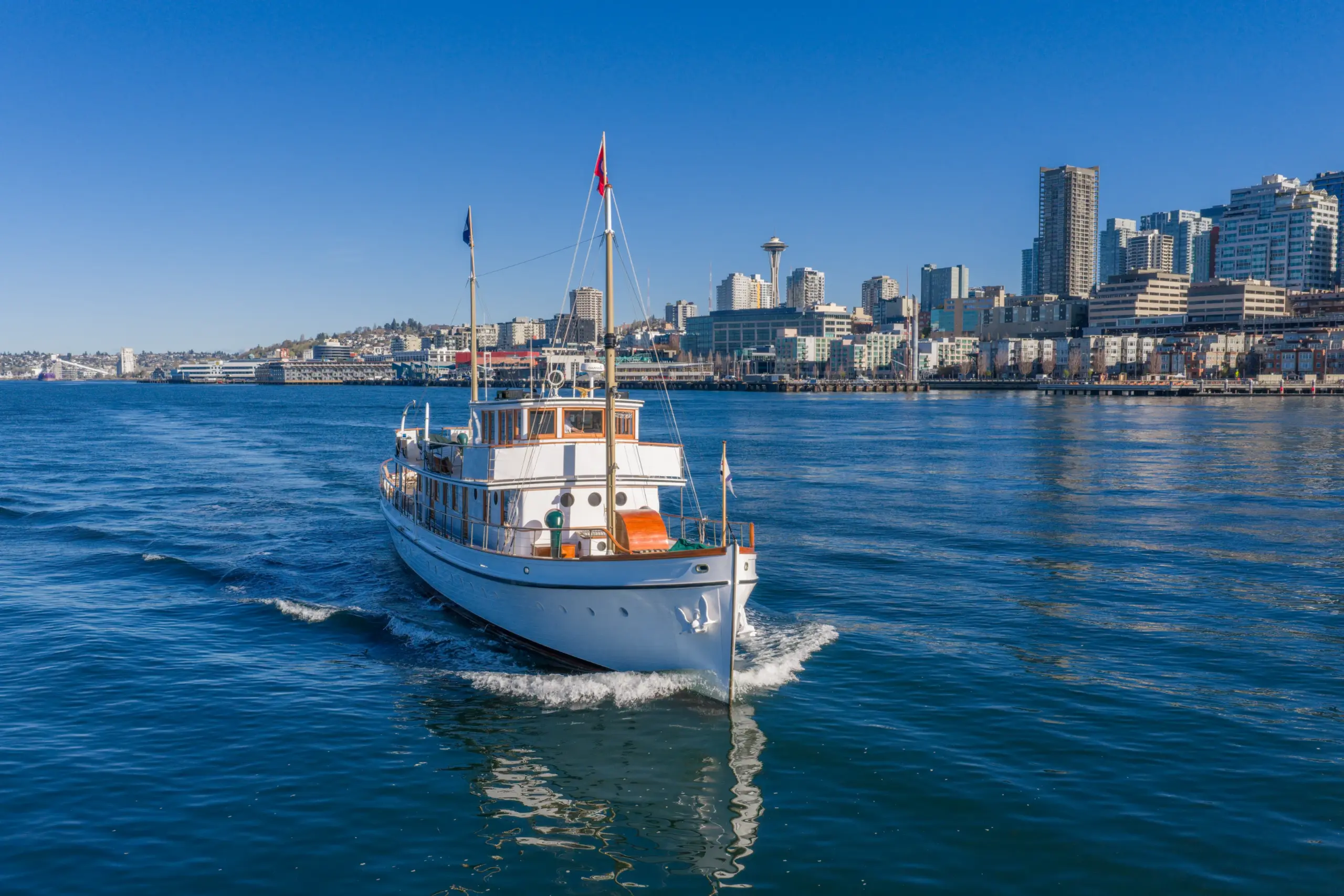
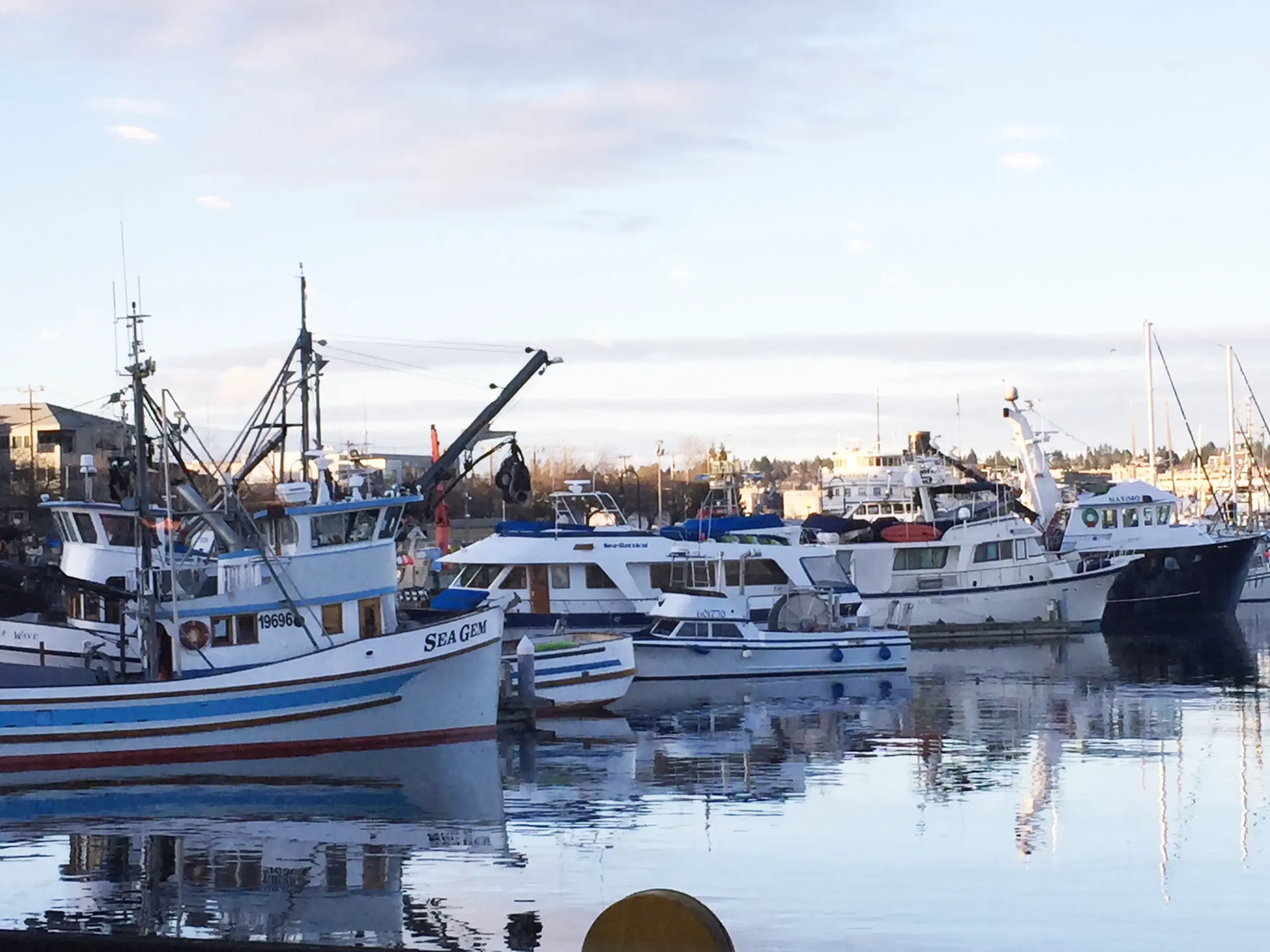
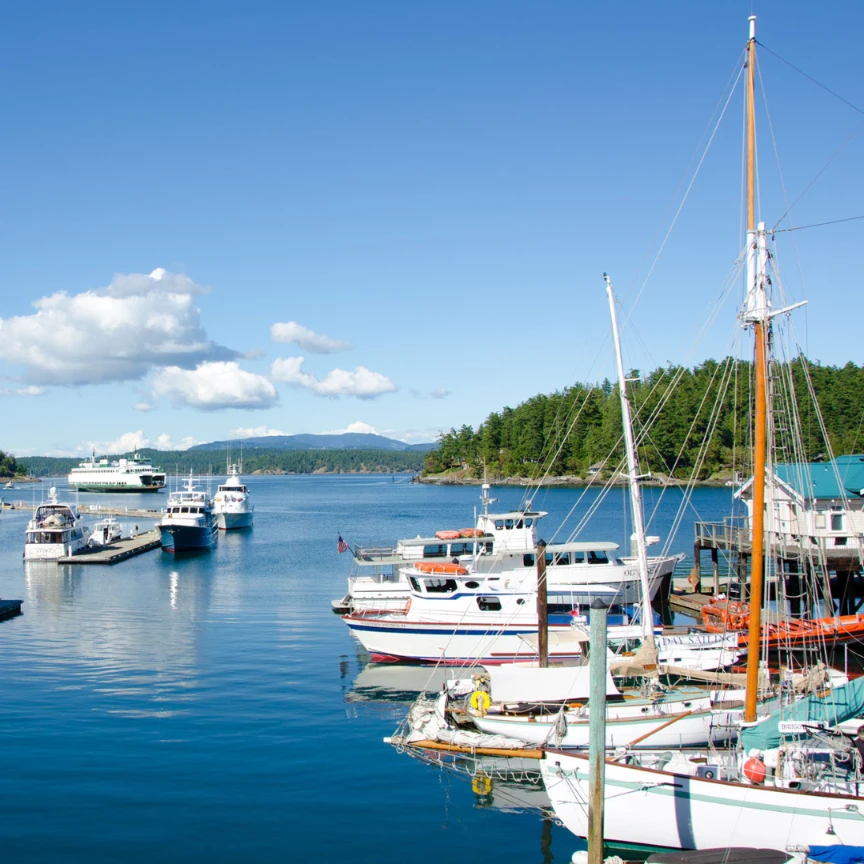
Image: Seattle’s Fisherman’s Terminal was an early adopter of the Clean Marina Washington program. (Credit: M. Wagner)
A free, voluntary program that focuses on cleaning up marinas across Washington waterways has helped improve the environmental conditions at 83 facilities since it began in 2005. As it enters its third decade of operations, the Clean Marina Washington program has become one the best examples of incentive-based, goal-driven environmental stewardship in the Pacific Northwest maritime industry.
Created as an expansion of the EnviroStars program, Clean Marina Washington has been targeting marinas all over the Puget Sound region, starting with Shilshole Marina in Seattle, as a simple way to encourage boaters to pay attention to the environmental impacts their activities contribute to in the state’s fragile ecosystem.
The Washington Sea Grant organization took over leadership of the program in January 2022. Other partners in the program include the Northwest Marine Trades Association, the Washington Department of Ecology, Puget Sound Keepers, the Washington Department of Natural Resources, Envirostars Collective, the Recreational Boating Association of Washington, and the Washington State Parks Commission.
“The concept is pretty simple,” said Bridget Trosin, a coastal policy specialist for Washington Sea Grant. “Basically, we ask marinas to establish three measurable environmental goals they would like to accomplish over the next three years.” Some examples could be to reduce stormwater runoff, establish a hazardous waste management program, add fuel-spill containment equipment, use climate-friendly cleaning materials, add a sewage pumpout station, begin a recycling program, or promote sustainable boating practices.
“Then we help the marinas set up some action items they can take to help them accomplish their goals,” Trosin added. After the actions are set in motion, Washington Sea Grant staffers do a walk-through audit to determine whether the marina has achieved their desired results. If they reach the rigid qualification standards, they earn the right to fly the “Clean Marina” flag. Every three years, the certification can be renewed for additional goals and walk-through verifications.
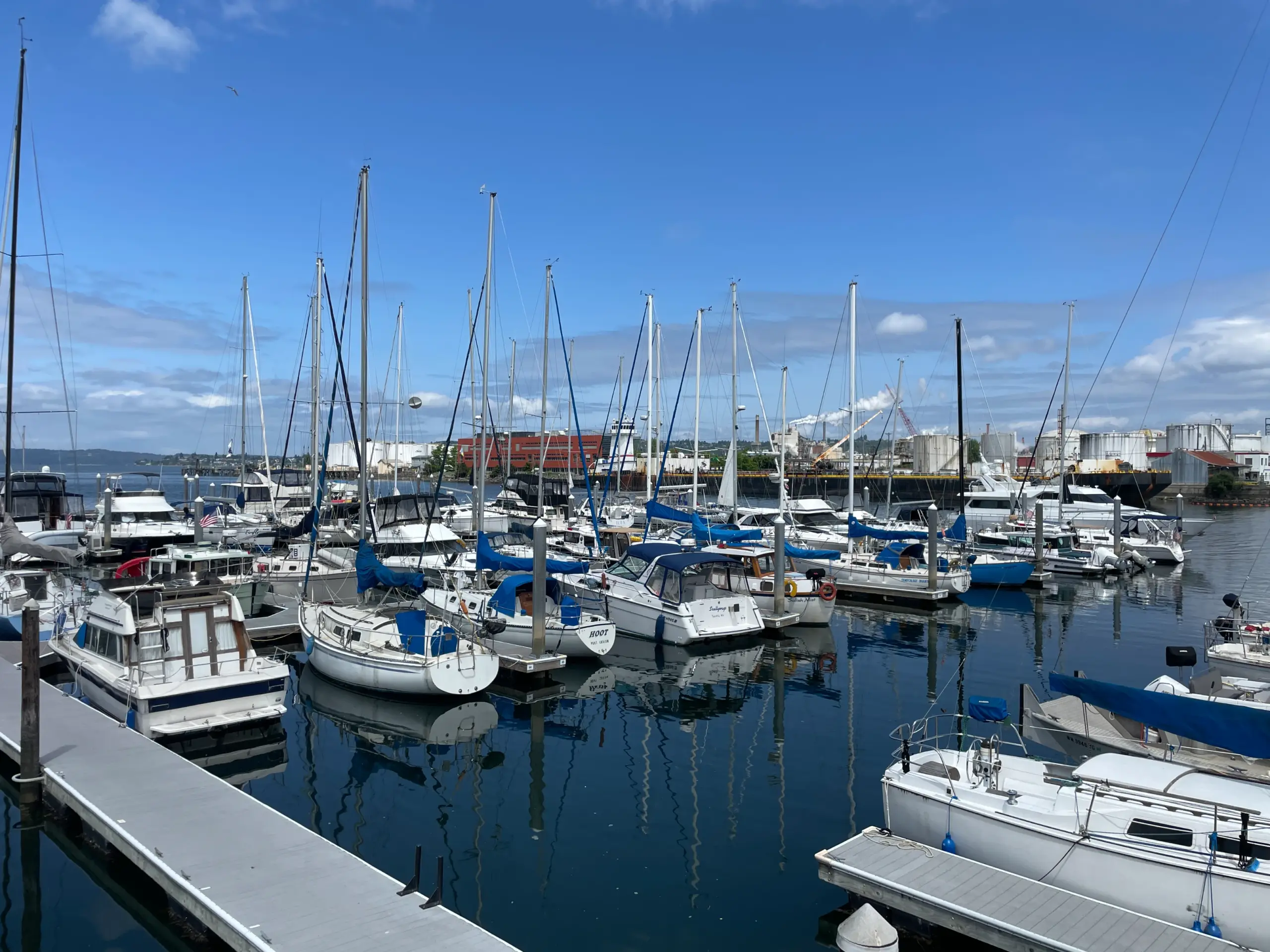
One of the program’s most prominent successes is Oak Harbor Marina, which just had its certification renewed for another three-year period in March. The Whidbey Island marina first became certified by Clean Marina in 2008 and has now been recertified six times. As part of its latest recertification agenda, the marina will sponsor a public environmental event this year, install new “level 3” electric vehicle (EV) charging stations, and pursue the possibility of purchasing additional EVs.
Aaron Barnett, one of the managers of the Clean Marina program for Washington Sea Grant, said one of the key signs of the program’s success has been the general relocation of most of the marina maintenance shops farther inland. “We used to see many of the older maintenance shops located right on the water, where there was more risk of pollution or chemicals spilling into the environment,” he said. “Now, most of the maintenance shops that have been certified have be relocated upland to help reduce the chances of contamination.”
“Certification adds an element of peer pressure to those marinas without it,” Trosin said. “Being certified is something they can point to as a measurable way that their marina and boaters are being environmentally conscious. It’s really good publicity.”