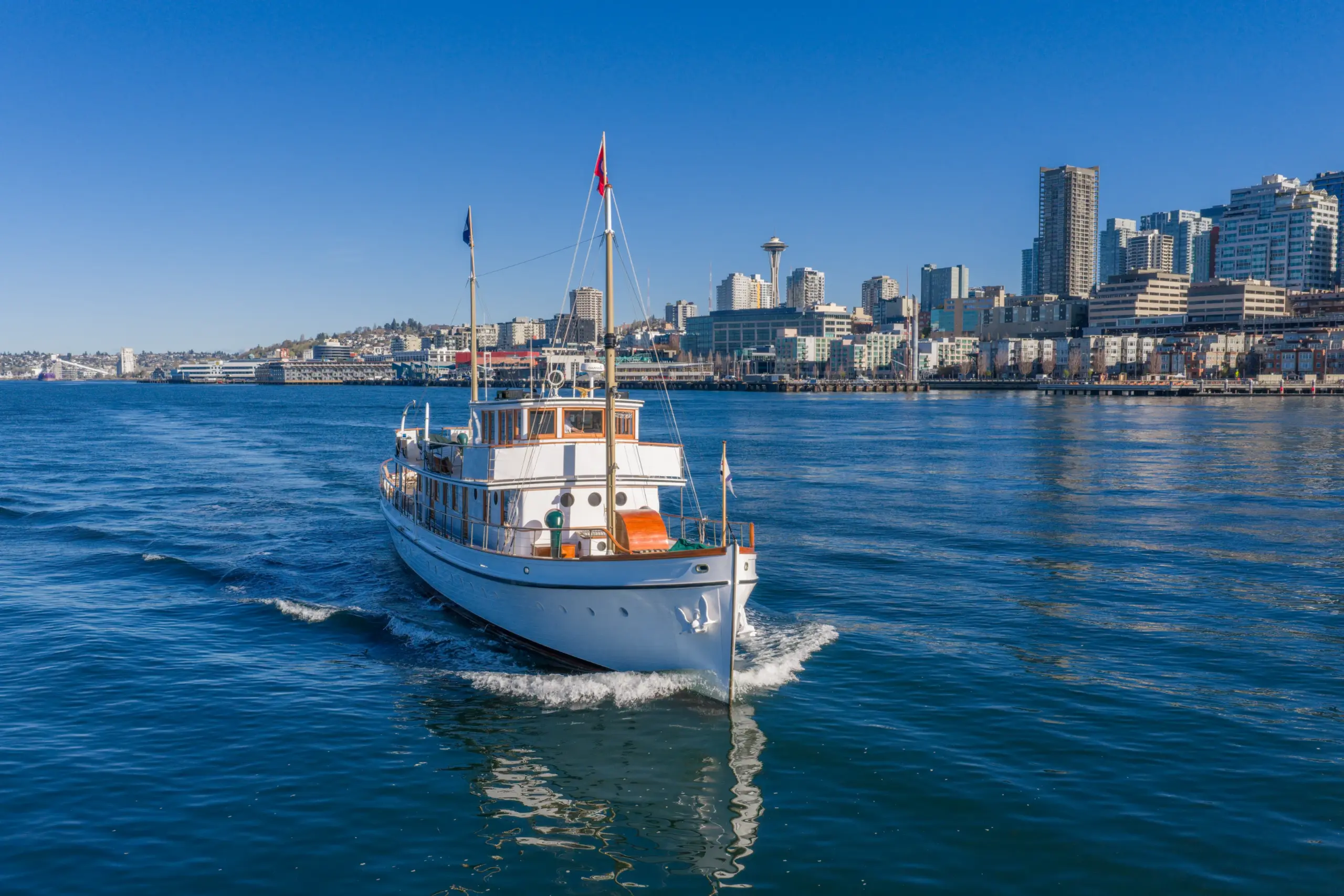
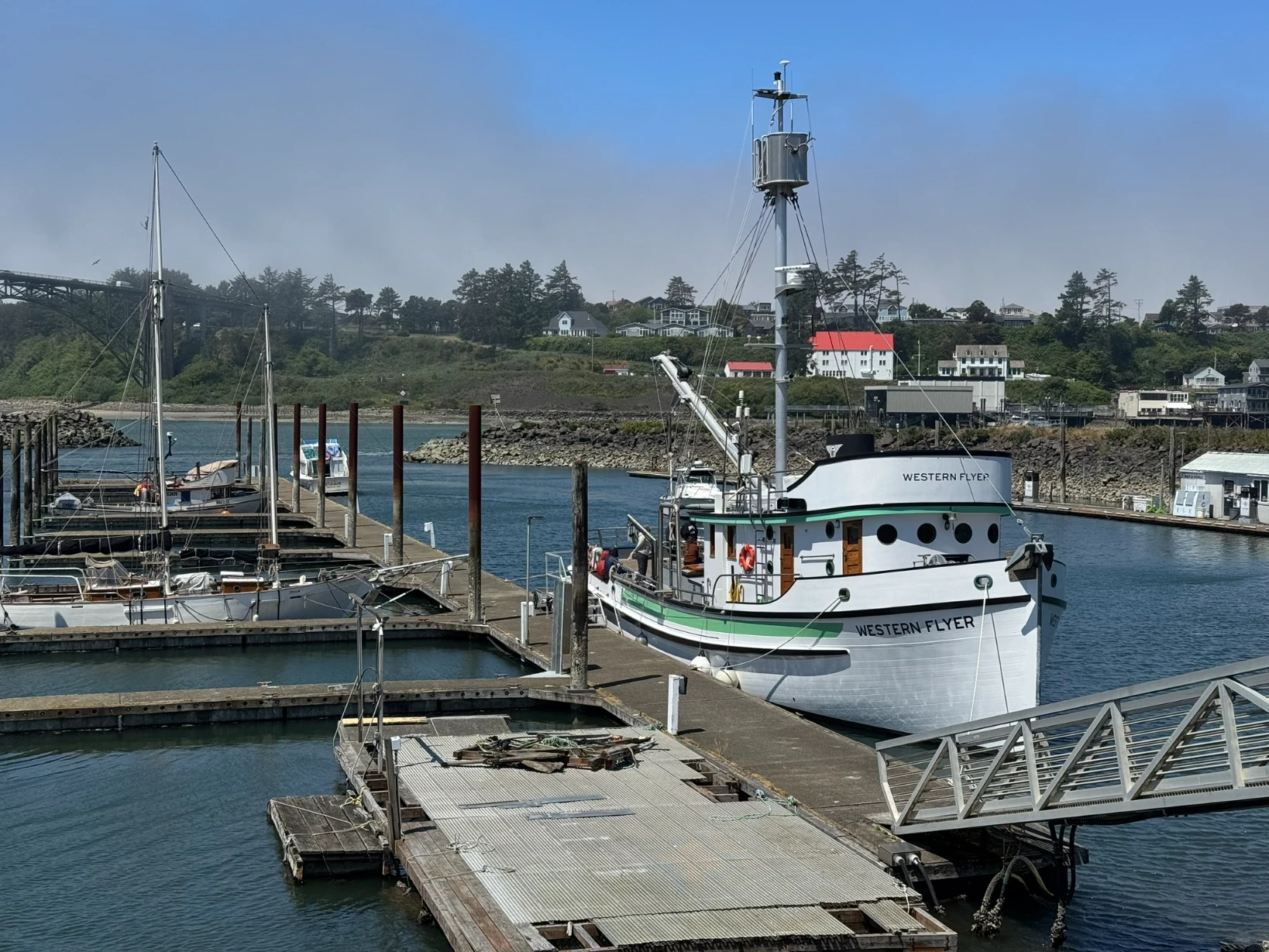
Image: ‘Western Flyer’ at dock during extra-low tides in Yaquina Bay in Newport, OR, on May 14, 2026.
One of the world’s most famous fishing vessels, Western Flyer, has, once again, returned to its old stomping grounds in the Pacific Northwest.
In March 1940, Nobel Prize-winning writer John Steinbeck and esteemed marine biologist Edward “Doc” Ricketts chartered Western Flyer, a 76-foot wooden sardine seiner originally built and launched in Tacoma, for a voyage of scientific research and adventure in the Sea of Cortez. A narrative of the journey was subsequently published as The Log from the Sea of Cortez.
After her voyage with Ricketts and Steinbeck, she continued to fish for many years off the Oregon and Washington coasts. She also worked as a crab boat in the Bering Sea and was chartered by the International Pacific Halibut Commission for research in 1962. She was subsequently lost to time, passing from hand to hand, and even changed names to Gemini. She fell into disrepair, sinking once in 2012 and again in 2013, and spent as long as six months underwater, timbers rotting and barnacles taking over.
She was put up for sale, and a man named John Gregg was able to identify her as the famous Western Flyer. Her owner at the time, a shrewd businessman, could tell that the Flyer held sentimental value to Gregg and that he would likely pay any price for the boat. Gregg ended buying the Western Flyer, sunk at the bottom of the harbor for many months and still in terrible condition, for $1 million.
Gregg founded The Western Flyer Foundation, and the Flyer was lovingly restored to her former glory by the Port Townsend Shipwrights Co-Op. Beginning in 2015, these skilled craftsmen spent nine years bringing the Flyer back to life. Impressively, about 90% of the wheelhouse was preserved. Although much of the hull had to be replaced, great care was taken to maintain the character and spirit of the original vessel.
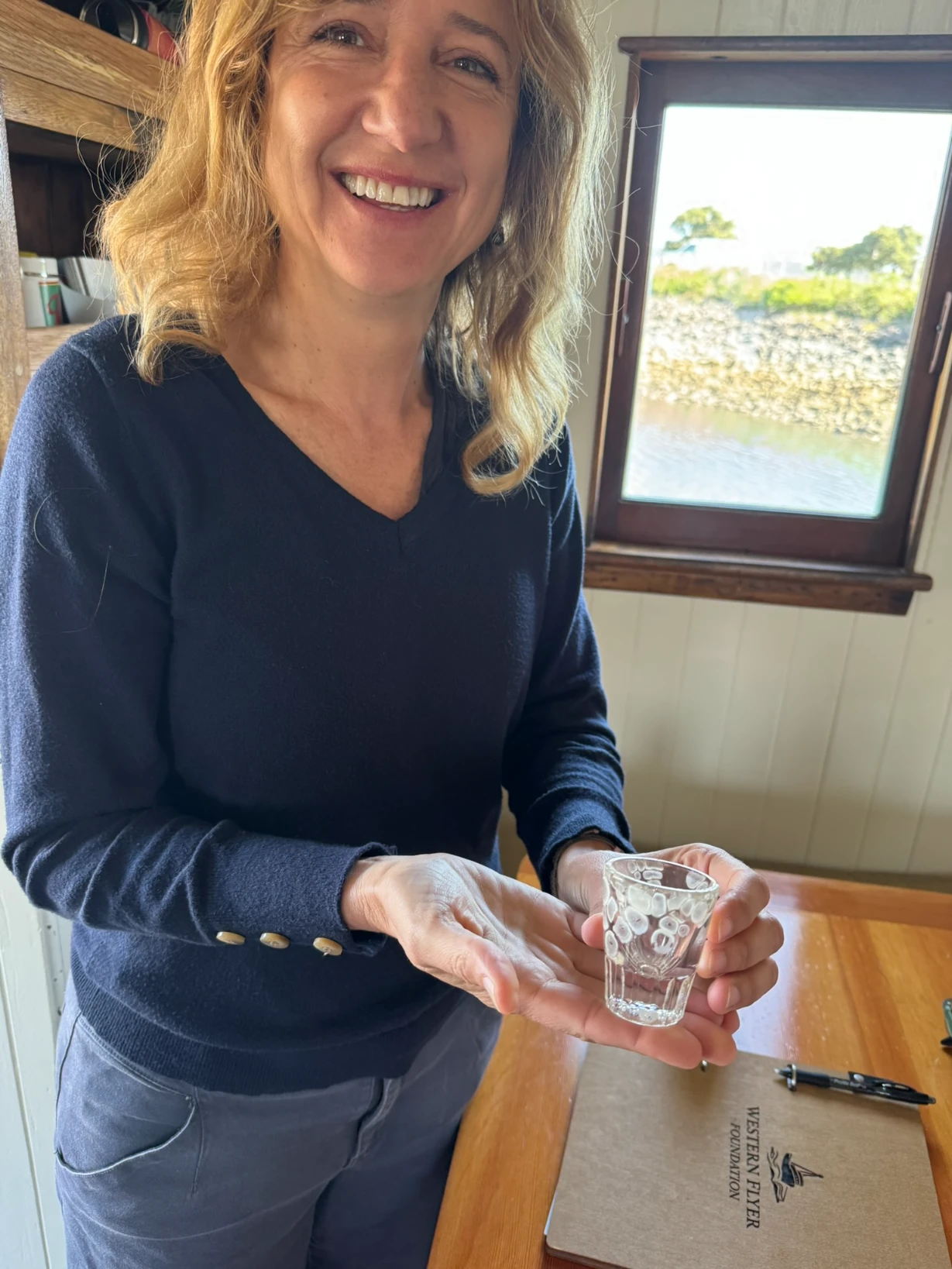
In a nod to the vessel’s remarkable history, some traces of her years underwater were intentionally preserved. Barnacle scars can still be seen in places throughout the boat, including on the original toilet in the head and on a shot glass discovered in the cabin when the Western Flyer was refloated.
Now, The Western Flyer Foundation is writing a new chapter for the historic seiner as an oceanographic research vessel and as a tool for education and outreach. The foundation has a goal of returning Western Flyer to the Sea of Cortez every other year, and in between, Western Flyer will make a journey northward along the West Coast. This year, she made stops in Charleston and Newport, OR, and finally arrived in Port Townsend, WA, where, at time of writing, she is currently docked.
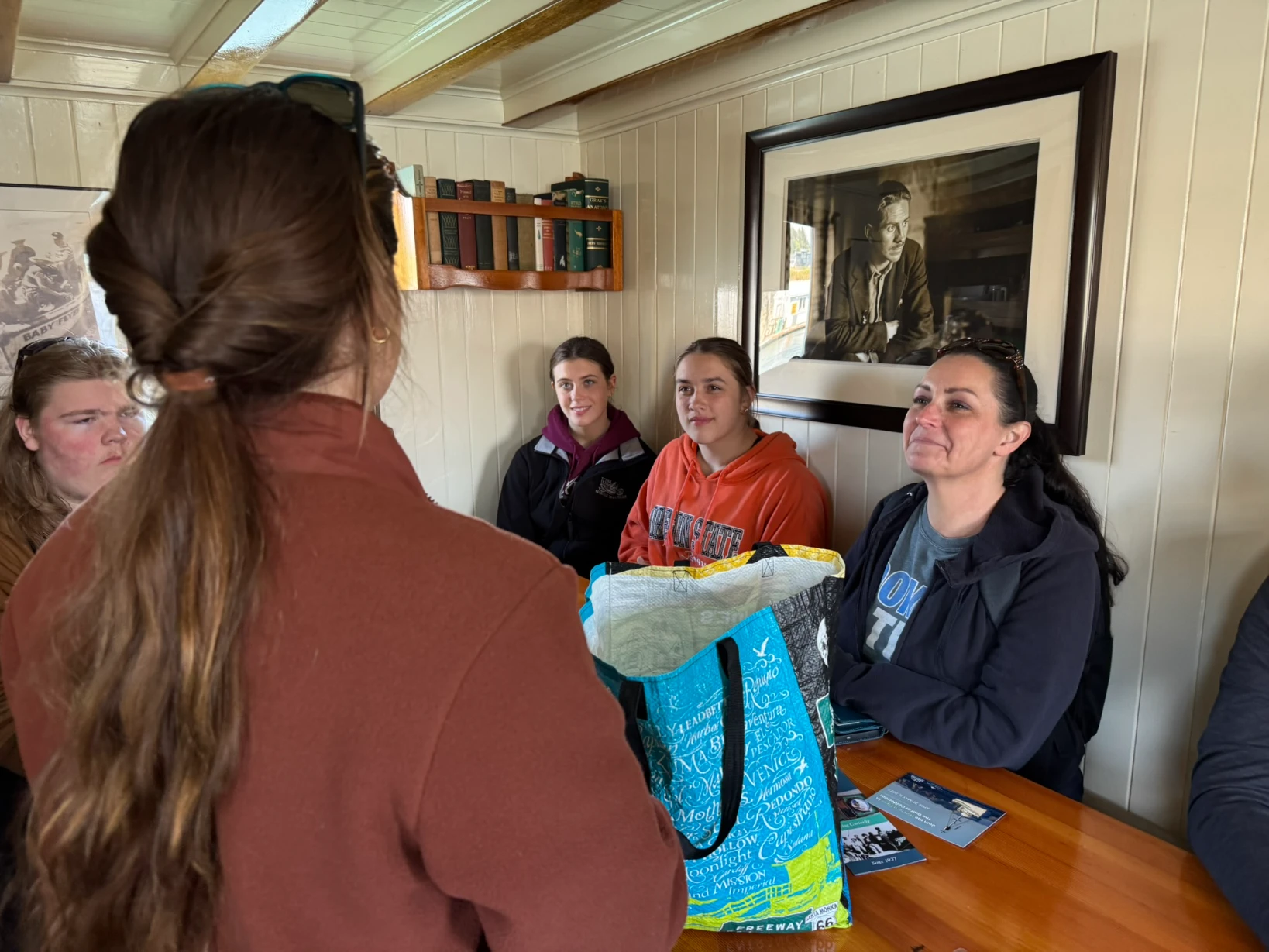
The crew of the Flyer engage with students of all ages, from elementary schools to university students, bringing them on the boat and teaching them about the boat’s storied history. They also take students out on the water, using the oceanographic equipment on board to show students how scientists collect information to monitor marine conditions. The mission of The Western Flyer Foundation is to spark curiosity at the intersection of marine science, history, and the arts, continuing the legacy of Steinbeck and Ricketts’ friendship and love of adventure and discovery.
Welcome back to Pacific Northwest waters, Western Flyer. It’s good to have you back.