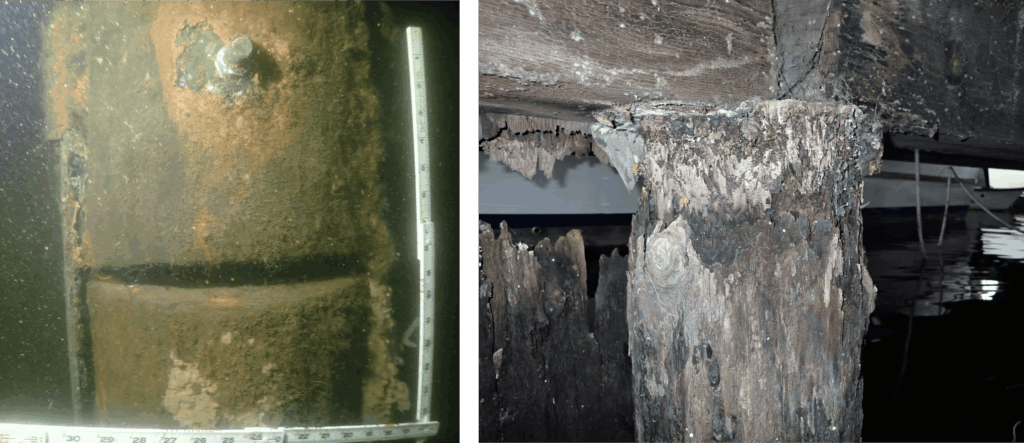
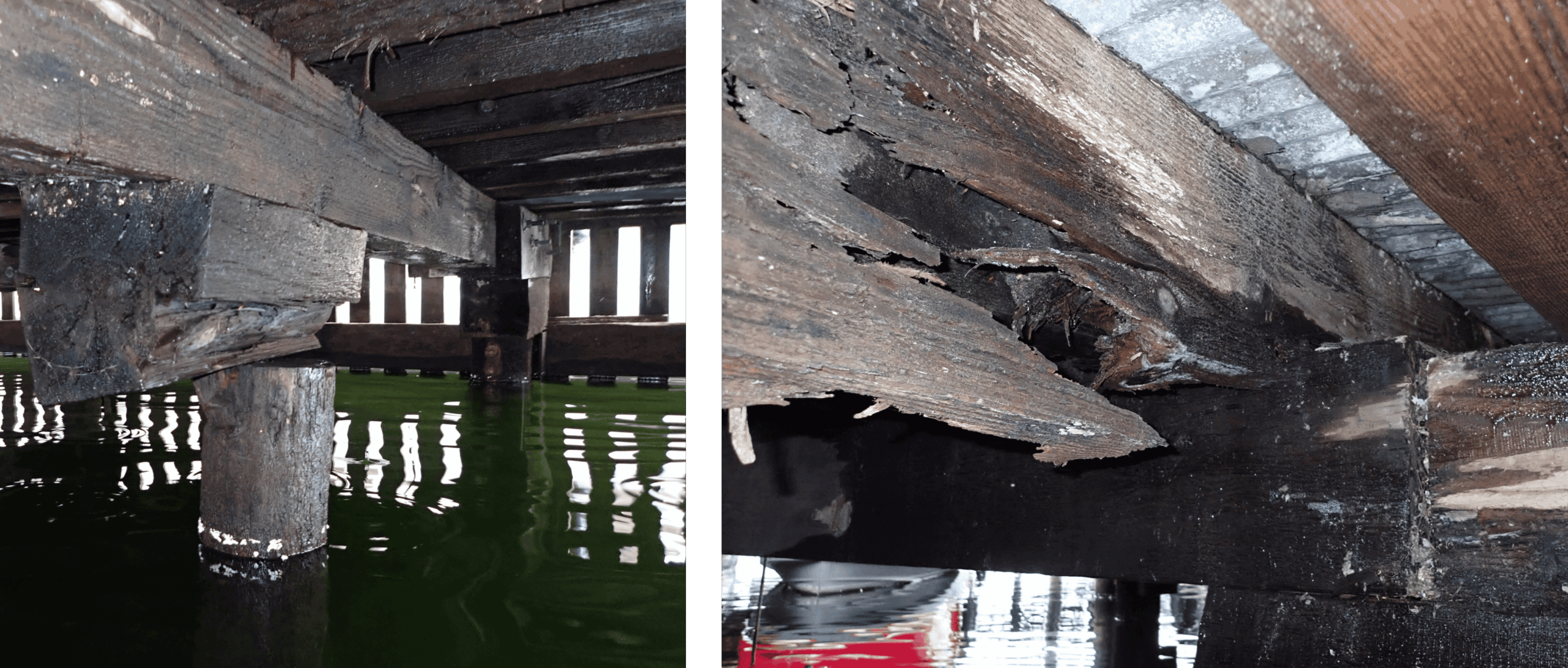
Image: Views underneath the Salmon Bay Marina docks show aging, cracked timbers with poor connectivity to the pilings, as identified by the Port’s engineering teams.
More than three months after receiving notices that most of their marina was to be permanently shut down for safety reasons, several of the remaining boat owners at the Salmon Bay Marina in the Interbay region of Seattle are still searching for new moorages for their vessels, some of which were considered their own homes.
In mid-September last year, the Port of Seattle, which has owned the marina since 2017, told the 121 boat owners at its facility that three of the five docks were deemed to be unsafe “beyond reasonable repair,” and are to be closed no later than March 18, 2026. Those customers with live-aboard vessels on the marina’s covered A, B, and C docks were also told they would no longer be able to stay on their vessels overnight by Nov. 18, 2025.
According to the Port, a team of marine structural engineers hired to inspect the facility found that the three docks show signs of significant wear and tear, “including the roofs, connections, and underwater pilings,” which posed a “distinct and imminent safety risk.” The marina’s other two open-air floating docks, D and E, were both found to be in “fair” condition and declared fit for moorage for at least the next five to 10 years.
As of late November 2025, Katherine Fountain, senior media officer at the Port, said that 70 percent of the marina’s customers had found other moorage spots for their vessels and that all the people who had been living at the marina had moved out before the Nov. 18 deadline.
Fountain said the Port has been able to help reimburse the owners of floating on-water residences (FOWRs) at the marina for up to $15,000 for towing charges once other dock spaces have been secured. At press time, two of Salmon Bay’s remaining six FOWRs, which do not have motors to move them, have been able to find other moorages.
“We’ll continue to work with remaining customers to support their relocation and stay in close communication should any severe weather come through,” Fountain said.
Built in 1961, Salmon Bay Marina was designed to have a typical life of 30 to 50 years in the marine environment with regular maintenance, Fountain said. Over the years, the Port has said it has provided “routine maintenance work” on all of its docks, but the cost of upkeep are now too great to continue operations. Most of the signs of damage, Fountain said, are the result of “the marina being built at a time when codes were different than how we would build today.”
Soon after the announced closure, however, a petition from some Salmon Bay Marina customers began circulating on Change.org, calling for the Port to “halt their closure plans immediately.” According to the petition, the Port has allowed the marina to “fall into disrepair” after purchasing the facility eight years ago and has not addressed “long-standing maintenance and safety issues.” By Nov. 25, the Salmon Bay petition had gained 612 signatures—more than halfway to the group’s goal of 1,000 signatures.
Fountain said the Port has not yet come to a decision yet on what to do with the A, B, and C docks once they are closed.