Usually, when we think about strength, we often think about the big muscles: quads, hamstrings, and core. But one of the most important muscles for both boating and everyday life tends to be overlooked—the gluteus medius.
This small but powerful muscle sits on the outside of your hip and plays a critical role in keeping your pelvis stable when you’re standing, walking, stepping, or balancing on one leg. The gluteus medius muscle is therefore a critical muscle, especially for boaters.
As boaters, we step from dock to deck. We move across uneven surfaces and must adjust to subtle shifts of the water (sometimes not so subtle). Our body relies on the gluteus medius to keep us upright and controlled. When the gluteus medius is not doing its job, we might experience knee, low back, or hip pain. Also, because it plays a critical role in controlling our pelvis, balance can be affected if the gluteus medius muscle is weak.
The good news is that this muscle responds really well to targeted training. Below are a few of my go-to exercises to build strength, control, and stability. These exercises can be performed at home, on a dock, or in a boat.
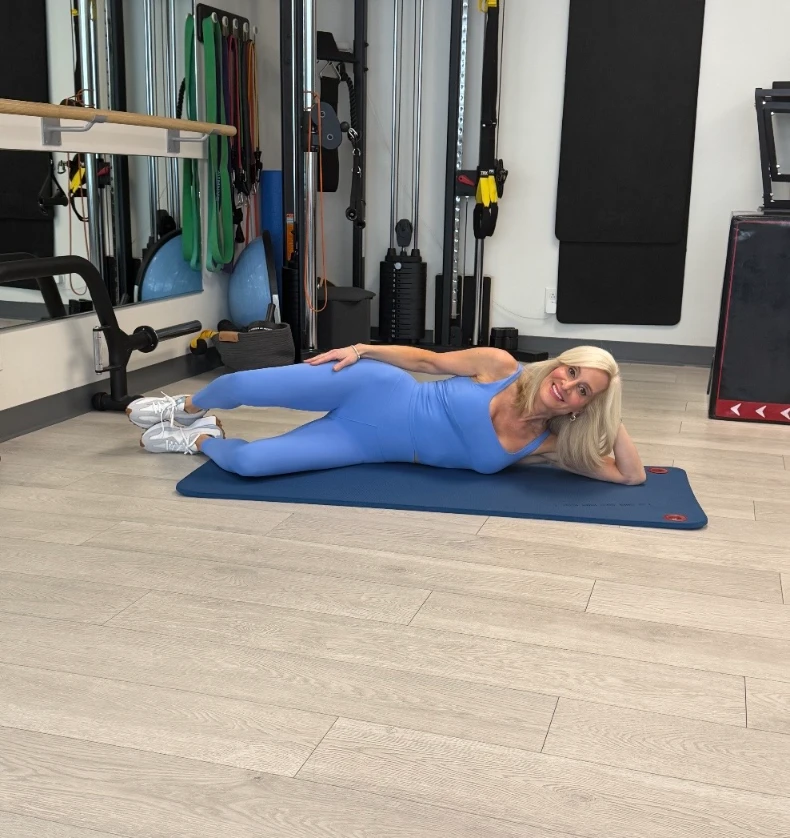
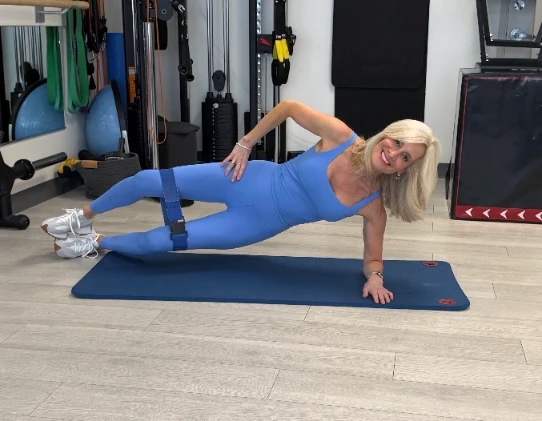
1. Clamshell Progression
Purpose: Activate and strengthen the gluteus medius in a controlled, supported position.
Progression
- Level 1: Side-lying clamshell with hips stacked.
- Level 2: Add a resistance band.
- Level 3: Lift into a side plank while maintaining the clamshell position.
Things to Avoid
- Rolling backward through the hips.
- Feeling it more in the low back than the hip.
- Losing control at the top of the movement.
PT Tip: Think small, controlled motion.
2. Side-Lying Leg Circles
Purpose: Improve hip control and endurance through a full range of motion.
Progression
- Level 1: Small, controlled circles.
- Level 2: Larger circles while maintaining alignment.
- Level 3: Add tempo change/directional change (e.g. counterclockwise/clockwise).
Things to Avoid
- Rocking through the pelvis.
- Tension in the neck or low back.
- Losing control of the movement pattern.
PT Tip: Keep your body stable; movement should come from the hip, not the spine.
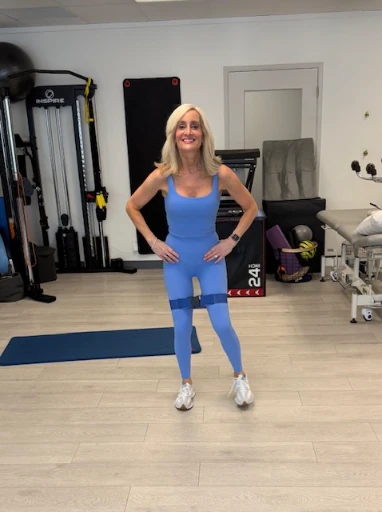
3. Side Stepping (Lateral Band Walks)
**Side note about band placement: Just below the knee placement targets the gluteus medius. If your knees are sensitive, placement above the knee is a great option.
Purpose: Builds functional hip stability for movement in standing
Progression
- Level 1: Small side steps with a light band.
- Level 2: Lower into a slight squat while stepping.
- Level 3: Increase time under tension or add directional changes.
Things to Avoid
- Knees collapsing inward.
- Excessive trunk sway.
- Dragging the trailing leg instead of controlling it.
PT Tip: Stay low and controlled—avoid popping up between steps.
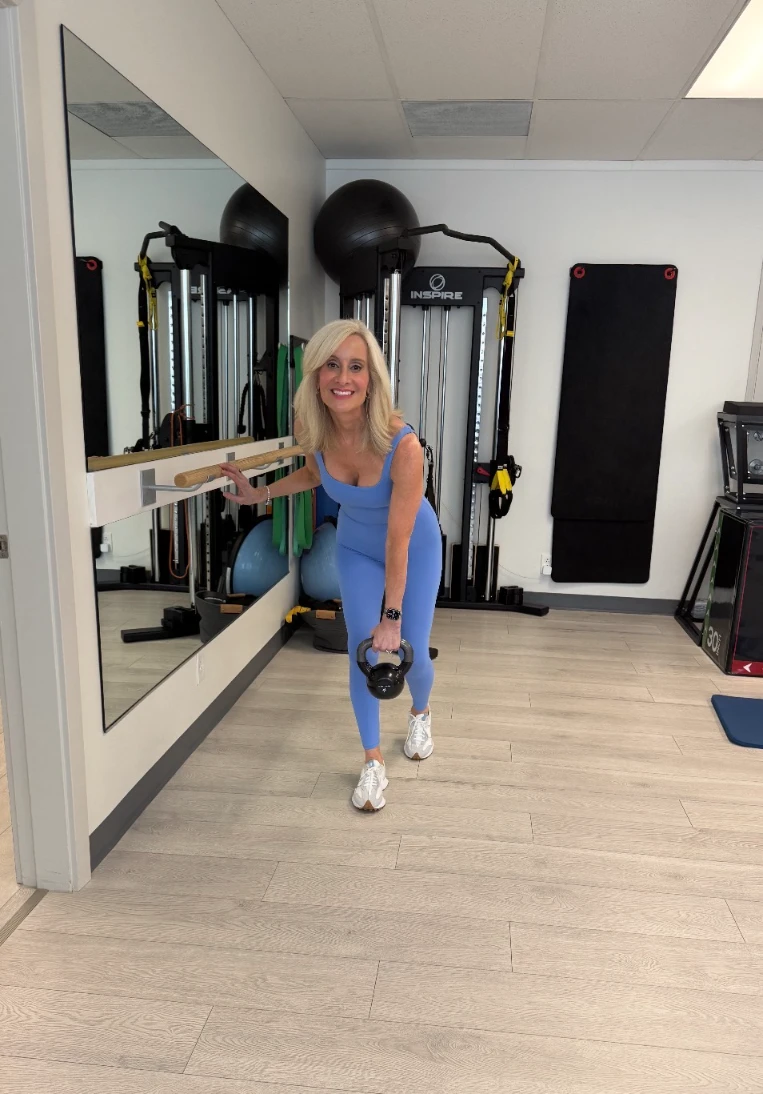
4. Kickstand Deadlift
Purpose: Train single-leg stability and hip control in a functional, weight-bearing position.
Progression
- Level 1: Body weight with light support.
- Level 2: Add load while maintaining balance.
- Level 3: Reduce support and increase control through full range, then you can try with a light weight.
Things to Avoid
- Rounding the back.
- Shifting weight excessively to the back leg.
- Loss of balance or control.
PT Tip: Think “hinge, not squat”—the movement comes from the hips.
Why This Matters
A strong gluteus medius helps you move with confidence, whether you’re stepping onto a dock, walking on uneven ground, or simply staying balanced as the boat shifts beneath you. It also plays a key role in protecting your knees, hips, and lower back from unnecessary strain.
How to Progress
Progress these exercises by improving control, balance, and body position. When you can move smoothly and stay aligned without pain, you’re ready to advance.
Final Note
These exercises are not appropriate for everyone. If you have a history of hip, knee, or back pain, or concerns with balance, start conservatively and modify as needed.
If you would like a custom program based on your individual needs and boating activities, consider visiting your local independently owned physical therapy practice for a personalized assessment and plan.