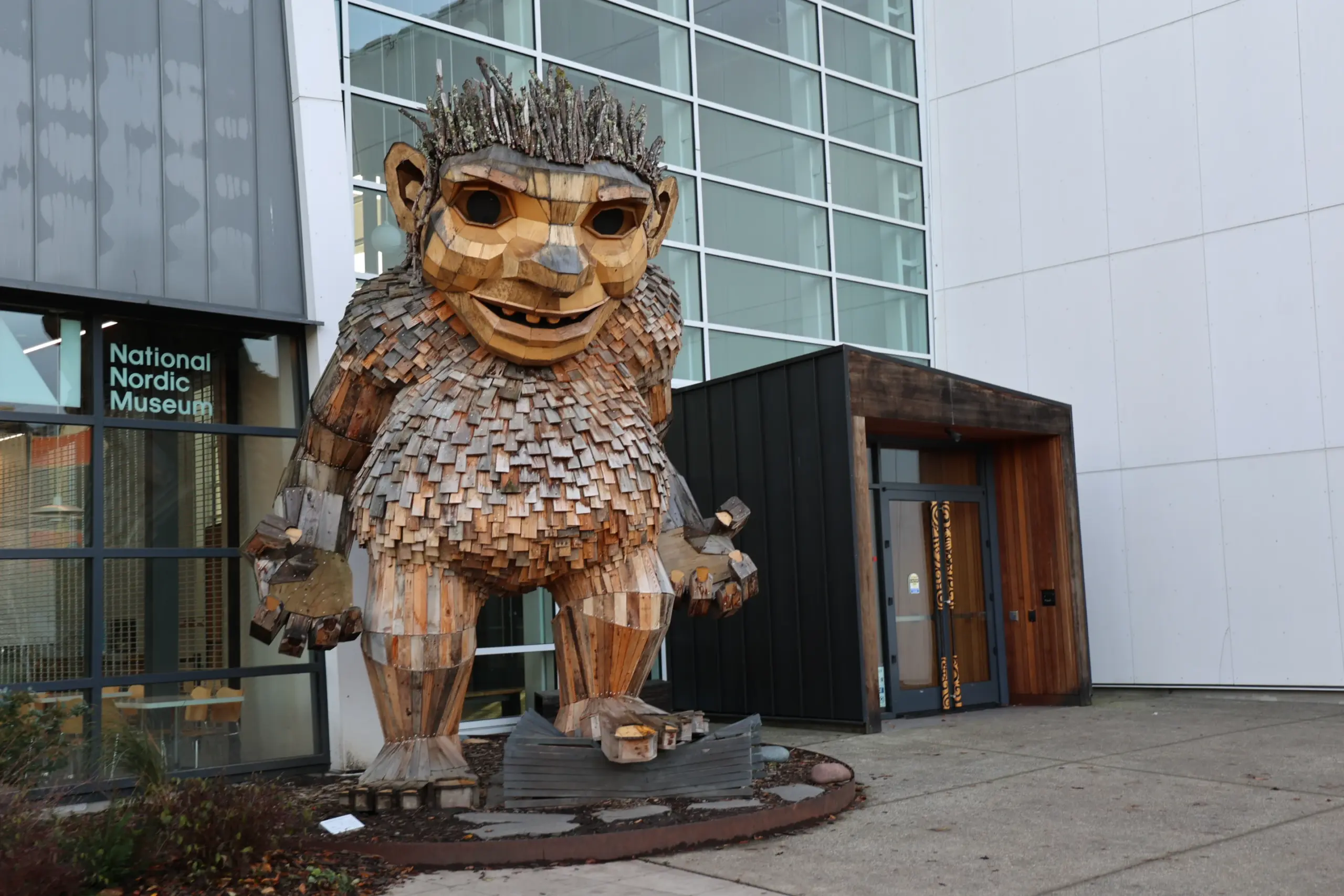
Image: Entrance to the National Nordic Museum with Frankie the troll.
The National Nordic Museum exhibit stimulates our senses to intertwine us with the sea
The Pacific Northwest is a Nordic place at its core. Immigrants from Sweden, Norway, Finland, Iceland, and Denmark, commonly known as Nordic people, flocked to the region in the early 1900s. Perhaps the place provided a familiar echo of their homelands: enchanting darkness, snowy peaks, and deep green forests. Just as important was the abundance of the sea and the flavors contained within. Cold fjords and oceans with fish and salt kept them nourished and connected. Many of these immigrants settled right in Ballard, where the Nordic Heritage Museum opened in 1980. Then, in 2018, the National Nordic Museum reopened into a beautiful location on Northwest Market Street, two blocks from the Ballard (Hiram M. Chittenden) Locks. I had the pleasure of visiting to investigate an exhibit called New Nordic: Cuisine, Culture, and Place.
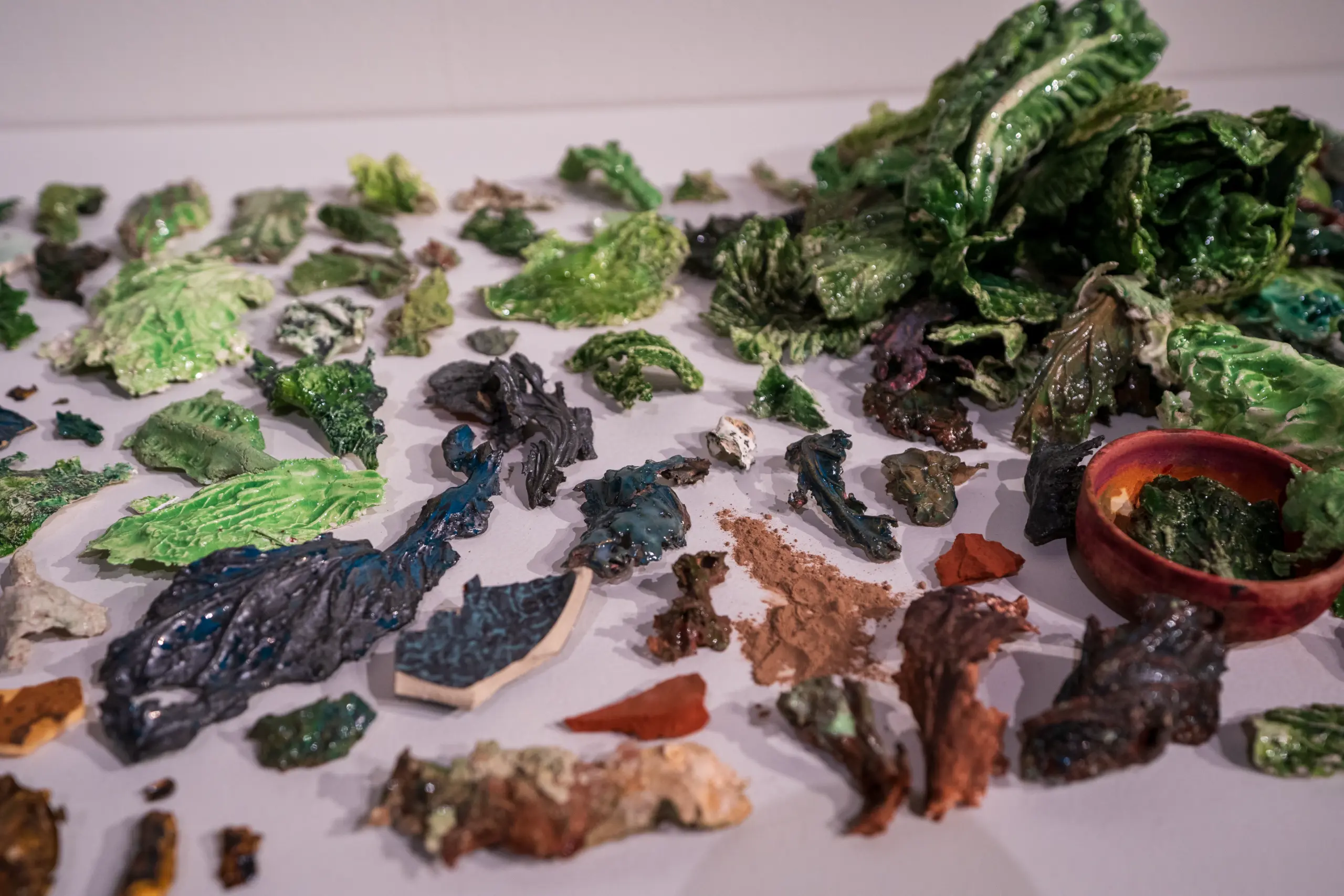
As an on again, off again professional yacht charter chef, I wanted to put my stereotypical impressions of Nordic food (sausage? cured fish? bland vegetables?) to rest. I wanted to learn about modern Nordic cooking. In the early 2000s, Nordic chefs began to draw culinary inspiration from nature, using wild ingredients in both traditional and unexpected ways. The movement attempts to honor a harsh but breathtaking natural place through food and design. It is an attempt to elevate Nordic food to an excellence on par with, say, French cuisine. The focus is innovative preparation of hyperlocal ingredients, expressing an ethical responsibility to the land and its cultivators. Of course, this all unfolds in a polished way that feels synonymous with Nordic expression. In Nordic design, everything is viewed in an ecological context. The same considerations apply in the New Nordic. It isn’t only about food. Everything must flow.
Overall, the exhibit provides a visual balm of earth tones—sage and dark greens, blues and grays—that allow the focus to remain on the place they represent. Wooden tables and chairs invite diners. Food is served in handmade ceramic. Moss, stone, and seaweed abound. One document in the exhibit is an email from Jan Olav Jensen, architect of the stunning Juvet Landscape Hotel. He argues the desired principles of stark structural design in order to keep the focus outside: “Buildings should be built so that they age beautifully… Bedrock must not be demolished. Trees must not be cut.” Number one on the list is that, “Geometric and spatial challenges should be embraced.” And no “scenographic (decorative)” elements are allowed. The beauty is there without them.
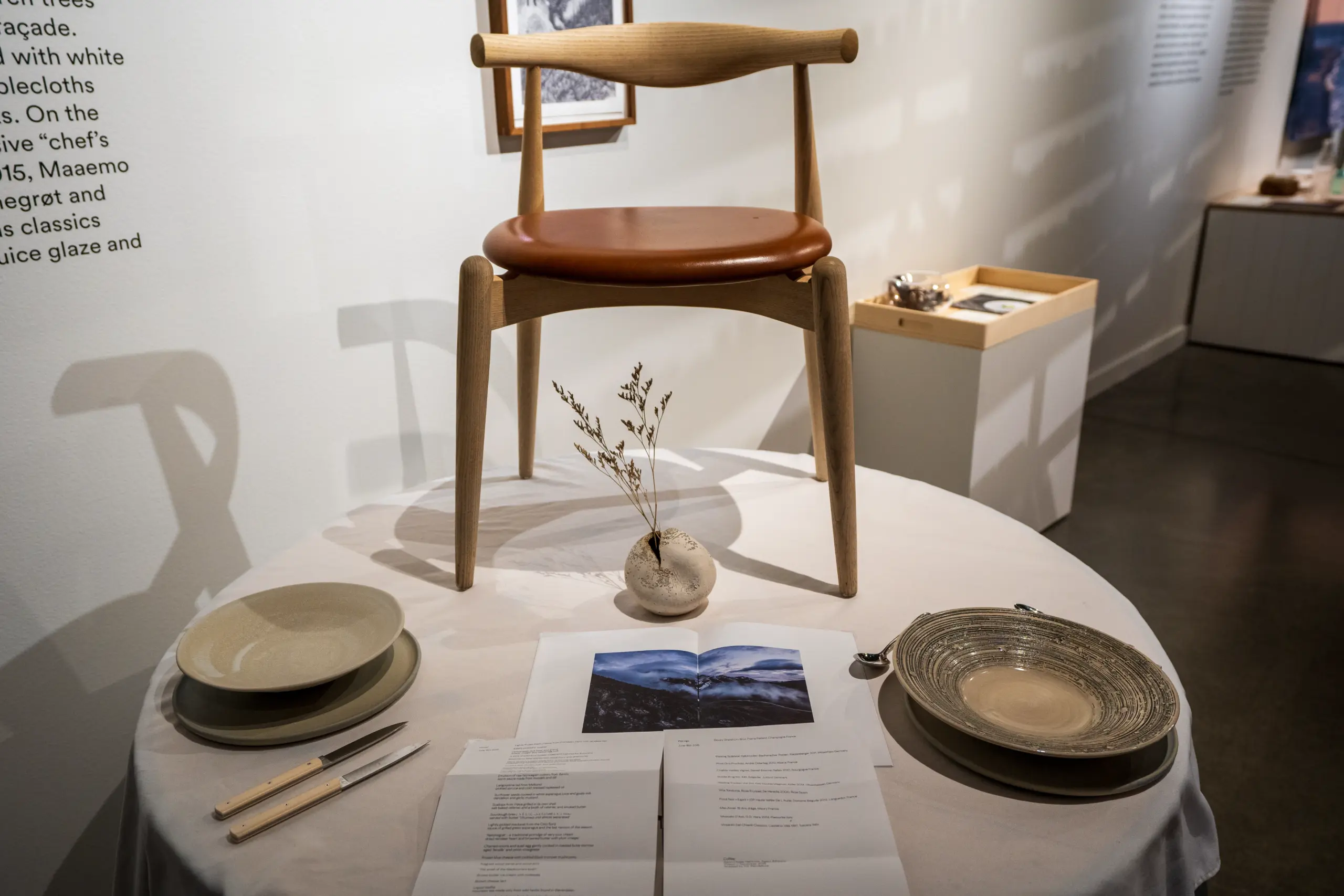
Two dishes from Oslo restaurant Maaemo achieve the New Nordic ideal. First is Skogen akkurat nå (The Forest Right Now). Moss and heather adorn the table. Chicken broth brewed with juniper, mushroom, and wood sorrel is poured over dried trumpet and chanterelle mushrooms, and frozen wood sorrel. The dish must smell and taste gloriously of the forest. A staple oyster dish, Østers “Tradition 2010,” features an oyster emulsion with local salt, rapeseed oil, and white wine vinegar. An oyster jelly juice tops the emulsion. A creamy sauce of mussel broth, dill oil, and white wine bathes the dish. Natural flavors take a sophisticated turn and a softer texture. More traditional fare includes rømmegrøt, a warm, sweet sour cream porridge, and pinnekjøtt, a salt-cured lamb rib main. Maeemo boasts an impressive three Michelin stars. It’s notable that many of these ingredients and flavors, like oysters, also belong to the Pacific Northwest.
The New Nordic exhibit explores what separates us from nature, if anything. It recognizes that our brains and thumbs allow us to create fine homes and food, but that it doesn’t have to destroy nature or separate us from it. Shouldn’t we live by the seasons, embracing the winter with the cozy concept of hygge? Just outside the museum, denizens of the Pacific Northwest are adopting other Nordic traditions to survive the Big Dark. Saunas are thriving, fueled by cold-plunge communities (more to come on that in a future issue). Most Pacific Northwesterners retain a reverence for the outdoors. Some adventurers seek out ice and snow. Others harvest and grow food in a sustainable movement that parallels the New Nordic. And of course, there are many, perhaps like you, dear reader, who embrace the ocean. I daydream of moving across the water under sail, ears full of the water’s rush against the hull.
New Nordic is a chic, creative, and at times self-aggrandizing yet endearing return to tradition. It asks if we can elevate moss and seaweed. It reminds us that we are shaped by our colorful planet and that our human power, our food, and our art can do something as simple as bring us back down to earth. Perhaps New Nordic will inspire us all to be more creative with the abundance we find when we reach into our home waters.
Experiencing New Nordic
The “New Nordic: Cuisine, Culture, and Place” exhibit was organized by Nasjonalmuseet in Oslo, Norway, and installed at the National Nordic Museum by Tim Brown, Webster Crowell, Claire Johnson, and Zoe Velie. It will be live until March 8, 2026. Visit the nordicmuseum.org website to learn more.