Reflections on life at the helm by a Pacific Northwest-based working captain and author.
What does it truly mean to be a captain?
It’s a question I’ve been pondering lately—while scrubbing teak decks and crawling deep inside the timbered belly of my own command, and yes, while head-scratching over that obstinate bow thruster too. I’m fortunate to be captain of the iconic sailing yacht Sizzler on Lake Coeur d’Alene, and I spend my summers working and playing on the waters of the Inland Northwest. My summer office on Lake Coeur d’Alene is our Ranger Tug, an R-25 classic.
Early on, this work was a way of carving out a life of adventure and chasing what was over the horizon. I wanted the essence of what a real job used to be—the working-class chops of my storied grandfathers, the lumberjack and the cowboy. Then I discovered all the places boats could take me. Ultimately, of course, it became about people—those exceptional characters I have met through life on the water. In the company of other captains, I feel a certain camaraderie, a fine sort of fraternity. I’m not a joiner by nature and usually resist that sort of thing, but belonging to a worldwide league of captains feels pretty good to me.
The work of a captain seems like a honest business. I’ve held jobs that felt false, and this one never does. Aside from those early days nearly every captain can attest to—when we all had to fake it till we made it—being a captain means knowing exactly what the job requires and carrying it out to the best of our ability. It has a physicality I relish, and a cerebral side too. One cannot be a good captain without both.
The life of a captain cuts against the grain. Instead of the gossip of the hour, we’re more interested in a solid weather forecast. We are keener on reading the tides than reading The Times. Practical matters rule the day. We appreciate a little less talk and a little more action.
We live and die by the weather, and this brings deep immersion in the natural world and a profound humility to the task. Captains know we never, ever have the upper hand. We talk about our plans as intentions, as intended voyages. We append these little phrases like “all going well, weather depending.” It’s an acknowledgment that the whole thing is much bigger than we are.
At the same time, captains stand taller and speak with more authority, because we know certain things. Perhaps our skills are arcane or esoteric, but in our floating trade, they matter. We know how to work with bad designs and faulty systems, how to improvise, adapt and overcome. We know how to coax a vessel to punch above her weight.
The best captains are understated. I know if a good captain says, “Yeah, it was a bit of a handful out there,” then it was a wild night indeed. And they mean what they say. If that captain tells me, ‘I’ll handle it,” it will be handled. If they say, “We’re ready,” be assured they are ready.
Boat owners love to hear, “That’s a good-looking boat. But the highest compliment you can pay a professional skipper is, “That’s a well-run boat.” A well-run boat, a well-run life. Things to be admired and emulated, and worthy of our consideration.
The Boats That Made Me
Every captain can name the boats that showed them the way. My first outings were on a Sunfish, on a mountain lake in Oregon where Dad showed me how to hike to the high side and then how to take the tiller. Out there he seemed lighter and less serious. His hair went wild and his laugh carried across the lake. I could see that boats brought him a certain freedom from the rigors of shore.
After college came Marlin, a Cal 34 in the care of my buddy Gartly, a man who never bragged because he didn’t need to. He asked me to crew with him doublehanded from Mexico to Hawaii, 21 days and 2,300 sea miles by sextant. Sleep deprivation made us both half-mad. Gart never gave orders; he just expected me to step up. I learned that good captains move with the boat instead of against it and let quiet competence do the talking.
The first boat I ran was a knackered J/24 named Eagle. Faded yellow hull, winches that spun both ways, nonexistent non-skid—but she had heart. In my floating classroom, patience mattered more than polish anyway. We sailed off the dock under the main and coasted back in on the jib. Eagle taught me to trust simplicity, to run a tidy boat, to repair what breaks on the way, and to appreciate the places a boat could take you. Most significant of all, that humble craft made me want more.
Then came the island years—a leap of faith that carried me south to St. Vincent and the Grenadines. My first command down island was Andanto, a boat which had served her time in the trenches and had the scars to prove it. But she still floated, and she launched my new career as a charter captain. I learned to dodge unmarked reefs and to bridge the gap between what the glossy brochures promised and the real Caribbean. It was captain school every day.
My first private skipper job was an Oyster 56 I kitted out, delivered from Newport to Barbados and ran for the winter season. She was elegant, all polish and pedigree, but behind the gleam every system had a secret. The first time I closed the master seacock, the handle came off in my hand. Below the burnished teak and the logoed Sheffield silver cutlery was a fuel tank full of sludge we only discovered offshore.
I learned how to bargain and plead with boatyards, make the jump south between big weather systems, and scoot across the Gulf Stream when the window opened, plus a whole lot more. If the charter boats provided my undergrad work, the Oyster was my master’s degree.
On this glamorous gig, I also learned the hard way another essential art of seamanship on yachts—the awareness of where the boundaries are. There’s a mighty fine line between heartfelt service and improper entanglement in the owner’s affairs. Ultimately, it’s up to the professional skipper to know the difference.
I left the Oyster impeccable, but I was not. At the end of that season in the sun, I was unclear whether I wanted to stay in yachting at all. Luckily, a dream was taking shape on a mountain lake in Idaho, the boat that would come to be my longest-running command.
Steering the Sizzler
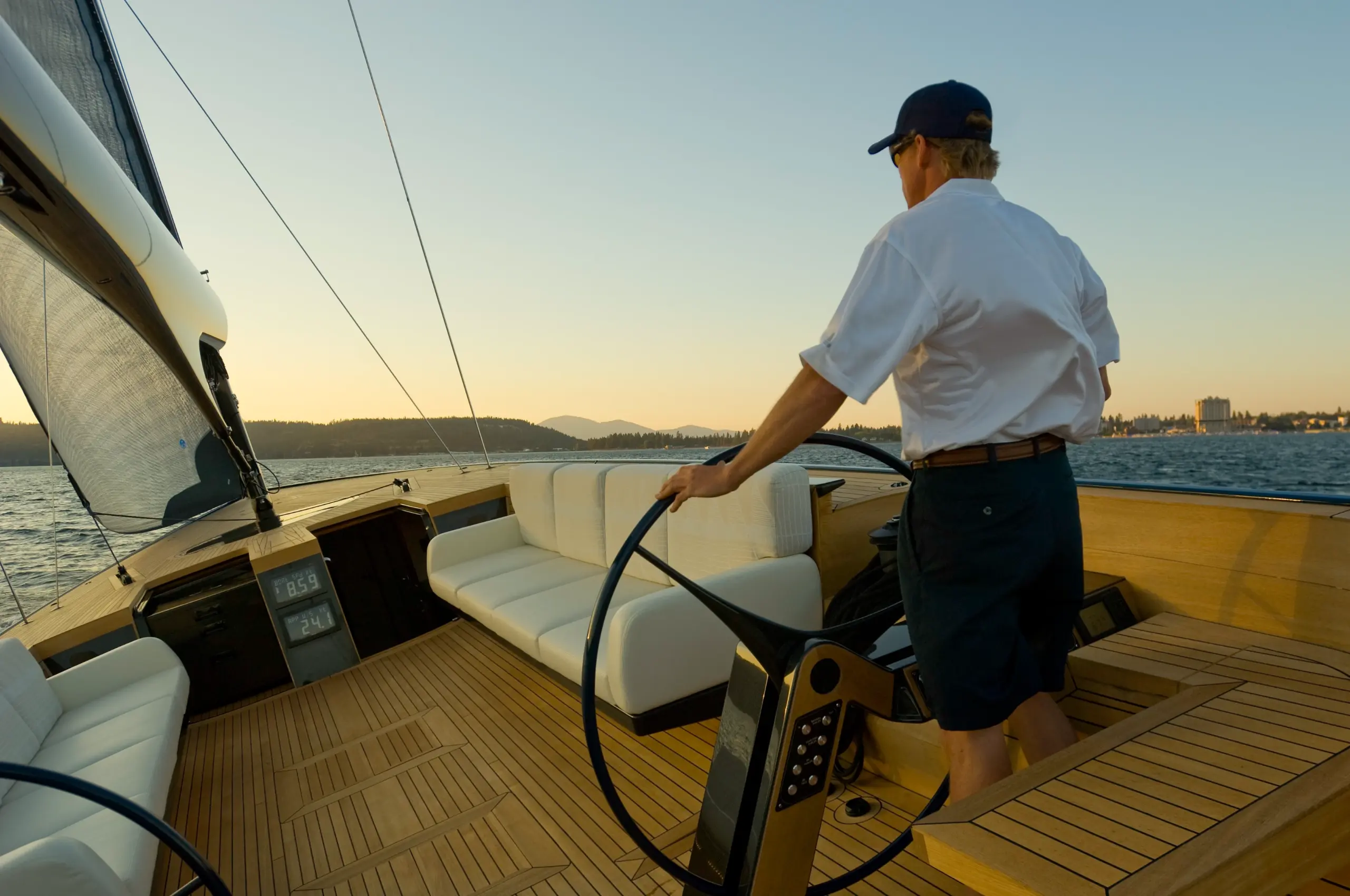
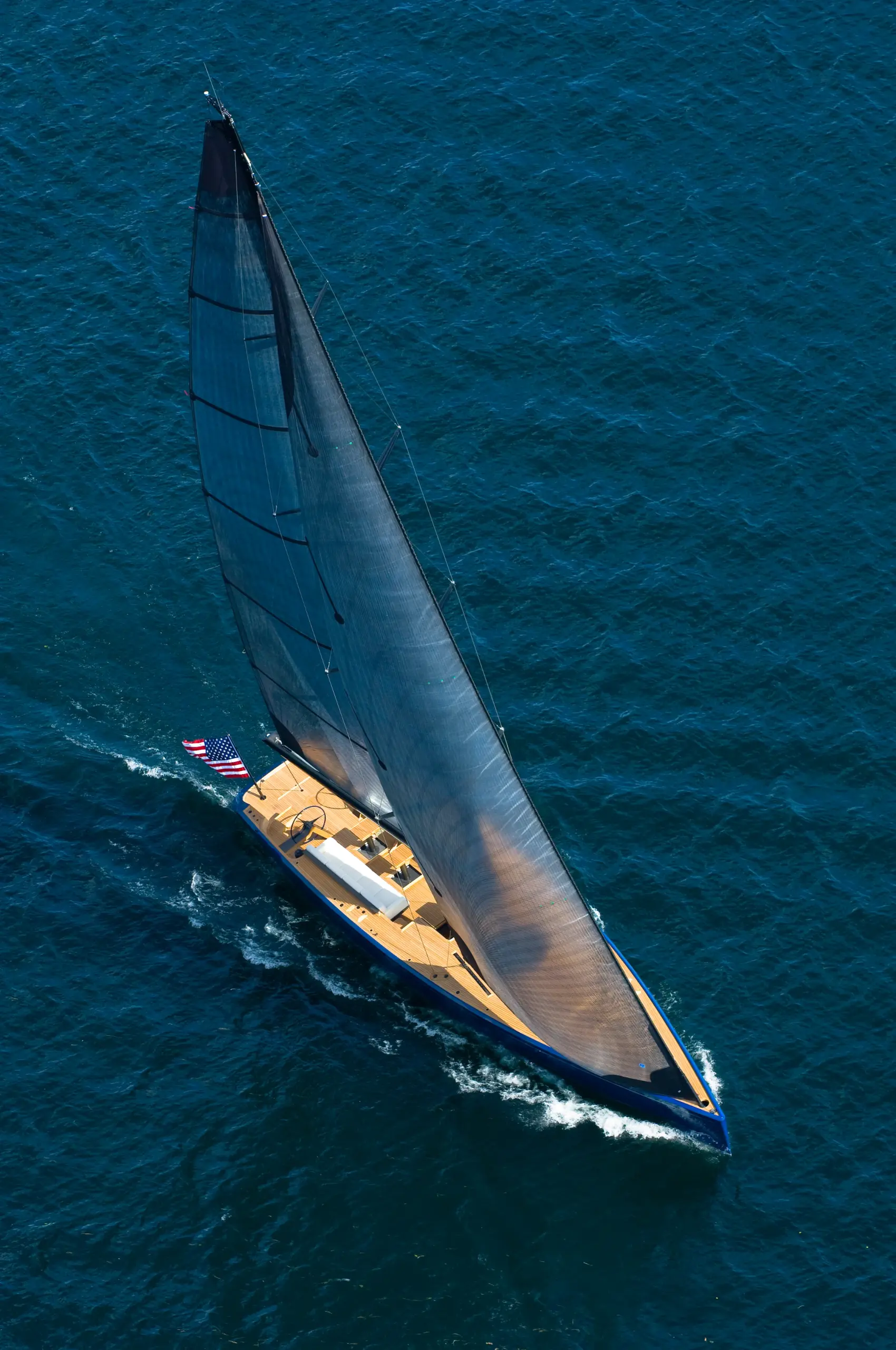
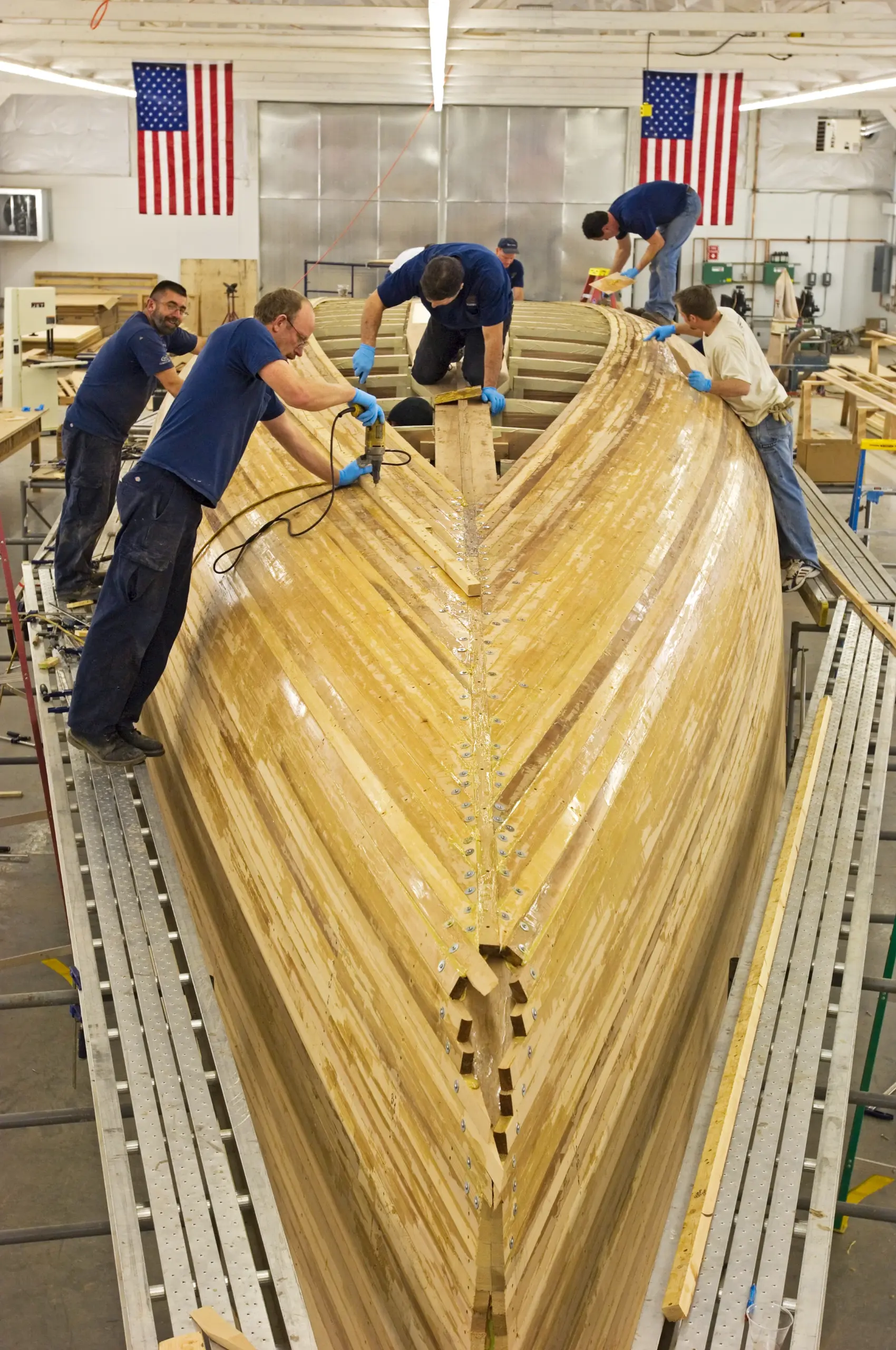
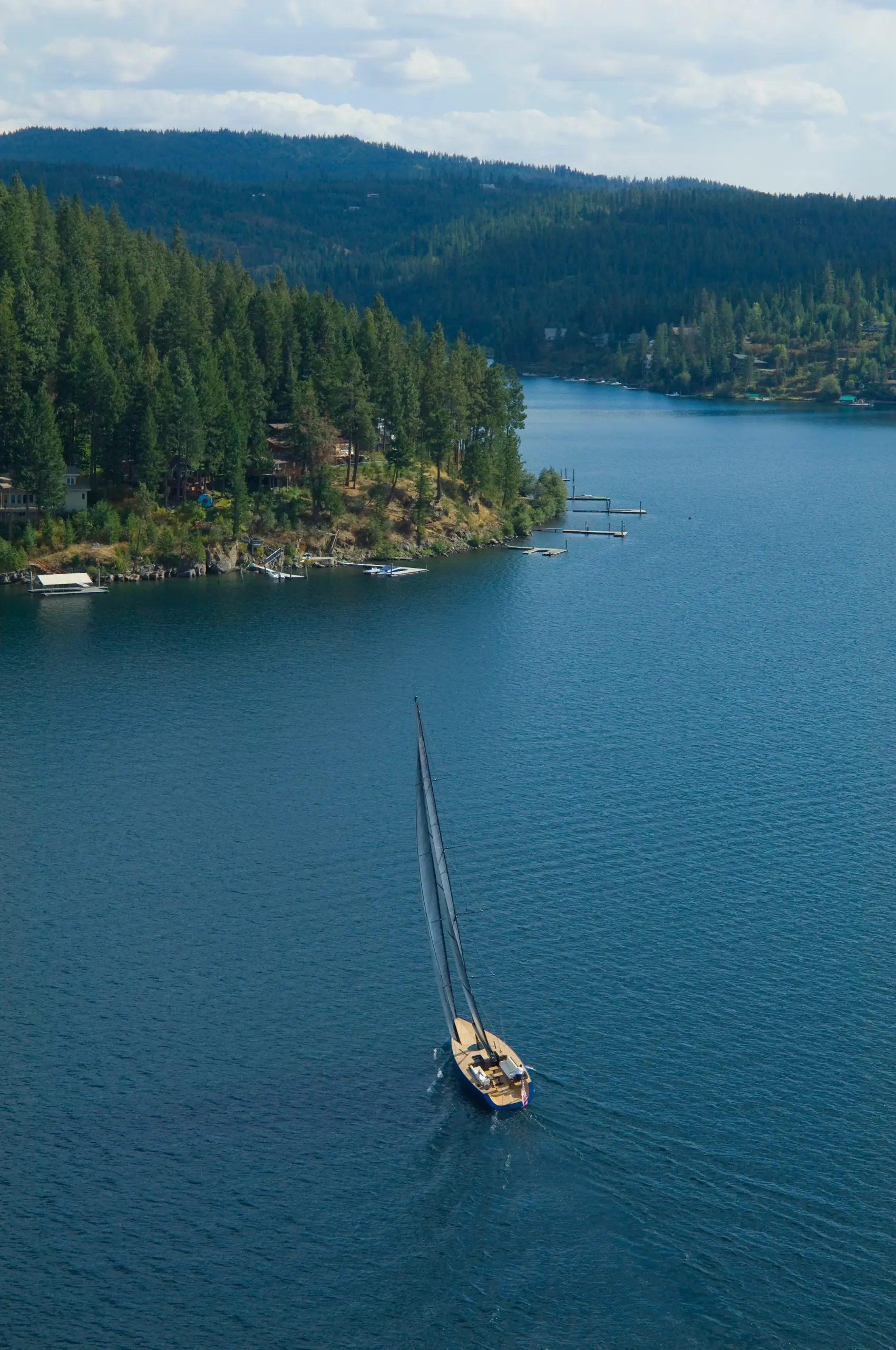
For many summers now, I’ve been captain of a sailing yacht named Sizzler. She’s shaped my life immensely. The first time I stepped aboard she was crawling with specialists from around the world: Kiwi riggers from Southern Spars, Italian engineers from Cariboni, and Giorgio the carbon wizard. She was a one-off build, custom from stem to stern, no owner’s manual, no precedent. I was her first and only skipper.
The systems were like nothing I’d seen before. I remember studying the captive winch system that held her mainsail halyard. “Where’s the override?” I asked. “What happens if I need to get that main down without hydraulics?”
A Kiwi snorted. “You got a sharp noyf, dontcha? Ten million dollars’ worth of yacht and a serrated blade was my only backup plan.
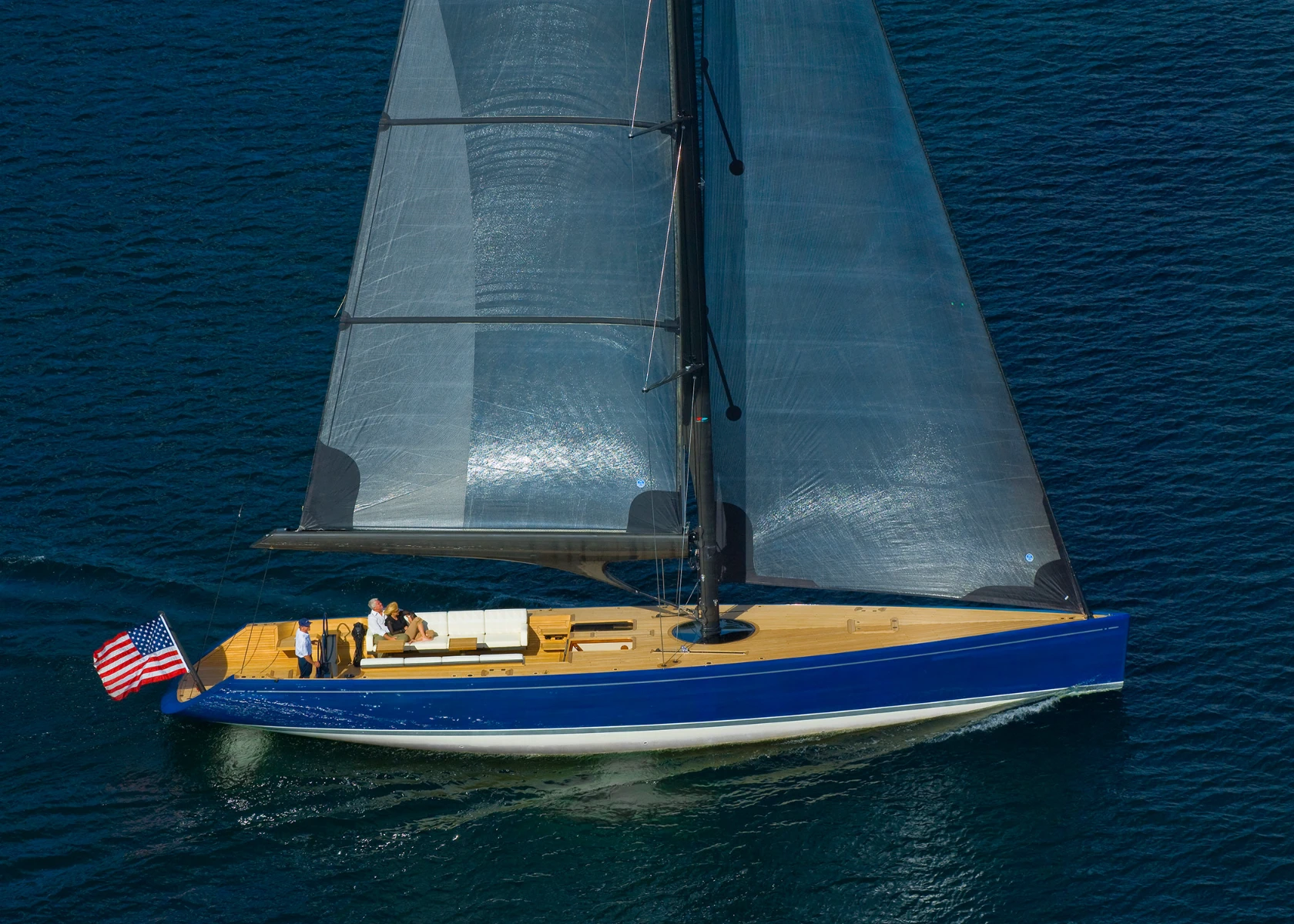
The boat was launched for Duane Hagadone, whose vision had transformed Lake Coeur d’Alene and included establishing the resort and the golf course with that famous floating green on the 14th hole. When he decided to build a sailing yacht for his home lake, he wanted it tailored to its unique winds and navigable depths and sailed by a crew of one. She was designed by Tony Castro, and Hagadone’s own group, Coeur Custom Wood Boats, handled the build in Idaho.
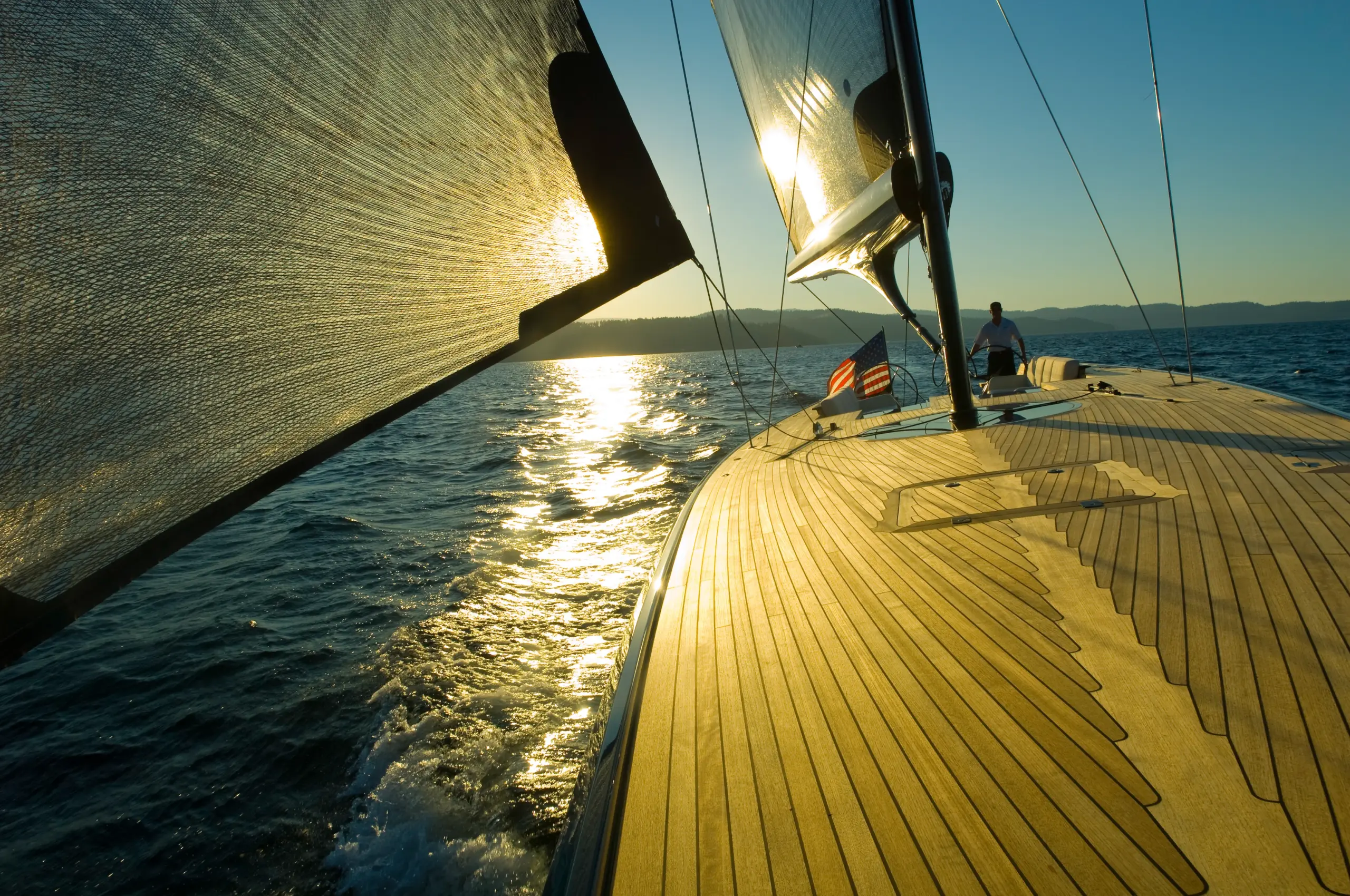
The mahogany topsides gleam with thirty coats of Alexseal epoxy with a custom tint of blue—the owner’s favorite color. When they handed me the keys that July day in 2007, someone said, “Just don’t hit anything, Captain.” One mistake and it would never be the same.
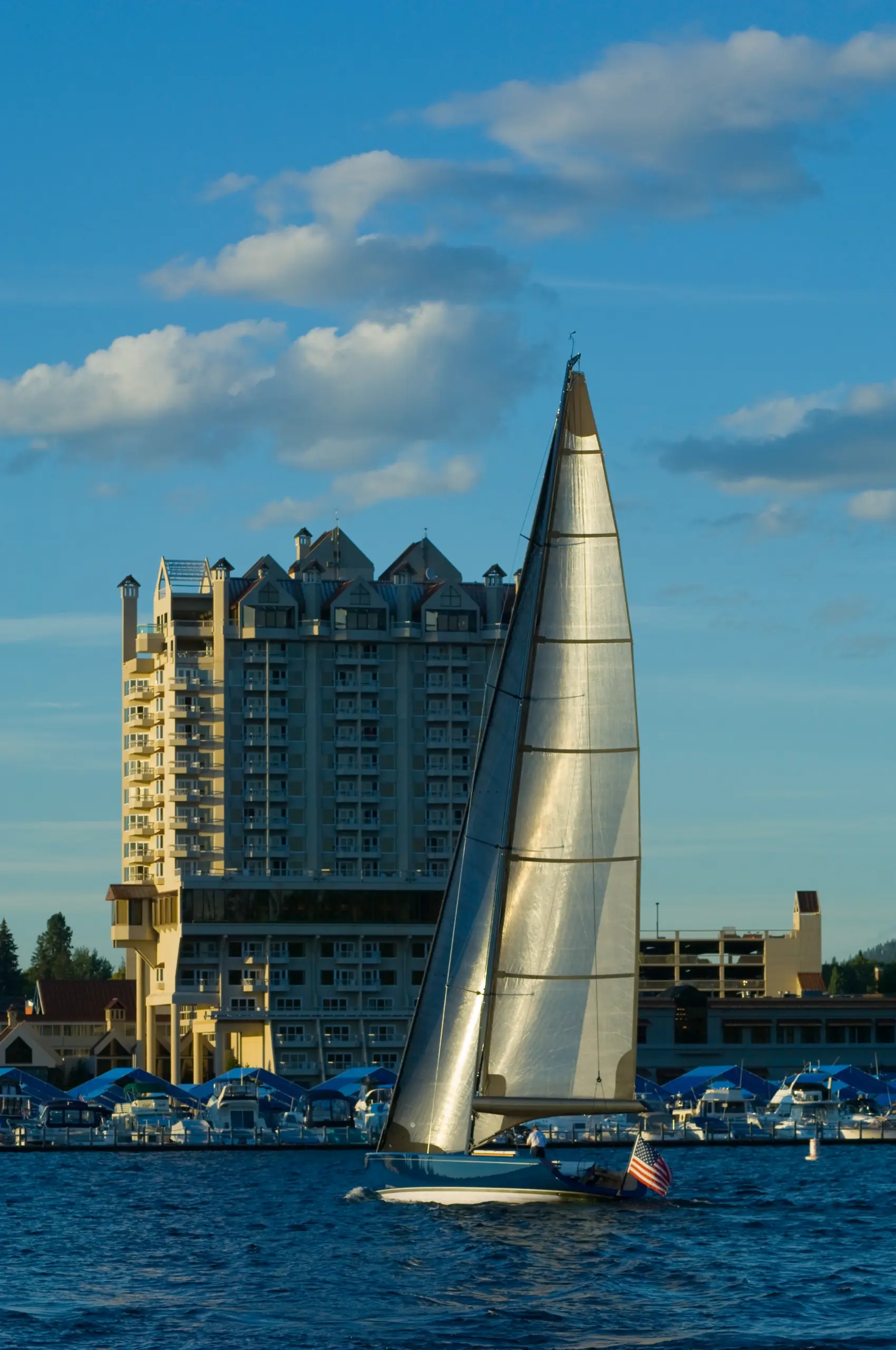
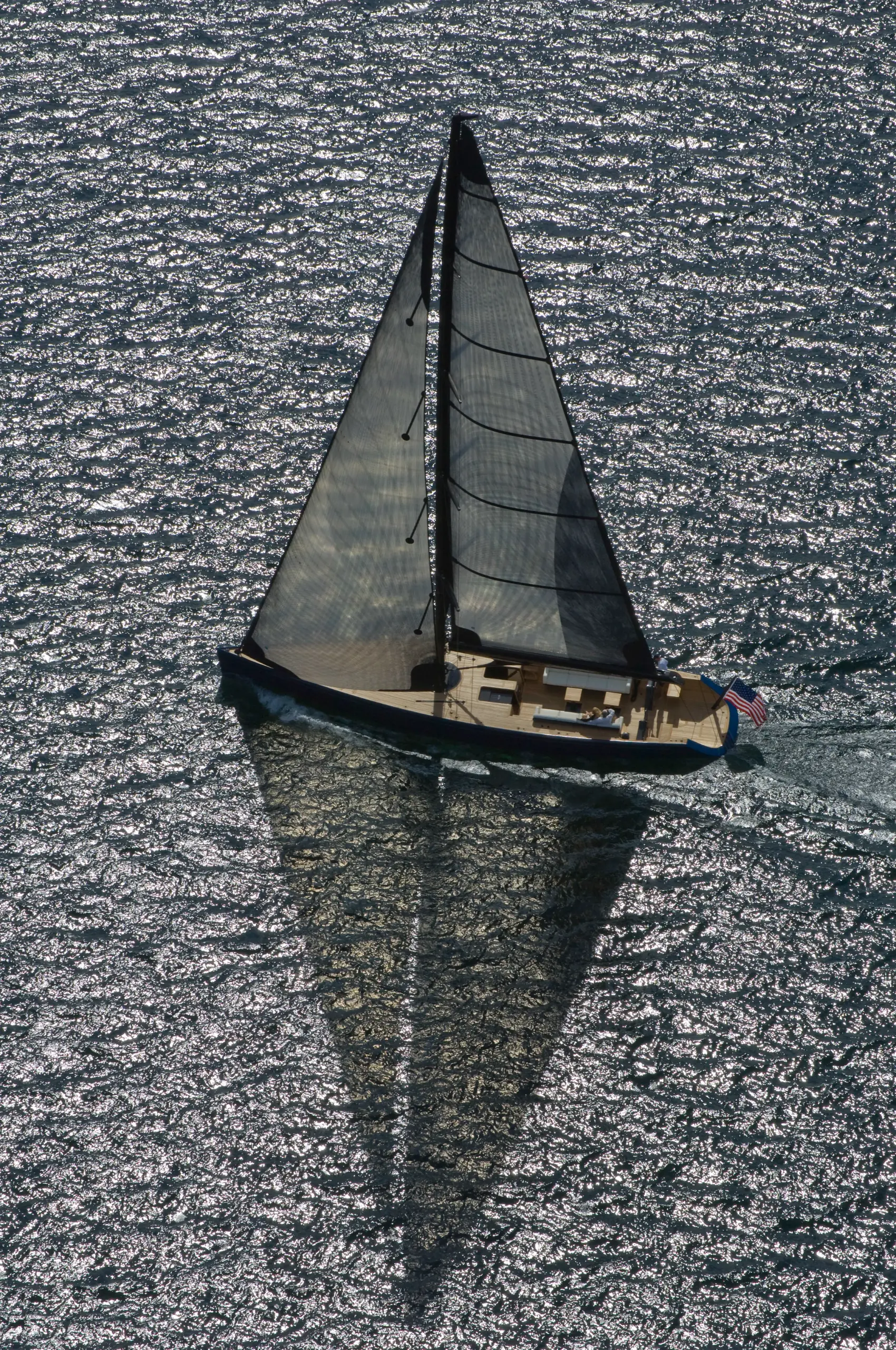
Sixty feet of waterline, 21 tons of precision, floating over the lake as if in a dream. Too big for an inland lake? Not on the choppy days, when she cuts right through the chaos. Not on the drifter days, when she still moves with that 100’ tall rig.
In that beautiful boat, we hunt the Wolf Lodge Express—the land breeze this boat was built for, a night wind that funnels down the lake like clockwork. Cocktail tables rise at the touch of a control, guests relax on sumptuous couches, and I run the boat from twin helms by an array of push buttons. Sailing through the dark in that mighty boat, on that steady and friendly breeze, is a rare and wonderful thing.
After nearly 20 seasons, I know her quirks well, and she knows mine. The hydraulics make sailing effortless—until they don’t. The same system that hoists the sails also drives the engine. If it fails, we’re adrift and perhaps aground. Hydraulics have immense force and can break things in a hurry. I have learned to stay attuned: to hear the strain, feel the pulse of the thing, to double-check everything before I commit.
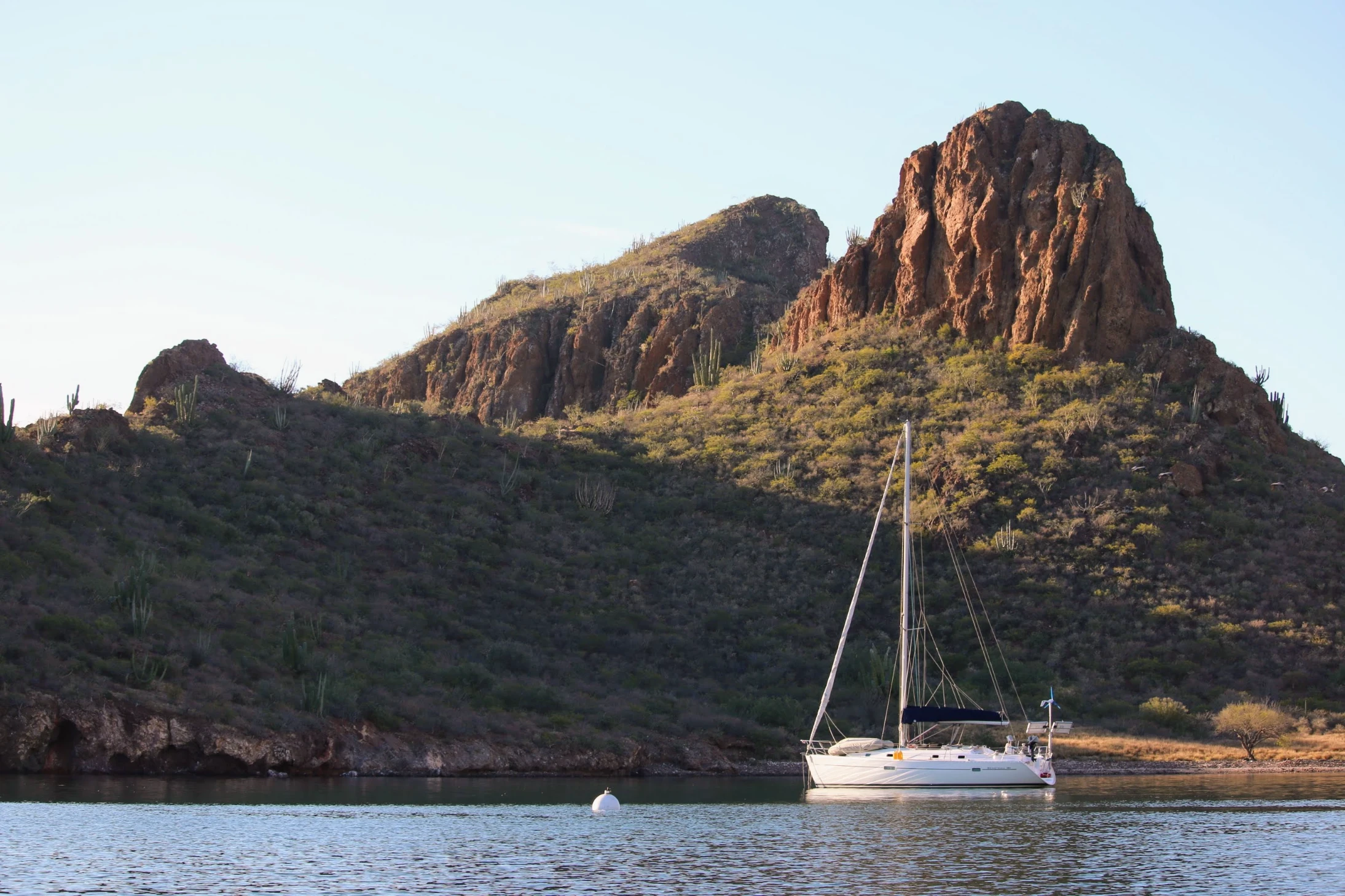
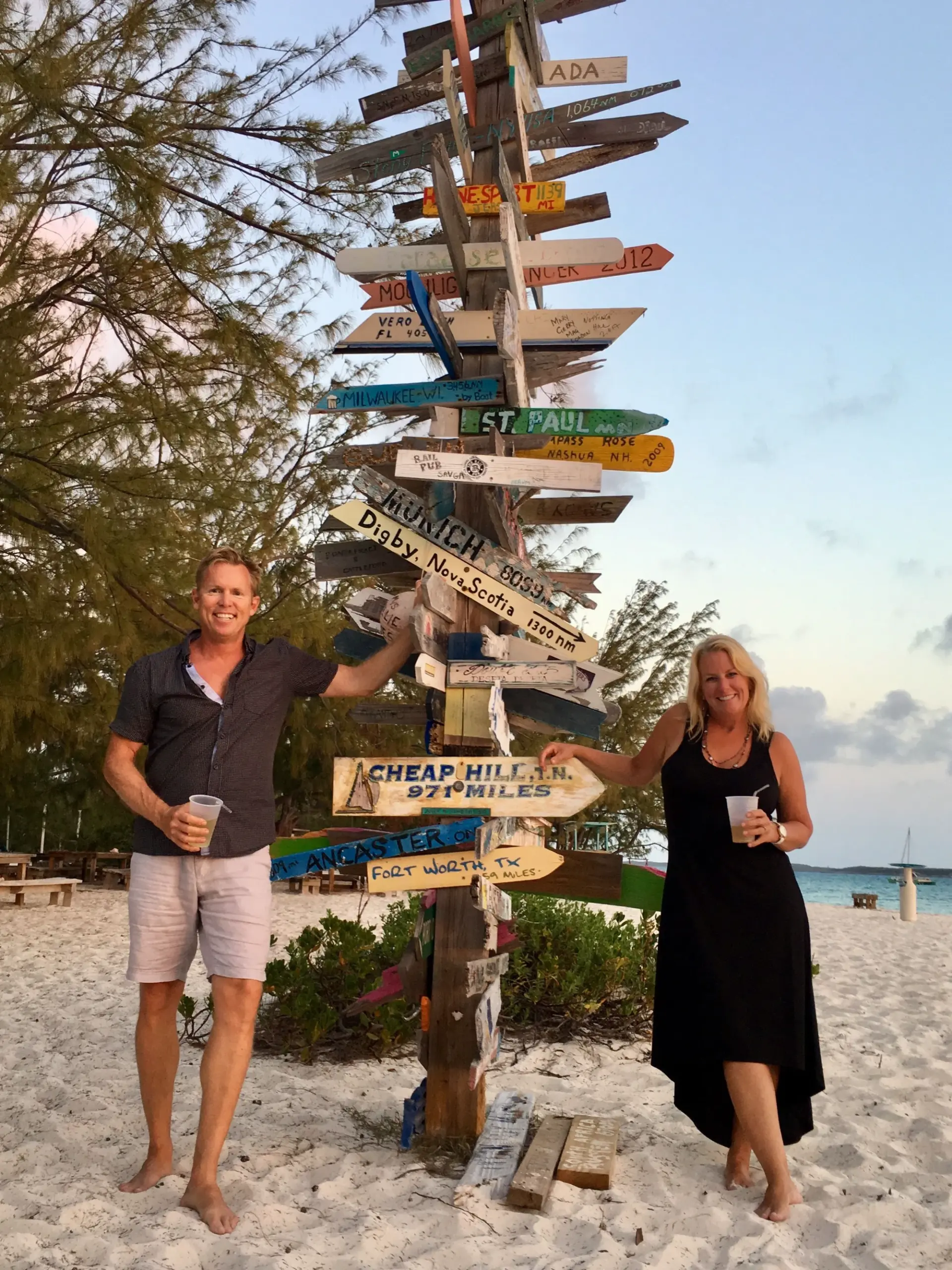
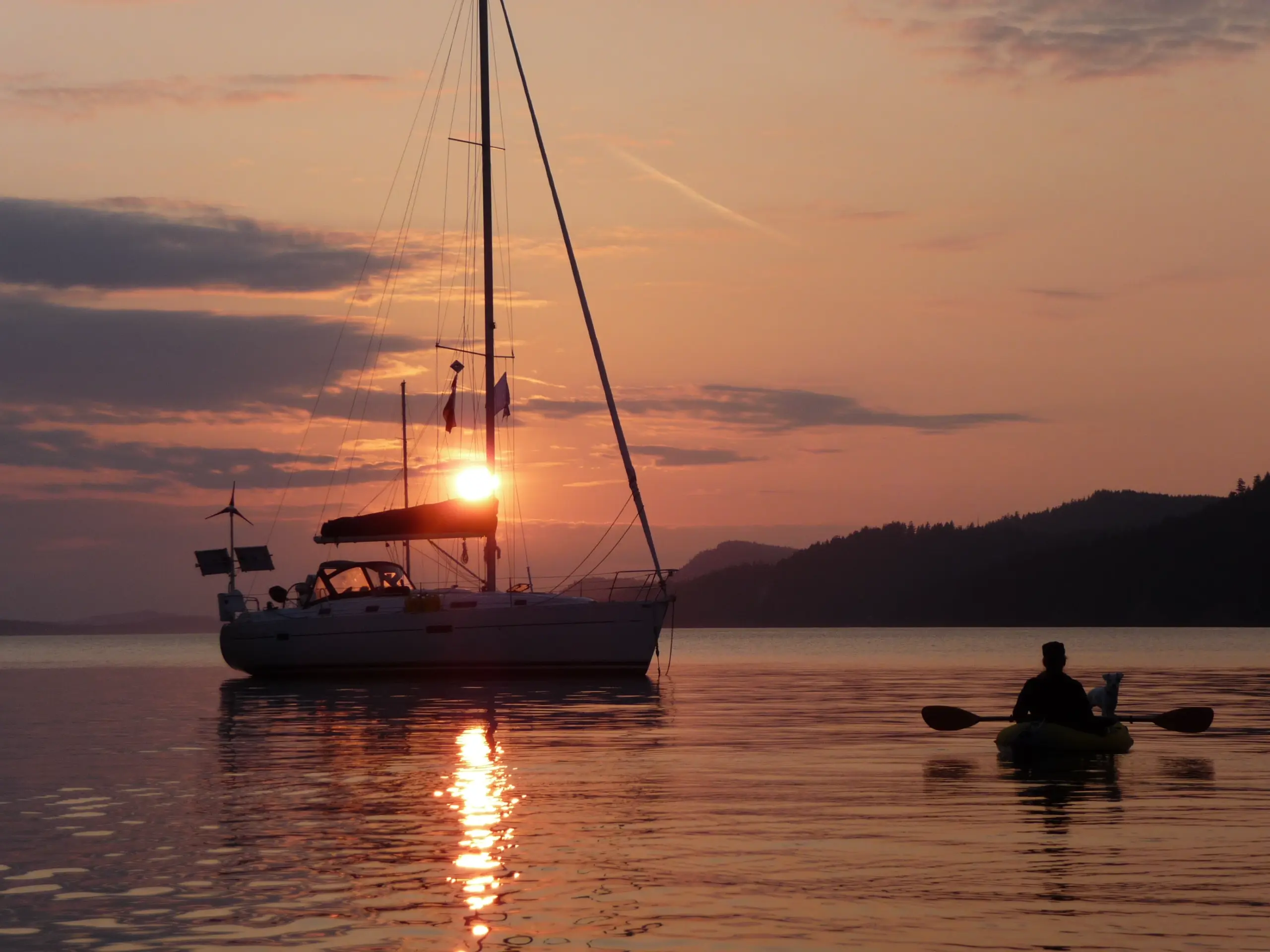
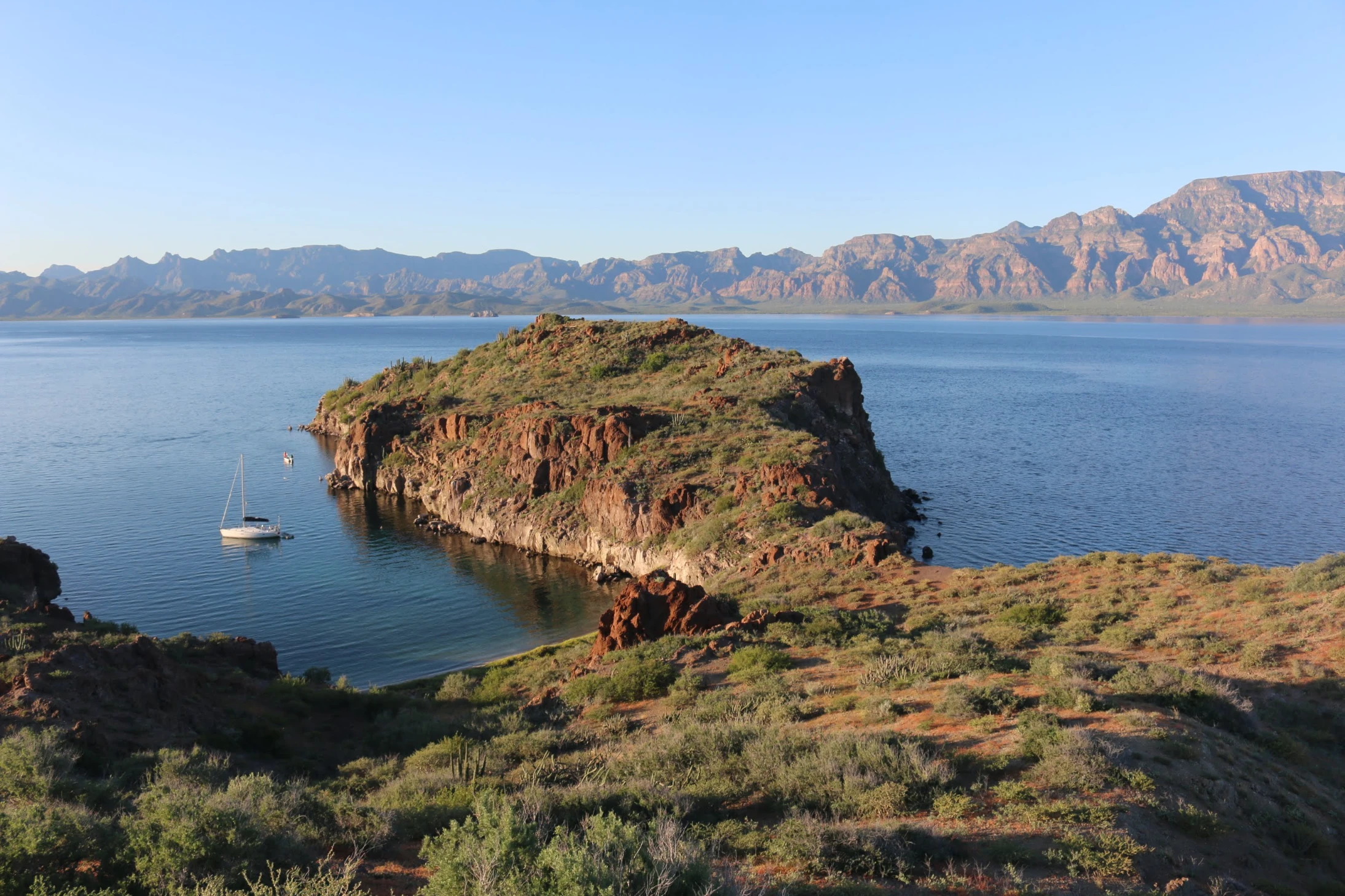
Plenty of captains burn out at a full-time command; I’m grateful to have a different sort of schedule. I work six months on call on the lake and spend the off-season on my own time. While the osprey flies south, I follow, cruising my own sailboat Liberte, a Beneteau 361, through British Columbia and down through Mexico and beyond—through the Panama Canal to Belize, Cuba, and the Bahamas. For years I’ve laid my own boat up somewhere tropical, flown home, run Sizzler through another superb Idaho summer, and started again. It’s a rhythm I’ve come to treasure.
There’s also something pretty handy about a freshwater boat. No salt to wash, little corrosion. And something grounding, too, about sleeping in your own bed and belonging to your own community. With the Oyster, I lived on exotic islands for the owners; it was intoxicating, but it wasn’t my life. This one is.
The old salts were right all along; bigger isn’t necessarily better. It’s the lifestyle that counts, and the compatibility with the owner’s dreams. As one skipper told me, “If you run a great boat for a great family—you’ve won the captain lotto.” I’d run a rust bucket for the owners I serve, but I’ve been lucky enough to sail Sizzler instead. It’s a rare job, one people are always curious about, and I never take it for granted.
To do honest work on your own time. To labor outside in the elements. To harness a bit of the freedom Mark Twain felt on the riverboats when he said, “A pilot, in those days, was the only unfettered and entirely independent human being that lived on the earth.”
I know exactly what he means.
Sailing Through the Seasons
Some captains, savvier captains perhaps, look at each boat like a rung on the ladder. For them, the goal is a bigger, more important command. To rise to the top of their game. But I never longed for the biggest boat. I just wanted the best life.
I see now that Sizzler is an instrument through which I can play directly with the world and feel it all amplified back to me. Sunsets and moonrises over the jagged pines. The faint smell of woodsmoke across dark water. Sense the pull of her wheel. The kick of her rudder. Shudder in her rig.
This boat was built to last. The odds are good that her stout epoxied cedar ribs will outlast my own perishable bone. That her hydraulic valves will throb long after my own heart pumps its last.
Until then, I intend to be part of her story. And so, weather depending and all going well, I will continue to live by the seasons. As the osprey flies north again and spring comes to these shores I love, I too will return.
I will smile to see my waiting ship and hear the lake lapping her hull. Point her bow again into that night breeze that beckons—the wind we know so well.
Captain David’s Habits of the Helm
Be a Creature of Habit
Do the same things the same way every time until you find a better way. Routine builds rhythm, trust, and mastery.
Take Good Notes
Write everything down. Keep faithful logs, punch lists, contacts, and maintenance notes—what was done, how it was done, and by whom.
Keep a Weather Eye
The one day you don’t check the weather is the day it spanks you. Figure out what can ruin your day and manage it before it happens.
Fix the Problem
Pay attention to what catches your ear, your eye, or your intuition—and act on it. Don’t leave problems for later or pretend they don’t exist.
Meet, Relate, Repeat
Stay connected. Every conversation on the dock or in the yacht club will build a tribe for when you need a hand—or can offer one.
Keep It Tidy
Cleanliness is non-negotiable on yachts—it’s the foundation of the job. If you’ve got time to lean, you’ve got time to clean.
Do the Debrief
After every incident, trip, season—good or bad—talk it through, celebrate the wins, and then make the next one better.
Ask for Help
When you get stuck, talk it through with someone you trust. Fellow pros are often the best manuals you’ll ever find.
Practice Integrity in All Things
Be a captain of your word. Follow through, be honest about what really happened, and do the right thing when no one’s watching.
Serve with Love, Not Familiarity
Care deeply for your owners and guests, but don’t confuse their world with yours. Serve with genuine joy—but keep a healthy perspective.
Slow is Pro
There’s no reason to hurry on a boat unless it’s on fire or sinking. Slow down, stay calm, and never approach the dock faster than you’re willing to hit it.
Have Fun
Create a culture where smiles and laughter come naturally, and where sprezzatura—that splendid Renaissance phrase for quiet mastery—keeps the boat humming.