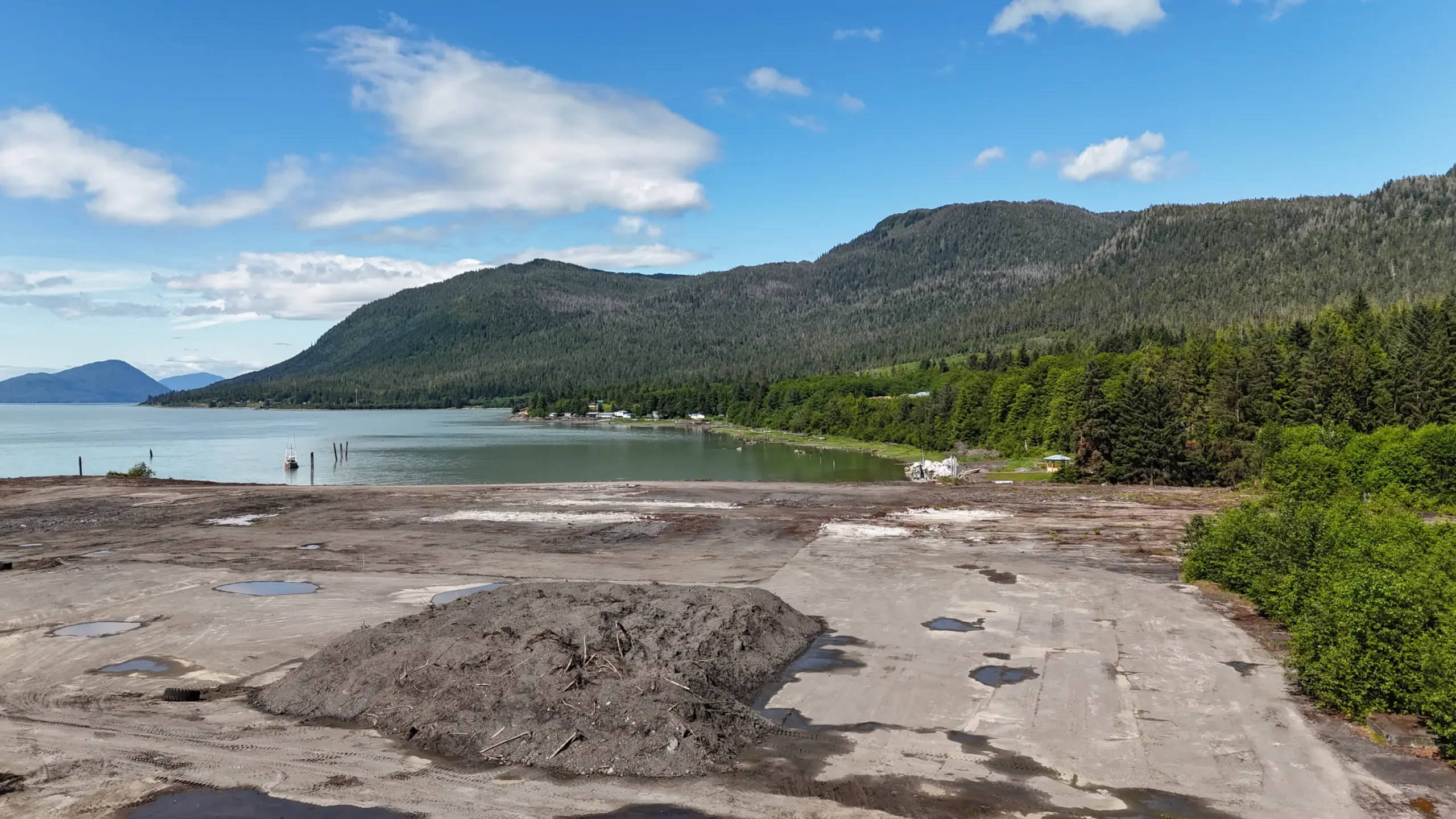
Image: The current, undeveloped Six-Mile Mill property as it looks today in Wrangell, AK. [CREDIT: Borough of Wrangell]
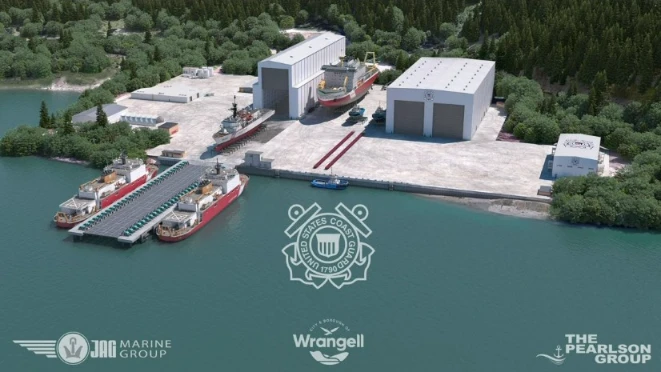
The Borough of Wrangell of Southeast Alaska has entered into a mutual nondisclosure agreement with JAG Marine Group to develop a deepwater marine terminal that may be capable of shipyard-scale operations.
The initial three-year lease deal between Wrangell and JAG Group began on March 1 to begin design reviews for development of the 42-acre coastal property known as the Six-Mile Mill site. Under the agreement, Wrangell and JAG plan to transform 25 acres of the former pulp-mill property into a new shipyard that will handle freight consolidation, heavy industrial activity, and data management facilities.
“This marks a significant milestone in advancing the project from concept to implementation, as early-stage engineering and site planning begin to take shape,” said Wrangell’s Borough Manager Mason Villarma.
The JAG Group, which also operates Alaskan shipyards in Ketchikan and Seward, said it plans to operate a full-capacity shipyard capable of fabrication, construction, and repair of vessels measuring up to 600 feet in length, potentially including US Coast Guard cutters and icebreakers.
The entire Six-Mile Deepwater Port Development Project will cost nearly $38.4 million, with about $30 million expected to come from a federal development grant, Villarma said. Other planned improvements in the project will include shoreline stabilization, utility extensions, industrial roadways, and power infrastructure. If the plan is finalized, the three-year lease could be extended to as many as 40 years, he said.
While design negotiation continue, the borough is also meeting with several potential partners, including Alaska Marine Lines, the Southeast Alaska Power Agency, Trident Seafoods, the Trust Land Office, American Cruise Lines (ACL), and others, which may develop businesses there. Currently, ACL is using the Six-Mile Mill site for the dismantling of their 360’ paddlewheel cruise ship American Empress that may serve as a floating dock in future development plans.
“Southeast Alaska’s primary bottleneck is not demand, but the lack of serviced industrial land,” Villarma said. “This investment unlocks that constraint, enabling significant private-sector deployment, including shipyard development, freight relocation, and emerging energy and data infrastructure.”
The Six-Mile Mill site—formerly owned by Alaska Pulp Corp. and, later, the Silver Bay Logging Co.—is considered one of the last developable deep-water ports available on the Inside Passage in the roughly 700 miles between both Seattle to the southeast and Anchorage to the northwest.