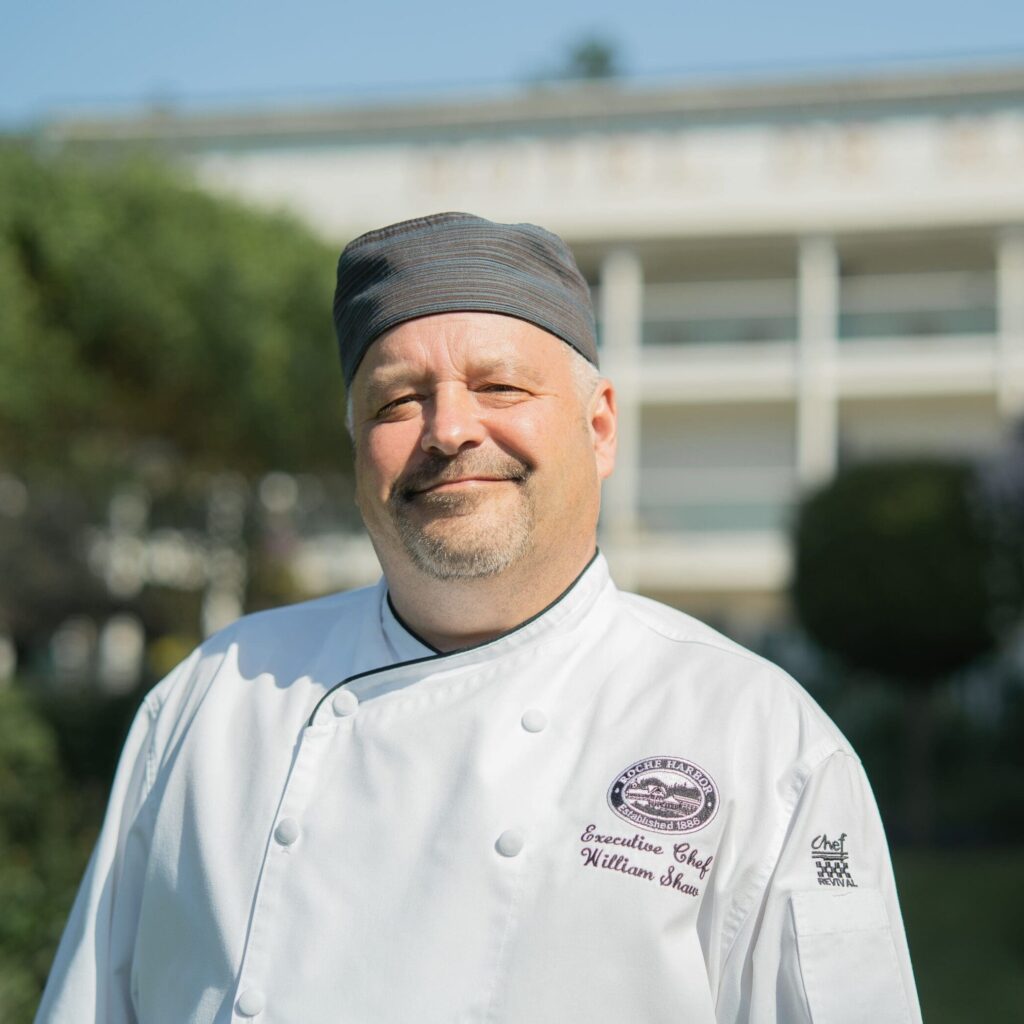
Hello everyone, I have been the executive chef at Roche Harbor Resort since 1993. I am thankful to work and live in one of the most beautiful places in the Pacific Northwest. From the first day I arrived, I was swept away by the lifestyle of our busy marina and all the wonderful people that make it my home. I was born in Seward, Alaska, the grandson of a commercial fisherman. Growing up around fishing boats, grizzled fisherman, and the hardworking women of the sea shaped my early years. I am excited to share my culinary adventures with you each month.
Coho salmon (Oncorhynchus kisutch), also known as silver salmon, has less fat than both the king and sockeye but are still well regarded. The average size of Coho is between six and eight pounds; they have metallic blue backs, silvery sides, and white bellies, giving them a classic look.
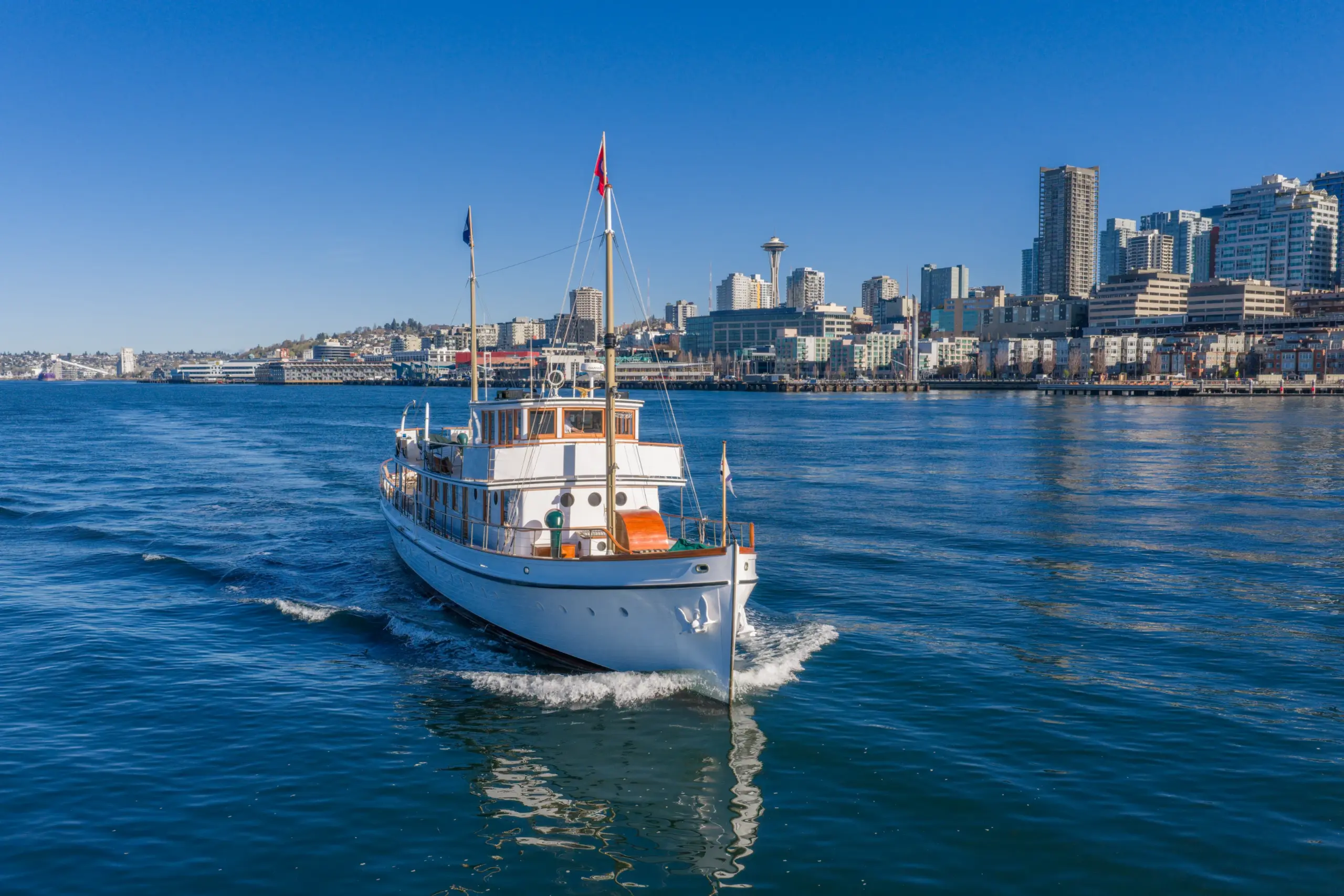
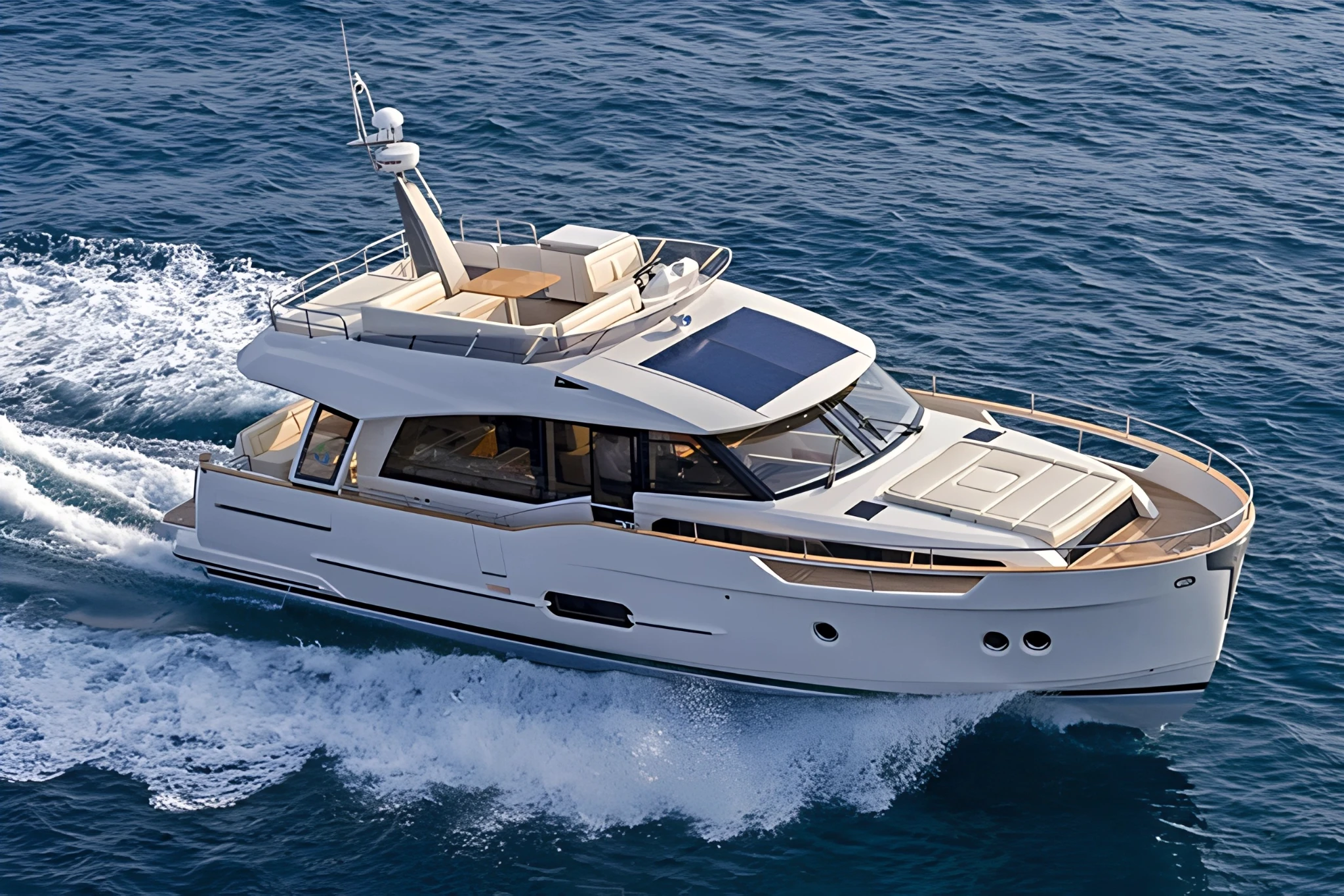
During late September and early October, the waters around San Juan Island are teeming with Coho salmon. My good friends, Nelson and Kathy Goodsell, invited my wife Rose and myself for a day of fishing on board their Riveria Fishtale. Nelson likes to get away from the crowds and hunt for the big Coho. Finding the bait in the rips in deep water at 250 to 300 feet down and trolling fast at three to four knots brings nonstop action.
On this trip, we concentrated our efforts between Kellet Bluff and McCracken Point off the north side of San Juan Island. Here, the Canada-bound Coho fill up with herring on their voyage north. For late September, it was a Silver Horde Herring Aide Coho killer tied with a long 40-inch, 25-pound leader that proved to be the key. The new Silver Horde “slider” Coho killers also “matched the hatch” for success.
Good times and great friends!
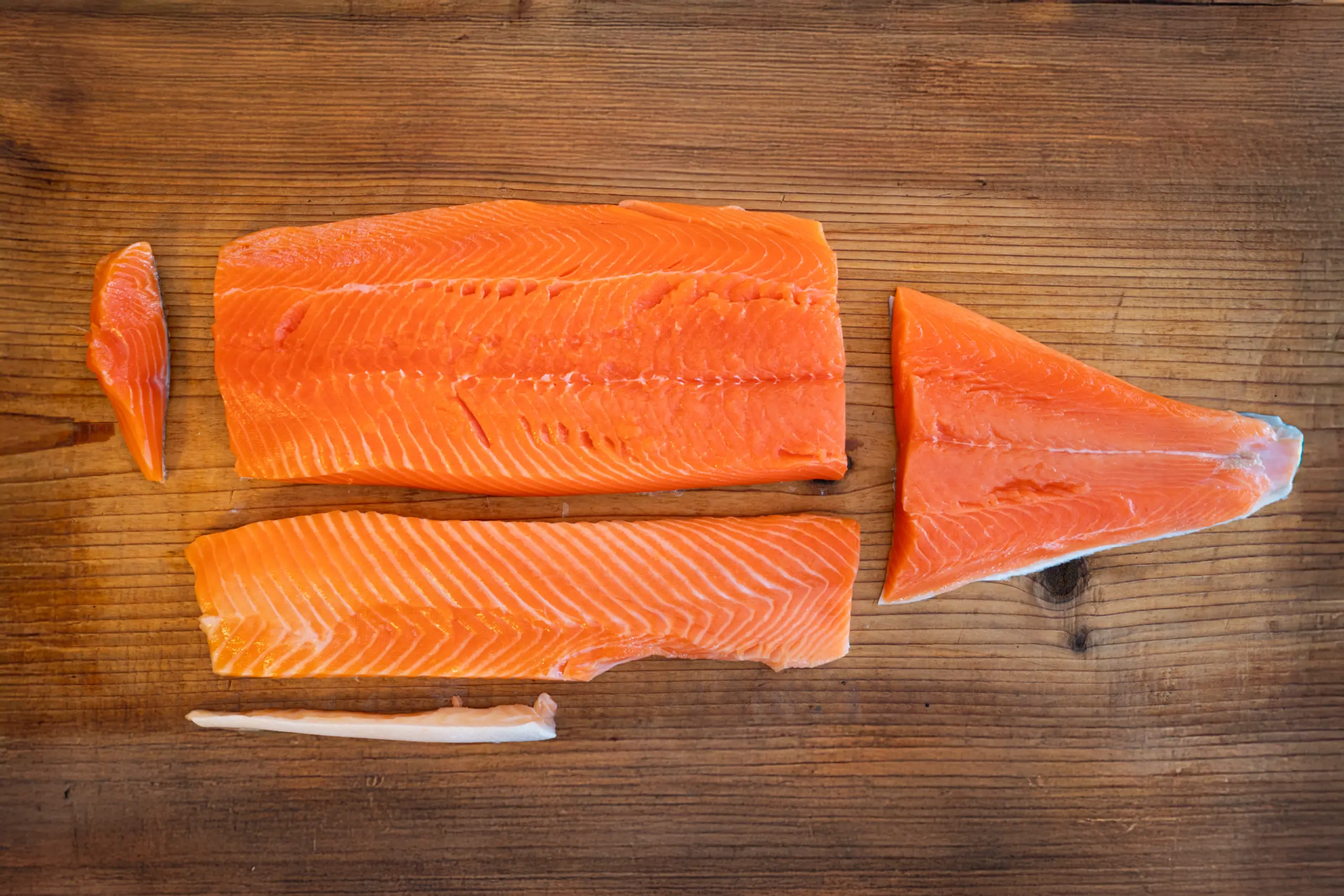
Deconstructing the Salmon
I like to break apart a salmon filet into three sections: the tail, belly, and loin. The tail has less fat and is best used for smoking and salmon cakes. The belly is tender, buttery, and loaded with Omega 3s and is best quickly sauteed and lightly seasoned. The loin can be grilled, pan-seared, or baked. I like to cut it into thick steaks and cook to an internal temp of 130˚F to preserve the natural juiciness of our local salmon.
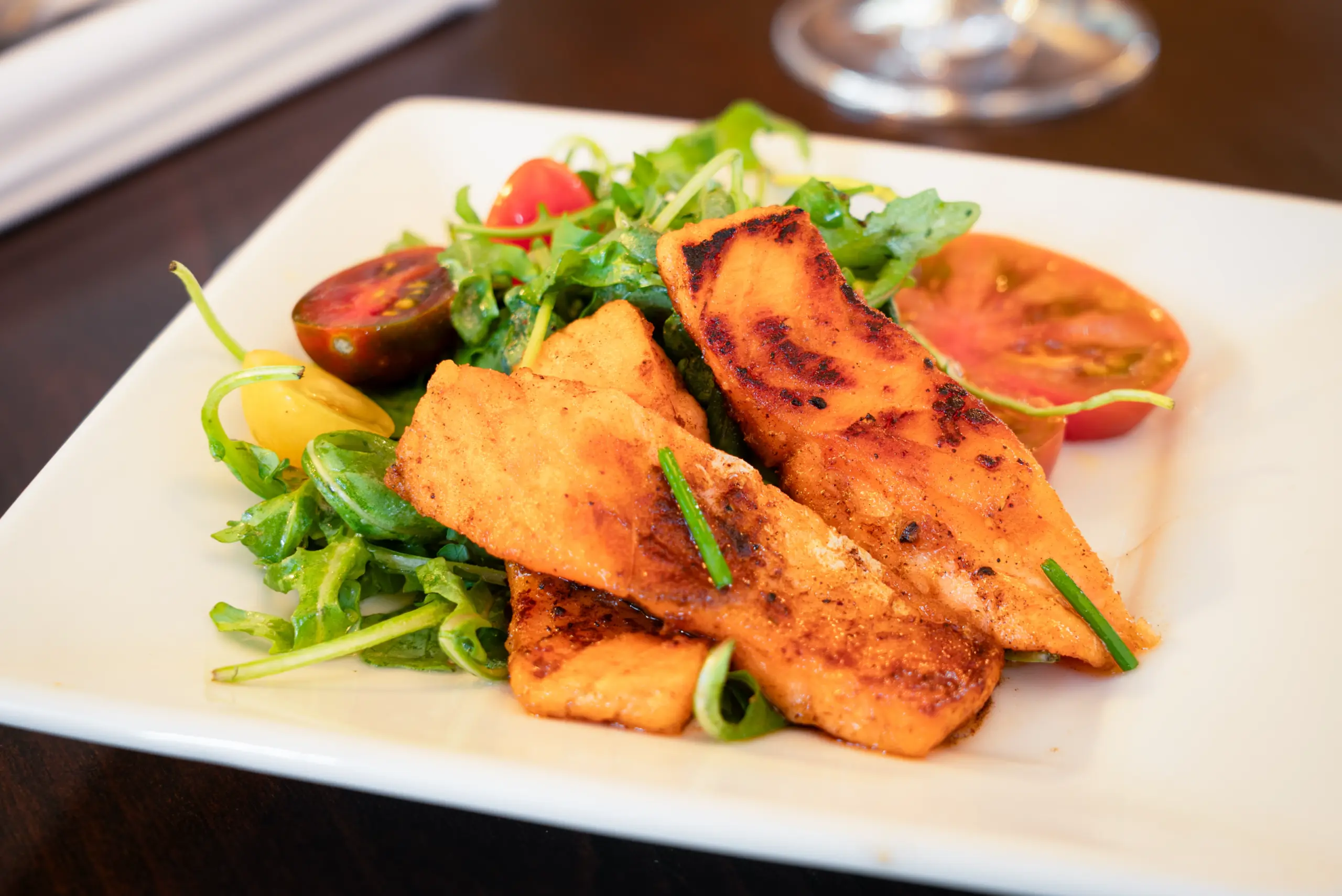
Pan-Seared Salmon Belly with Arugula Salad
Makes 4 starter salads
If you’ve ever seen bears feeding on salmon from the river’s edge, you’ll notice that not only are they extremely coordinated in their fishing skills, but, more importantly, after they seize their catch, they sink their teeth into the belly and then return to fishing. After a long winter hibernation, bears are craving fat, and the largest number of fat calories are in the belly of salmon.
8 oz. salmon belly meat, skin and fins removed
½ teaspoon sea salt
½ teaspoon black pepper
2 oz. extra virgin olive oil
4 oz. arugula or “rocket”—preferring baby or smaller leaves
Lemon Dill Vinaigrette Dressing
¼ cup lemon juice, about 2 lemons
2 teaspoons Dijon mustard
1 to 2 large garlic cloves minced
2 teaspoons fresh dill, finely chopped
Pinch sea salt
pinch black pepper
1/3 cup olive oil
Sliced lemon
In a medium size bowl, combine lemon juice, Dijon, garlic, dill, salt and pepper for the lemon dill vinaigrette dressing. Continue whisking the ingredients and slowly drizzle the olive oil. Continue to whisk until fully emulsified.
Trim the salmon belly by removing the skin, fins, and inner belly lining. Cut the salmon belly into 1 oz. elongated pieces along the line. This will prevent the belly from breaking apart when cooking. Season the salmon pieces with salt and pepper
Using a non-stick skillet over medium high heat, add olive oil. When oil begins to smoke, add the seasoned belly pieces. Note: This is a very quick cooking process. Sear the exterior of the salmon for about 15 seconds on each side, then immediately remove from pan to room temperature plate.
In a small bowl, combine the arugula with 2 – 3 tablespoons of lemon dill vinaigrette. Place dressed greens in center of plate. Garnish with fresh lemon.
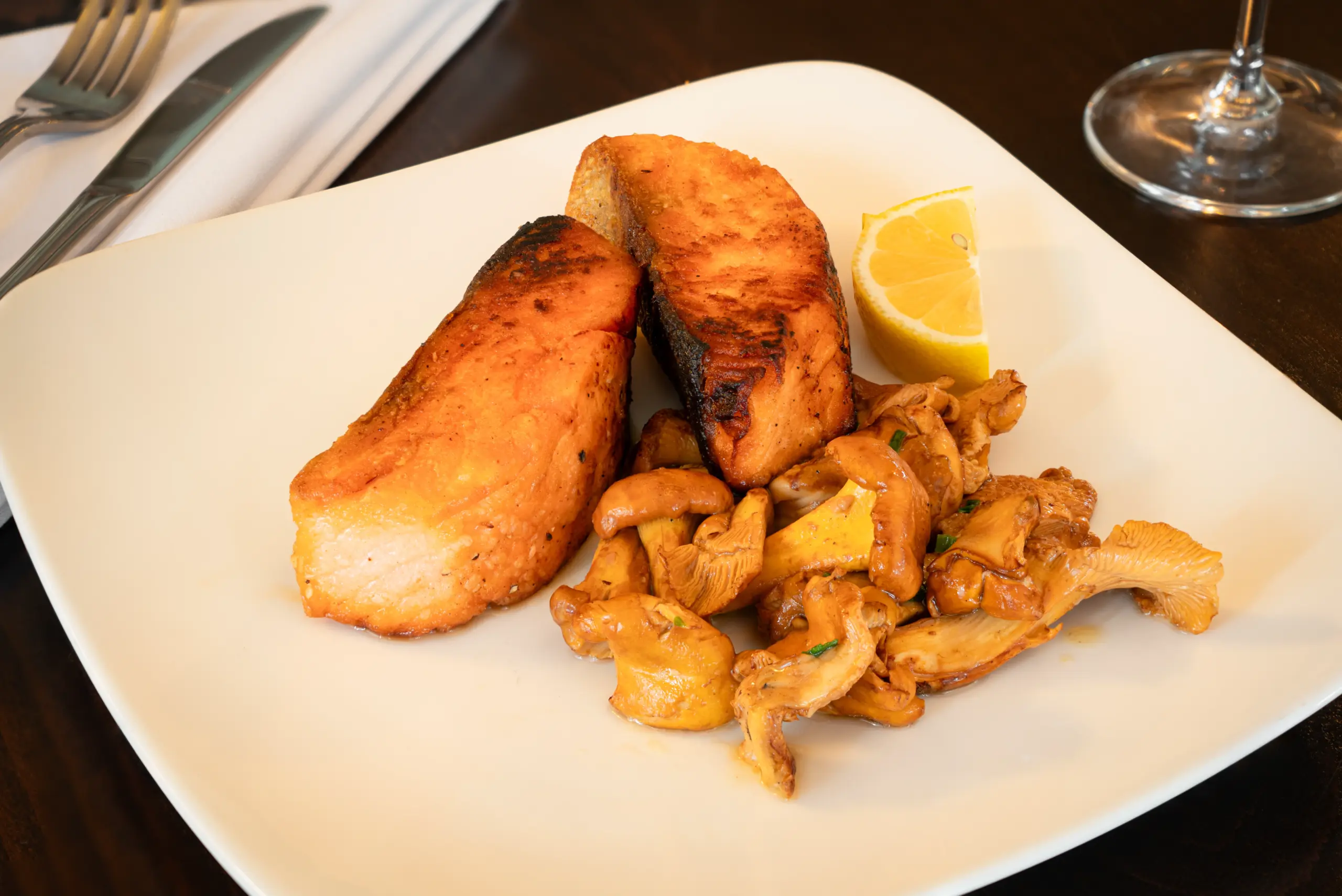
Cooking Perfect Salmon Every time
Makes 4 entrees
I define a perfectly cooked salmon as having a salty and slightly charred exterior with a tender and moist interior that drips of fatty salmon butter when cut in the middle. To achieve this, we need a salmon that is high on omega 3 fatty acids of 20% or more, but the rest is all technique.
2 lbs. salmon loin with skin or not
1 teaspoon sea salt
½ teaspoon pepper
½ cup all purpose flour
½ teaspoon sea salt
½ teaspoon black pepper
½ teaspoon onion powder
½ teaspoon garlic powder or granulated
2 oz. olive oil
Cut the salmon into ¾- to 1-inch-thick steaks or filets. Cutting the salmon to the same thickness is extremely important for consistent cooking results. Season the salmon steaks with salt and pepper. In a medium bowl, combine flour, salt, pepper, onion, and garlic. Dredge the seasoned salmon steaks in seasoned flour then place on a dry sheet pan.
Using a non-stick skillet over medium high heat, add olive oil. When oil begins to smoke, add floured salmon steaks skin side down to the hot skillet. Note: This is a very quick cooking process. Sear the exterior of the salmon for 1-2 minutes or until the skin is browned and crisp. Turn the salmon over and continue cooking. After about 2 minutes insert an internal probe thermometer into the center of one of the steaks. When the internal temperature of the salmon is 130˚ F, immediately remove from the pan and place on a warm serving platter.
Squeeze fresh lemon over salmon and serve with confidence.
Wine Pairing for Salmon
While walking through the dining room, I always notice the wines that guests are enjoying with their entrees and salmon pairings are always fun to talk about. When selecting a wine with salmon there are many factors that can create an incredible pairing. First is the salmon itself; is the salmon high in omega-3 like Copper River, Yukon River, and Ōra King, or is the saloon for lean like Sockeye, Coho, or most Northwest Chinook salmon?
Another consideration is if you want to compliment the salmon with the wine or contrast the flavors to create a unique duet of taste with each bite and sip. I prefer the latter and would pair a fatty king with a red wine medium with high acidity such as a Pinot Noir, Sangiovese, or Beaujolais. For a white wine, I would choose a Pinot Grigio or Sauvignon Blanc (Sancerre). For a great pairing of a salmon with lower omega-3 oils, I would choose a fuller bodied white wine aged in oak, which creates a buttery flavor with a velvet texture such as Chardonnay or Viognier.
With all that said, pairing a fatty, wild salmon cooked medium rare with a butter sauce with a big voluptuous Walla Walla Cabernet Sauvignon would be my first choice. The sensation of the juicy buttery salmon filling the senses with comfort and satisfaction then abruptly washed away with ripe black fruit, spice, and plum with a velvety finish of cedar—now that is the Pacific Northwest at its very best!