Anacortes, Washington-based America’s Cup and hydrofoil design genius Paul Bieker unveils his latest innovation, Fast Foil Ferry Demonstrator, set to begin construction next year
Of the four classical elements, my favorites are air and water. Air and water and the dynamics between them have been central to shaping our planet (and us). I have spent my life designing things that operate on the interface between them.
Basic Principles and Hydrofoil America’s Cup Beginnings
The interface between air and water is dynamic and changeable. Both elements are fluid and obey the laws of fluid dynamics, but in other ways they are dramatically different: Air is compressible and one-thousandth the density of water whereas water as a fluid is incompressible and exists around us as a liquid, a gas, and a solid. The interface between these two elements is an interesting place to live (and work)!
I started my career designing sailboats. When under sail, a sailboat is a subtle machine with the part we see “flying” in the air and the part we don’t see “flying” in water. It derives its power from the relative speed between the two elements. As subtle and complex as a sailboat seems, looking back it seems a little like starting on training wheels. A sailboat relies on Archimedes law (flotation) to control its height relative to the air/water interface. When hydrofoiling, a boat dispenses with the reliance on Archimedes law and instead relies on the fluid dynamic forces below the water to balance the aerodynamic forces above the water as well as the gravitational forces on the yacht. The result is that the drag associated with the water flow over the hull disappears and the efficiency of the boat is greatly increased. In a sailboat with a fixed amount of thrust, the speed of the boat can increase by a factor of three or more and in a powerboat that is operating at a fixed speed, the efficiency of the boat can increase by a factor of three or more. In other words, a hydrofoil boat can use less than a third of the energy to travel over a given distance at high speeds compared to more conventional craft.
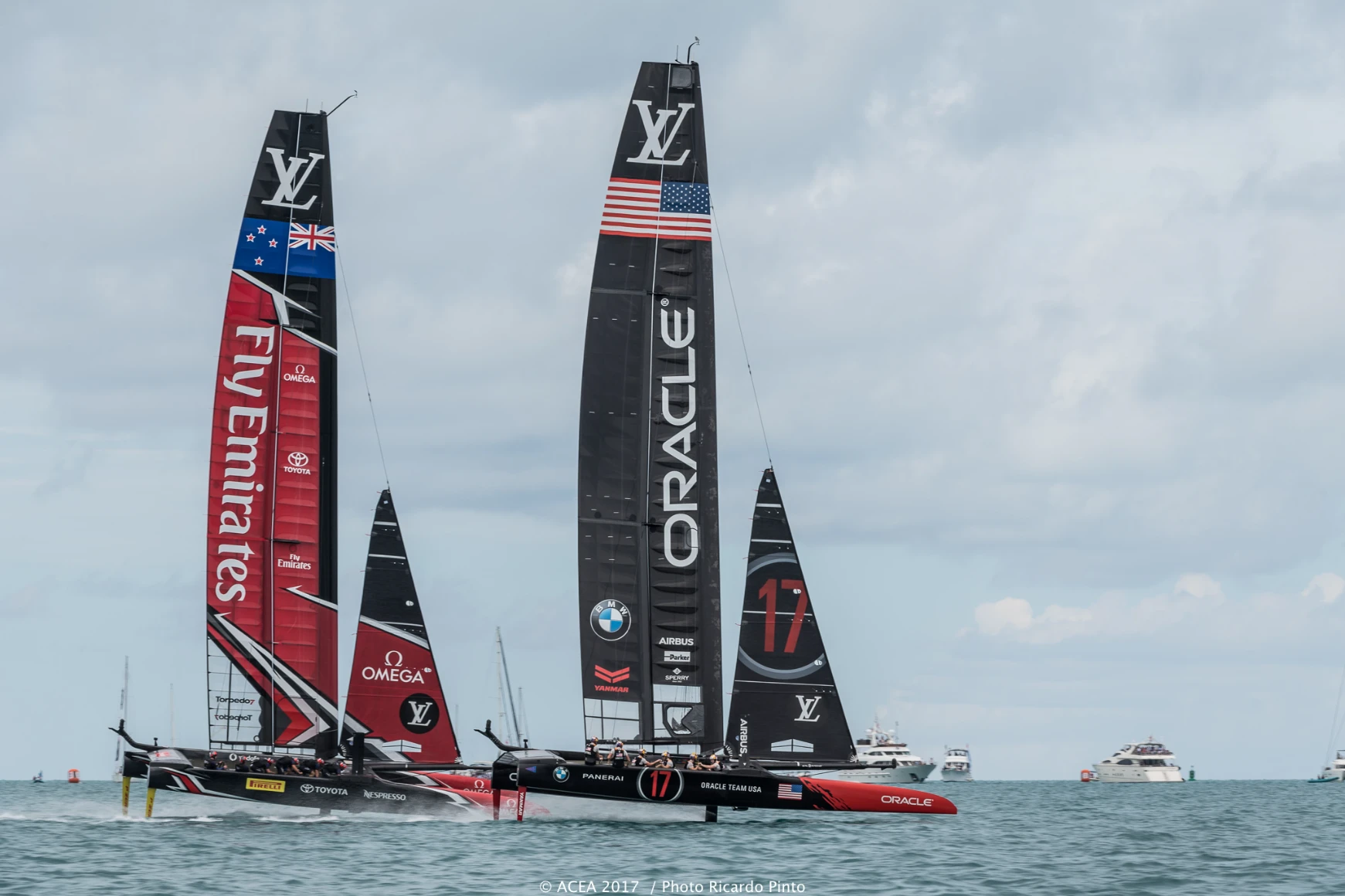
In 2013, I was thrust into the world of sailing hydrofoils. I had dabbled with small hydrofoiling boats before but this was nothing in comparison to participating in the team effort to figure out how to hydrofoil a 72’ America’s Cup yacht around a racecourse on San Francisco Bay in less than a year! That America’s Cup was intended to be sailed in non-flying catamarans; however, it became apparent not much more than a year before the Cup match that one of the challengers (Team New Zealand) had figured out how to fly their boat on hydrofoils. A non-foiling boat has basically no chance of winning against a foiling boat, so if it was to have any chance of winning,the Defender (Oracle Racing) had to figure out how to hydrofoil as well. Our responsibility in that effort was to design and engineer the hydrofoil structures for Oracle’s racing yacht. We learned a lot in a short amount of time.
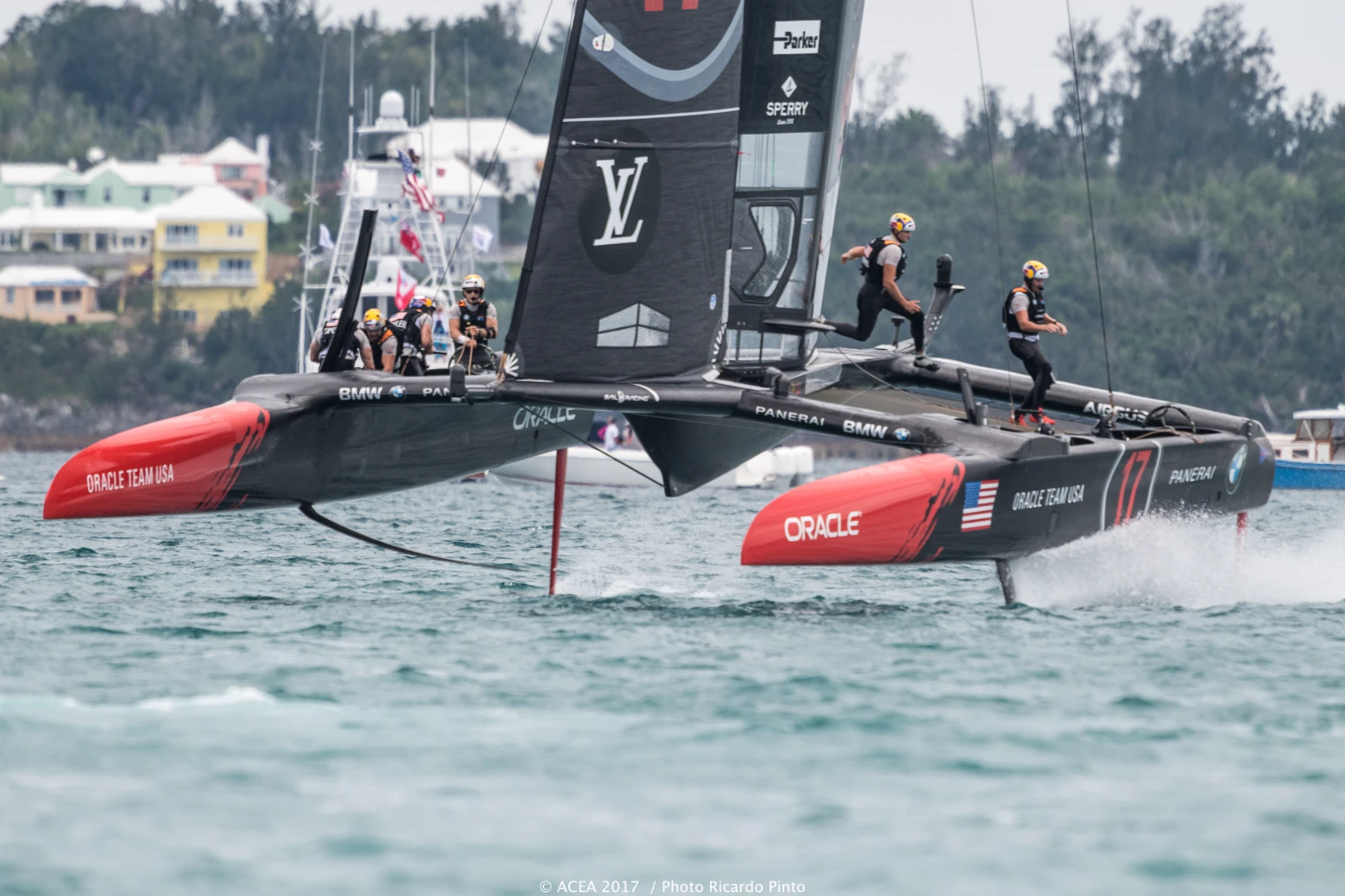
After our team managed to win that America’s Cup in an epic battle, we were soon immersed in the project of developing a 50’ America’s Cup yacht for the next Cup race in 2014. These yachts were smaller, faster, and more refined versions of the boats we sailed in San Francisco. Although much progress was made on refining the hydrofoils for these boats, the biggest improvements were made in the mechanical and electronic “fly-by-wire” systems to control the yacht functions (dubbed “mecha-tronics”). By the time the racing started, these boats were refined to the point that we could sail around a complicated racecourse without touching the water in anything over 9 knots of wind. Those boats have been renamed F50s and are now sailed in the SailGP worldwide racing circuit and we work closely with SailGP to continue development of the boats.
Foiling Ferry Vision
We lost that 2014 America’s Cup, and I soon found myself back in our Seattle design office Bieker Boats. The shock of experiencing the traffic and crowding of a big city after two years in a tropical paradise soon had me thinking about how I could use we had learned about hydrofoiling to do something to help improve the quality of life around the Puget Sound. This is when the concept of a hydrofoiling passenger boat first started crossing my mind. Designing a hydrofoiling powerboat to carry passengers at a narrow range of cruising speeds seemed significantly easier than designing a hydrofoiling sailboat that needs to sail and maneuver competitively in everything from 8 to 20 knots of wind!
The Salish Sea in general, and the Puget Sound in particular, are well suited to the development of hydrofoiling craft. Our waters are perfect for highlighting the benefits of foiling craft as well as being almost perfect for presenting significant challenges to hydrofoiling. On the positive side, the Puget Sound is a lightly used, deep, and semi-protected body of water that separates and connects many large population centers.
On the challenging side, the Puget Sound is surrounded by forests containing some of the biggest trees in the world and is subject to storms and torrential rains, which tend to deliver a significant number of those trees into the Sound. In addition, winter king high tides combined with short dark days make hitting that debris more likely. Adding to that, the Sound is home to endangered resident orca pods and other marine mammals that must be avoided. In short, the Pacific Northwest is a great but challenging place to operate hydrofoil craft, and if we develop craft that work well here, they are likely to have applications in many other parts of the world as well as being a great addition to the local transportation infrastructure.
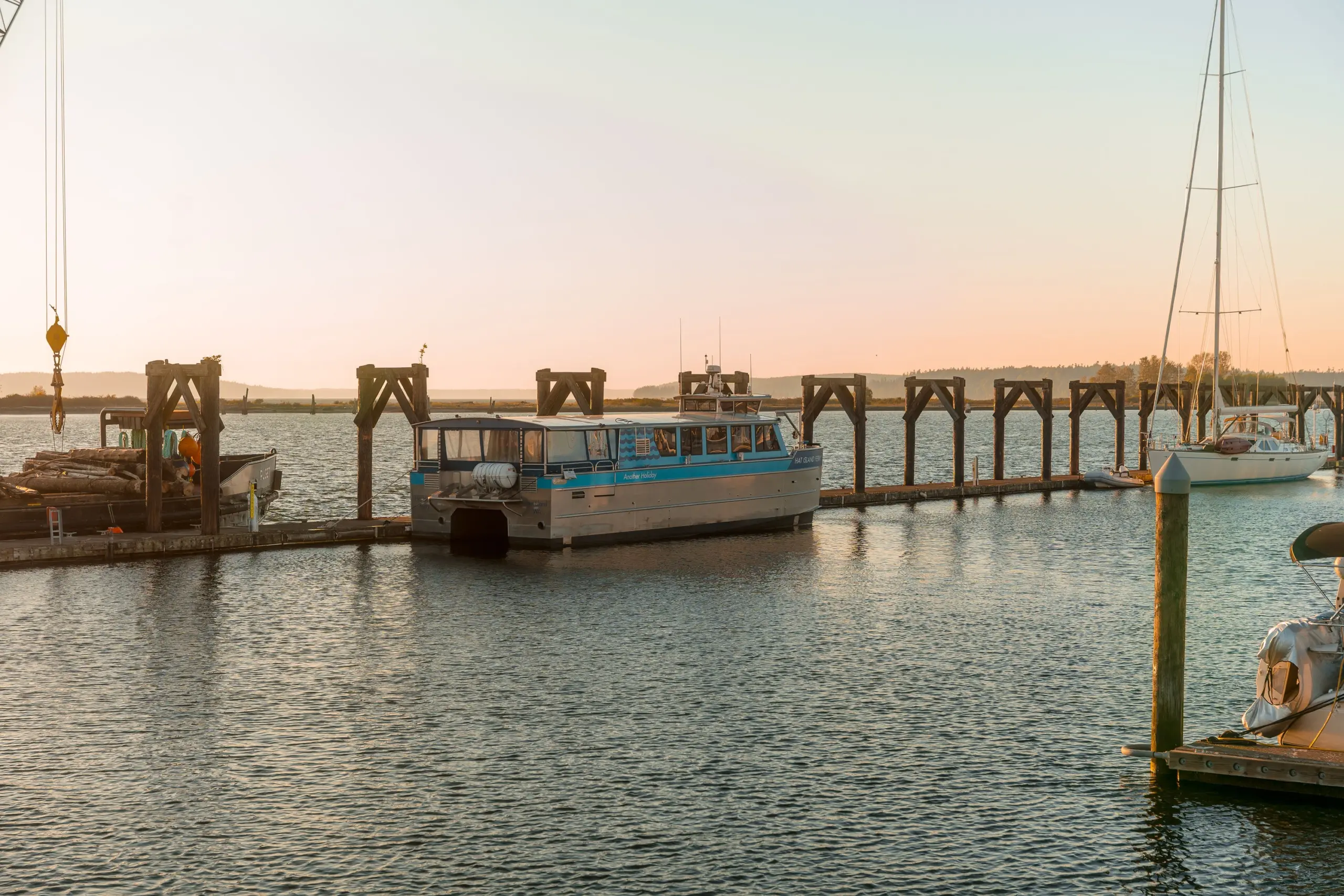
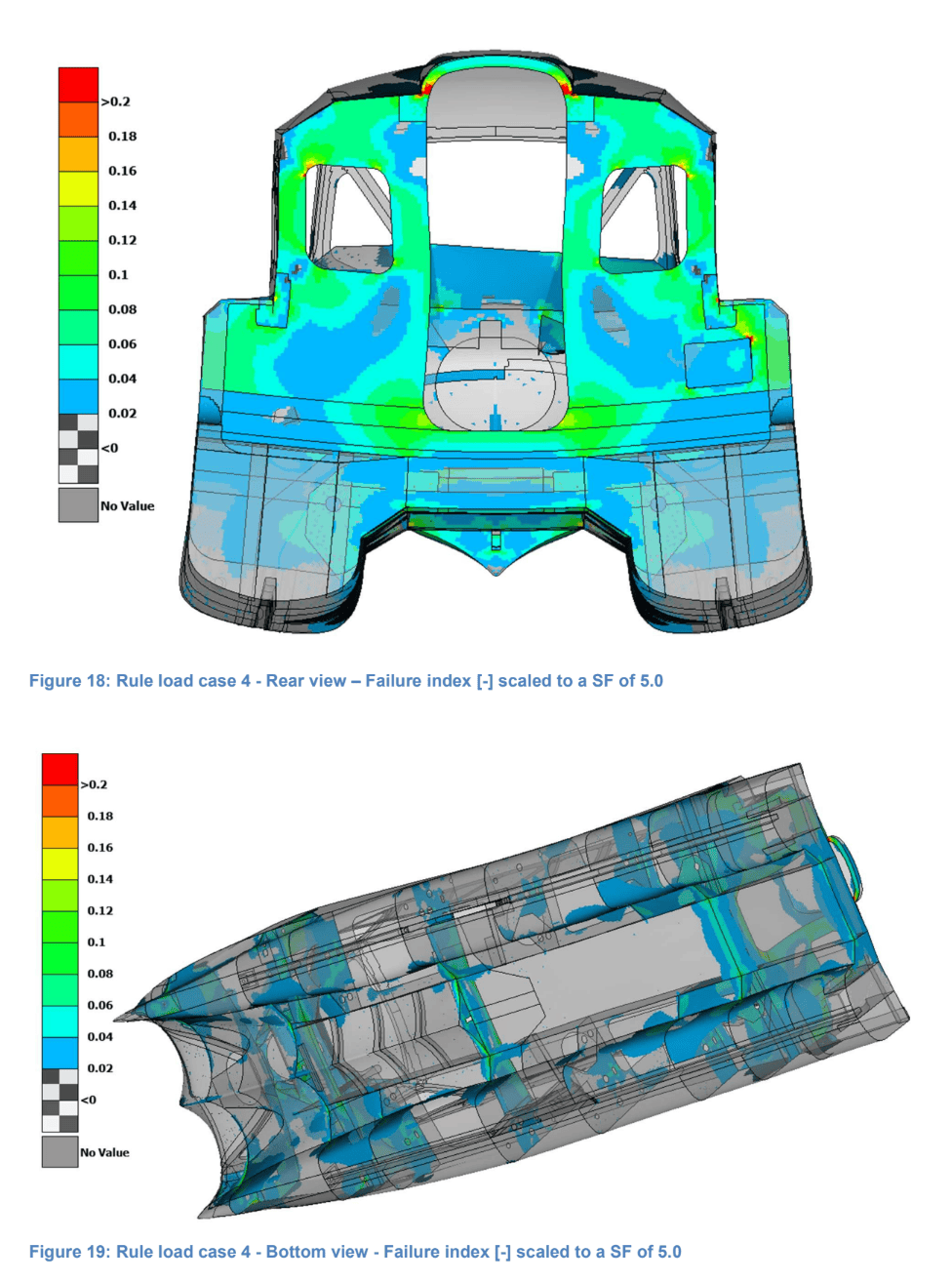
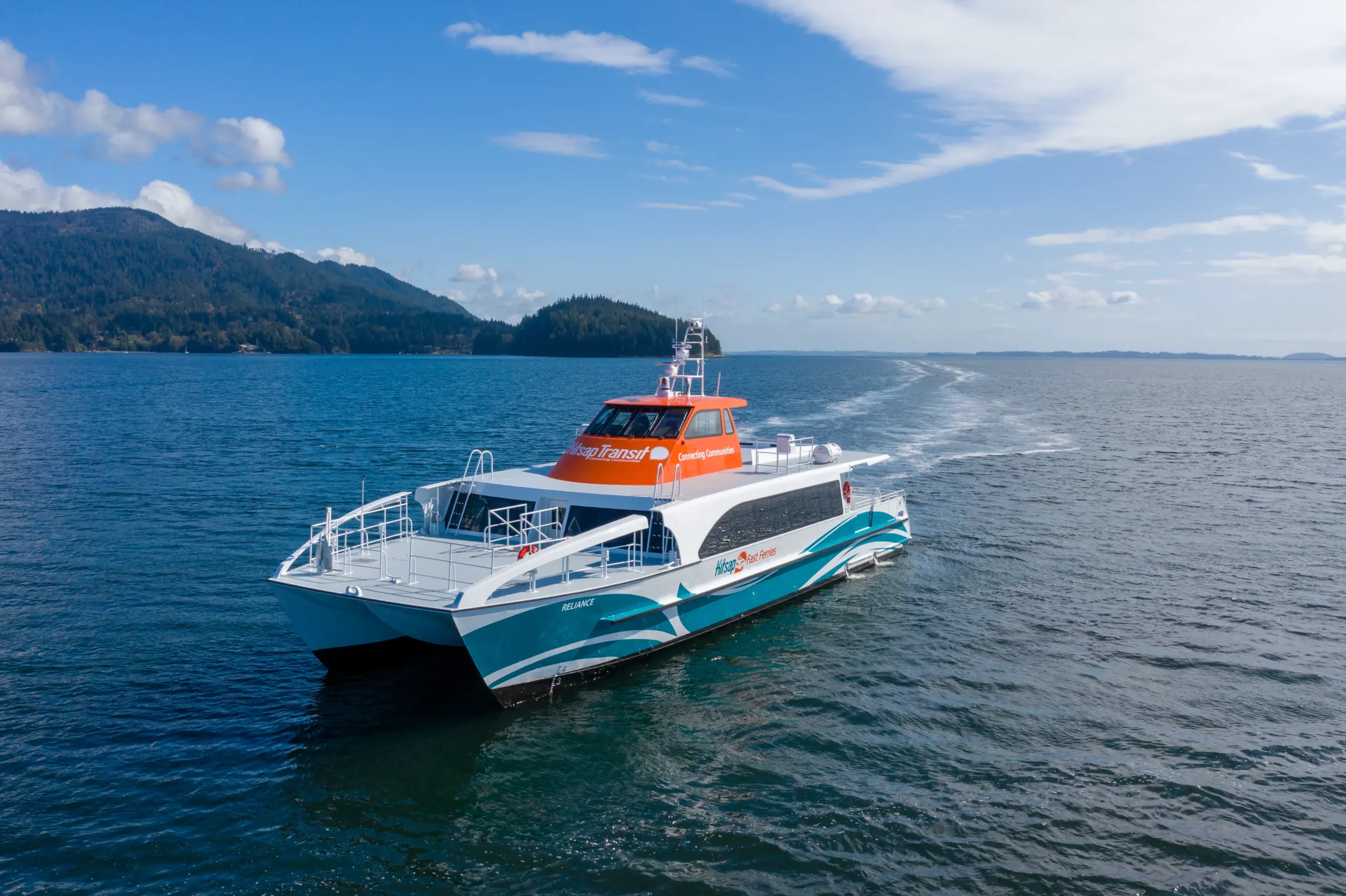
We got our first experience with hydrofoils on passenger boats back in 2011 when we were asked to re-design and re-engineer the hydrofoil used on the Rich Passage passenger catamaran built for Kitsap Transit to operate between Bremerton and Seattle. This is a hydrofoil-assisted catamaran (skimming rather than flying) which operates at high speeds (35-37 kts) and is subject to all the foiling challenges described above. We engineered the foil to use high performance carbon fiber composite construction techniques like those used for our America’s Cup foil designs (but with higher safety factors!). The result was a foil that was very lightweight, strong, and dependable. It is still fit for service 13 years after it first entered the water. Informed by non-catastrophic damage the foil has experienced over the years, we have refined its construction details such that in its current configuration it has withstood approximately two years of continuous service without any significant structural servicing.
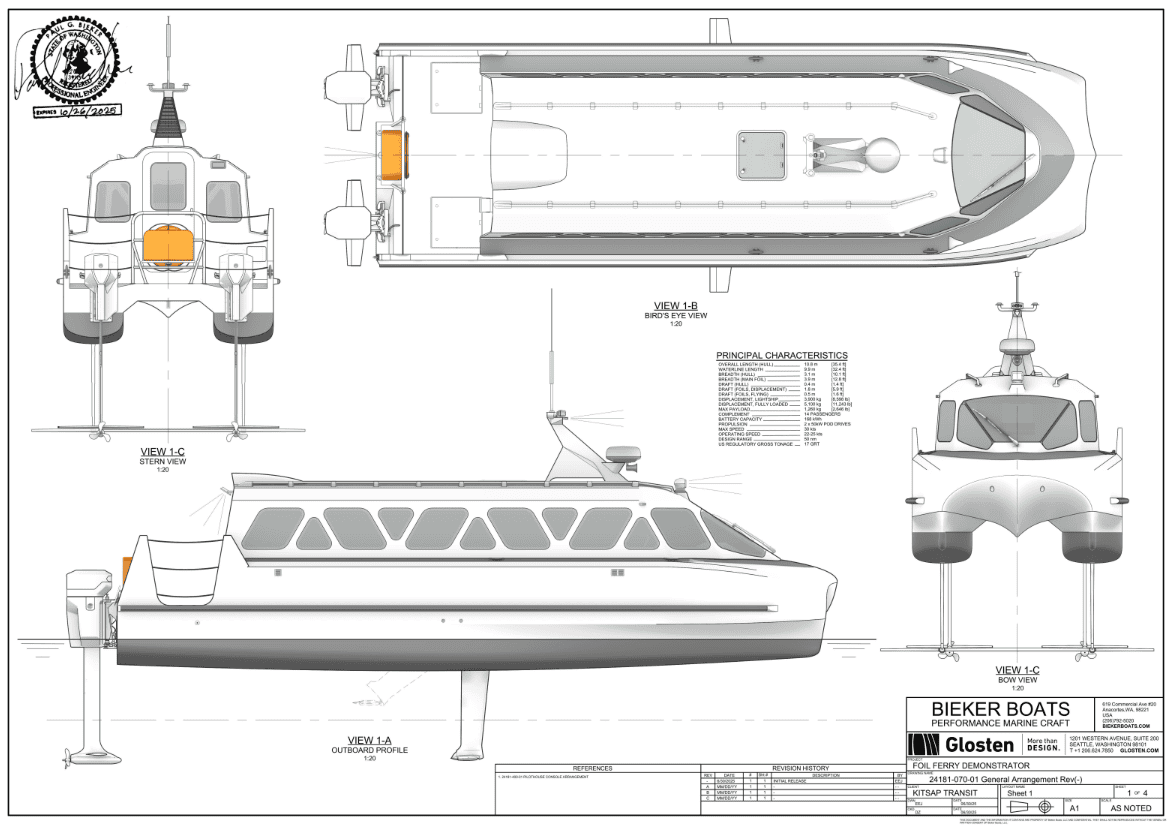
Although at first glance, designing a motor-powered hydrofoiling boat seems simple in comparison to the designing a sailing hydrofoiling boat, but if that boat is carrying passengers, the reality is very different. Passenger boats operating on U.S. waters require U.S. Coast Guard approval and navigating that approval process is both frustrating and difficult – especially when it involves introducing new technologies. For that reason, we chose the 150 passenger or less class size for our boat (known as USCG subchapter T). Although still subject to a long list of hidebound regulations, this size of boat is somewhat less tightly regulated than boats carrying more than 150 passengers. We partnered with Glosten, a commercial Naval Architecture firm headquartered in Seattle, to help us navigate the regulatory process and provide the marine mechanical/electrical engineering and naval architecture support needed to bring this vessel to market.
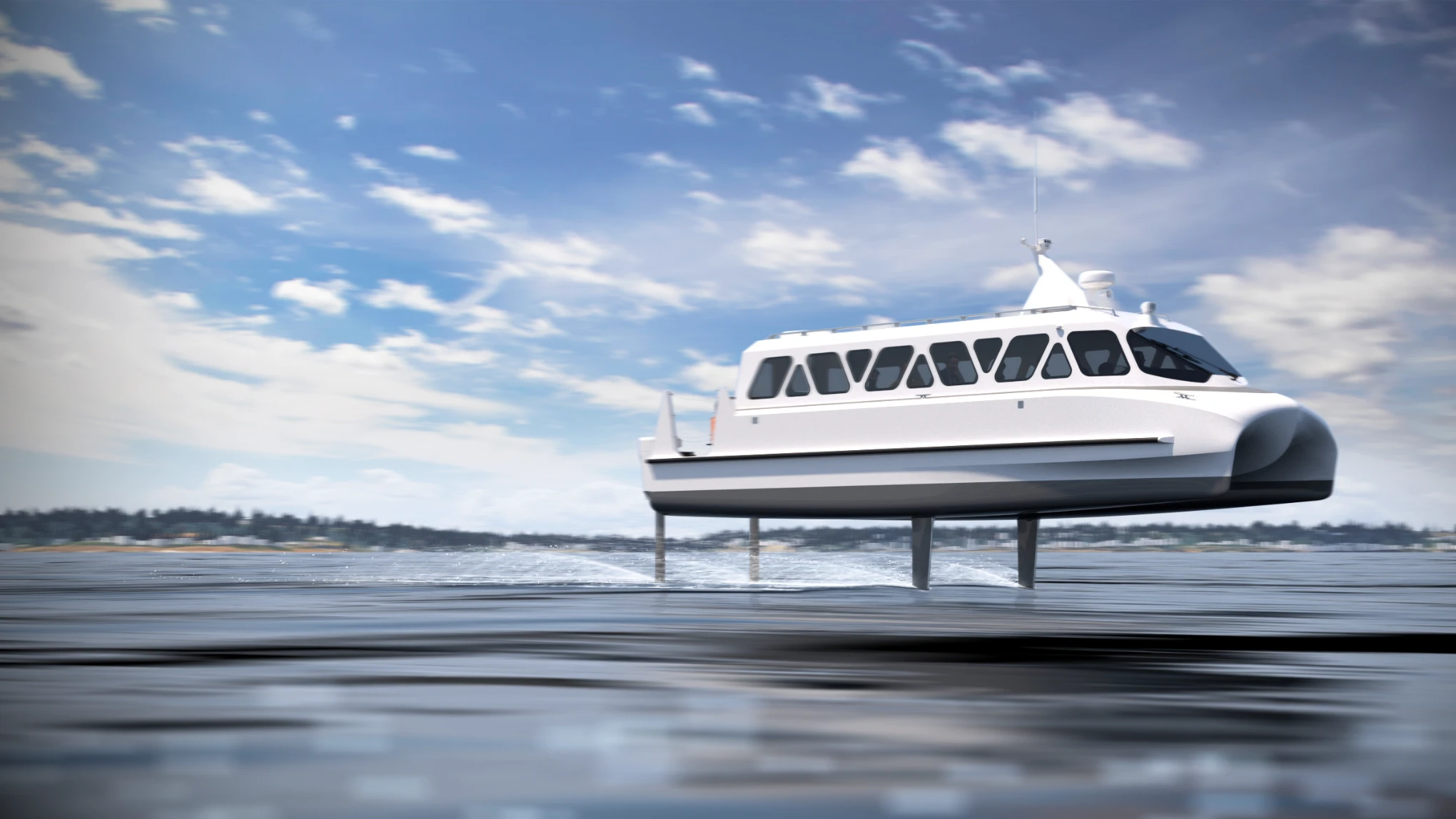
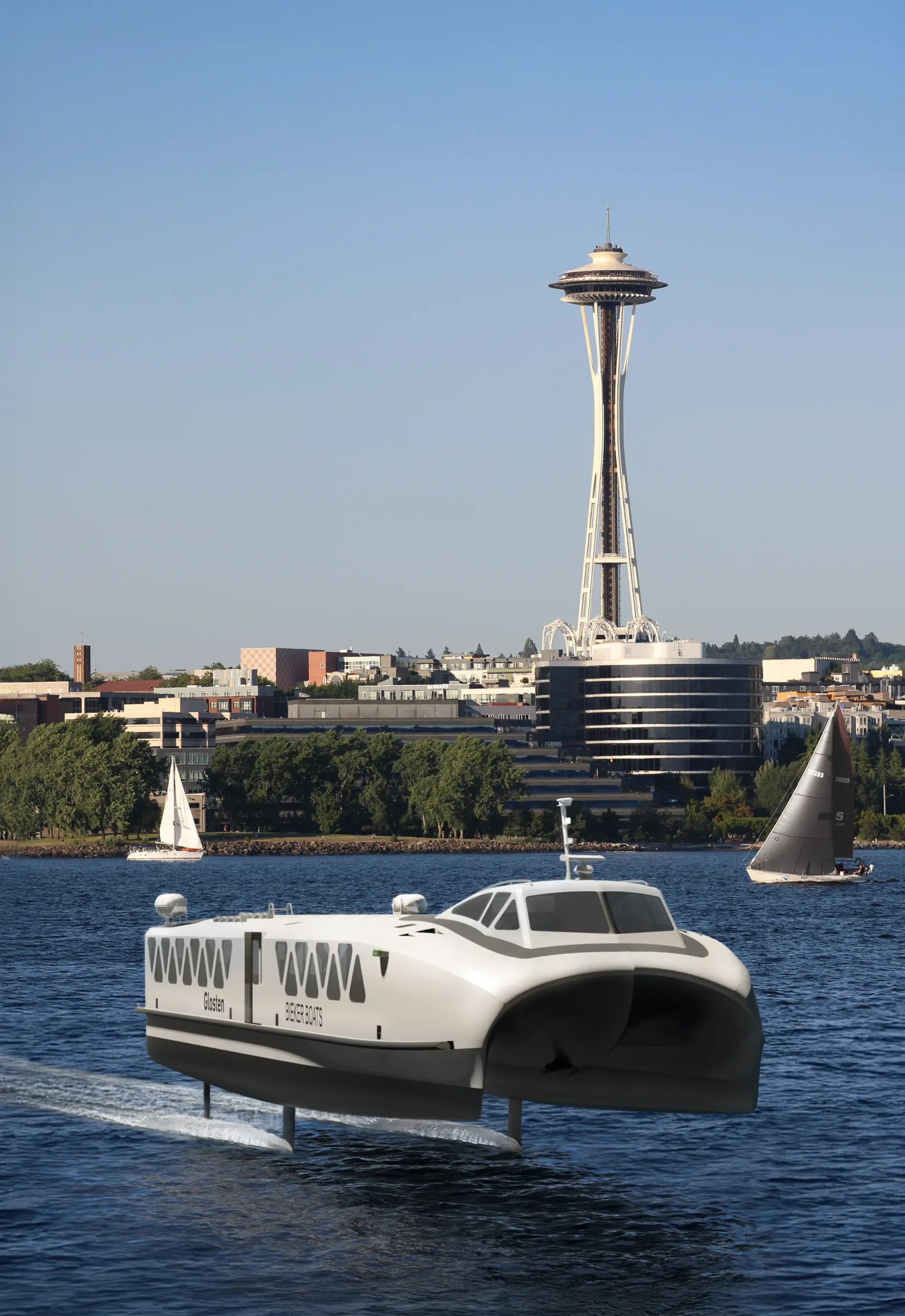
The Glosten-Bieker Foil Ferry feasibility design was developed under a grant funded by local agencies (Port of Skagit County, Port of Bellingham, Port of Anacortes, and Kitsap Transit) as well as the Federal Transportation Authority. It is an all-electric, carbon-fiber composite catamaran designed specifically for the Bremerton-Seattle route and designed to run the 30-nautical-mile round trip at speeds between 25 and 30 knots (29-35 mph), with fast charging on one side of the route. The foils are designed with a patented mechanical fuse system set to allow the foils to swing aft during collisions with larger objects. This limits the maximum deceleration experienced by the passengers as well as limiting the impact loads on the foils. The remodeled ferry consumes approximately one third of the energy as the Rich Passage boats currently making the run.
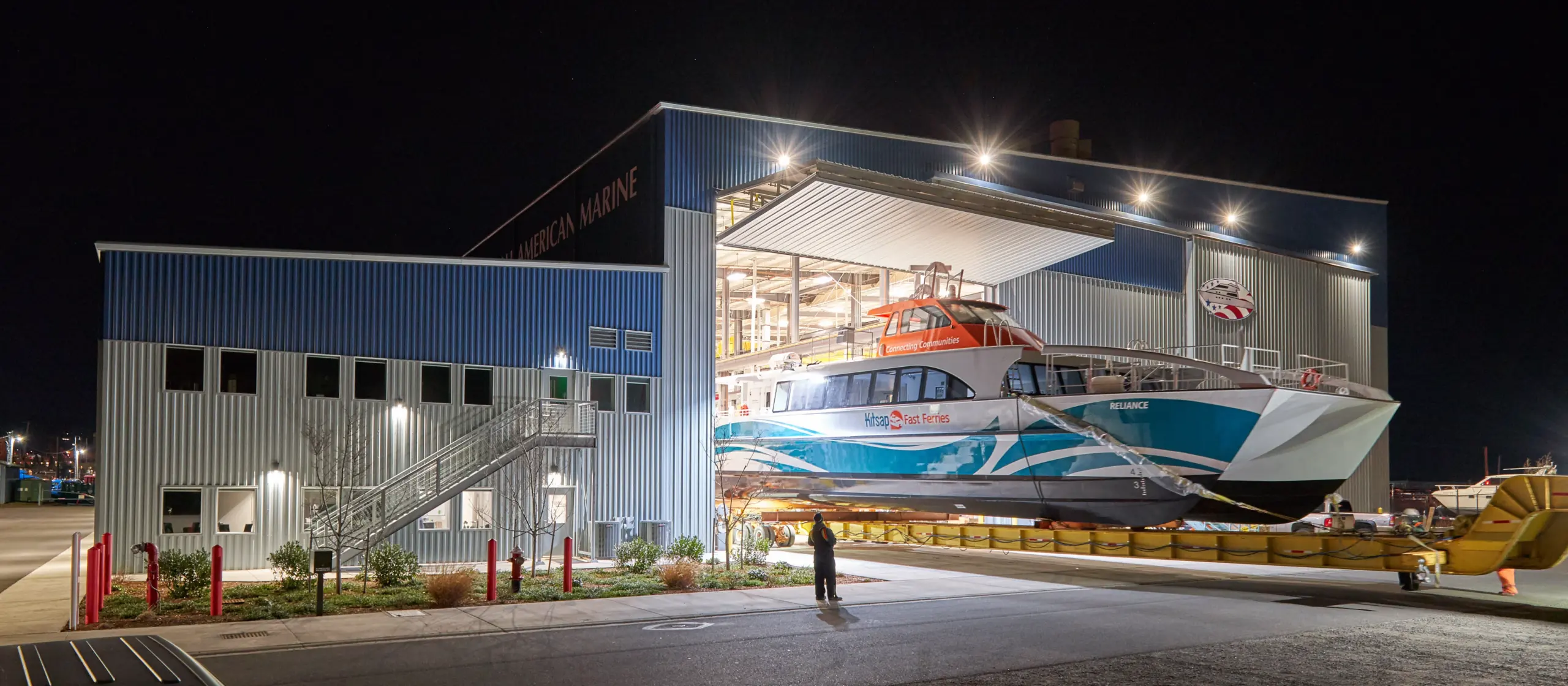
Designing the Foil Ferry allowed us to quantify the performance characteristics possible with this type of passenger boat, and it also helped to highlight the regulatory challenges involved in getting a boat like this into commercial service. In the interest of negotiating these challenges (as well as working through the details of the propulsion, hydrofoil, and hydrofoil control systems) prior to embarking on the final design and construction of the Foil Ferry, we were awarded a grant from the Washington State Department of Commerce to develop the detailed design of a third-scale prototype of the vessel. This boat, which we call Demonstrator has all the primary features of the full-size 150 passenger Foil Ferry in a 14 passenger / 1 crew scale. As well as being large enough to test the systems, this boat is capable of demonstrating the experience of hydrofoiling on the same routes and at the same speeds as the full-scale vessel (Demonstrator has significantly more range than the full-scale boat). In addition, the boat is small enough to trailer so it can be easily transported to demonstrate the technology elsewhere in the country.
Washington State funding to build the Demonstrator next year has been approved and the project is moving towards the build stage. It currently looks like an early 2027 launch is a reasonable target for the project.
The origins of hydrofoiling
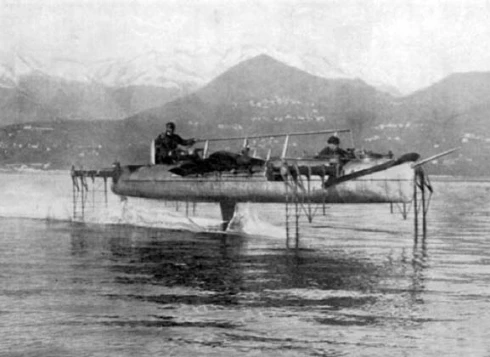
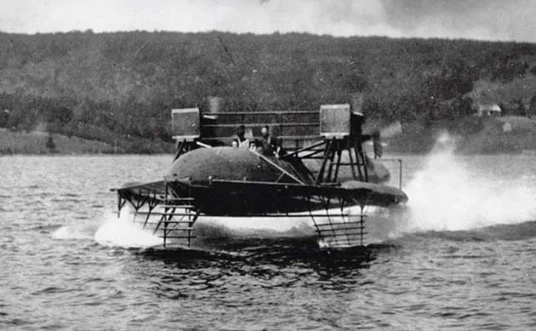
The first powered flight over water was achieved by Italian engineer and inventor Enrico Forlanini in a steam-powered machine on Lake Maggiore in 1906, only three years after the Wright Brothers achieved the first powered flight in air at Kill Devil Hills, North Carolina. At 37 knots, Forlanini’s machine was actually a bit faster than the Wright Flyer.
Alexander Graham Bell experienced a ride in Forlanini’s craft in 1911 and purchased the rights to design and built his HD-4 gasoline powered hydrofoil. Bell’s boat achieved a world marine speed record of 60 knots in 1919, a record that stood for over a decade and is impressive to this day (hydrofoiling over 52 knots or so is very difficult).
The origins of hydrofoiling on the Salish Sea
Boeing began a hydrofoil testing program on the Puget Sound in 1959. By 1962, they had launched the first operational navy hydrofoiling patrol boat—the USS High Point with an operational top speed of over 50 knots.
Boeing continued to develop hydrofoiling systems through the ‘60s and early ‘70s, mostly for military applications. One impressive innovation was the development of supercavitating foils, which allowed hydrofoils to operate well past the 52-knot limit for conventional hydrofoils. In 1963, they achieved controlled flight at 84kts (97 mph), a hydrofoil speed record that still stands today.
The Boeing hydrofoil program culminated with the Boeing 929 Jetfoil passenger boat, capable of carrying up to 350 passengers at speeds up to 45 knots. First launched in 1974, Boeing built 28 of these boats before ceasing to build them in 1985 due to excessive production costs. The production was then licensed to Kawasaki Heavy Industries in Japan and Shanghai Simno Marine in China, where 16 and two of the boats were respectively built. Many of the Boeing and Kawasaki boats as well as one of the Chinese foilers are still in active passenger service in Asian waters.
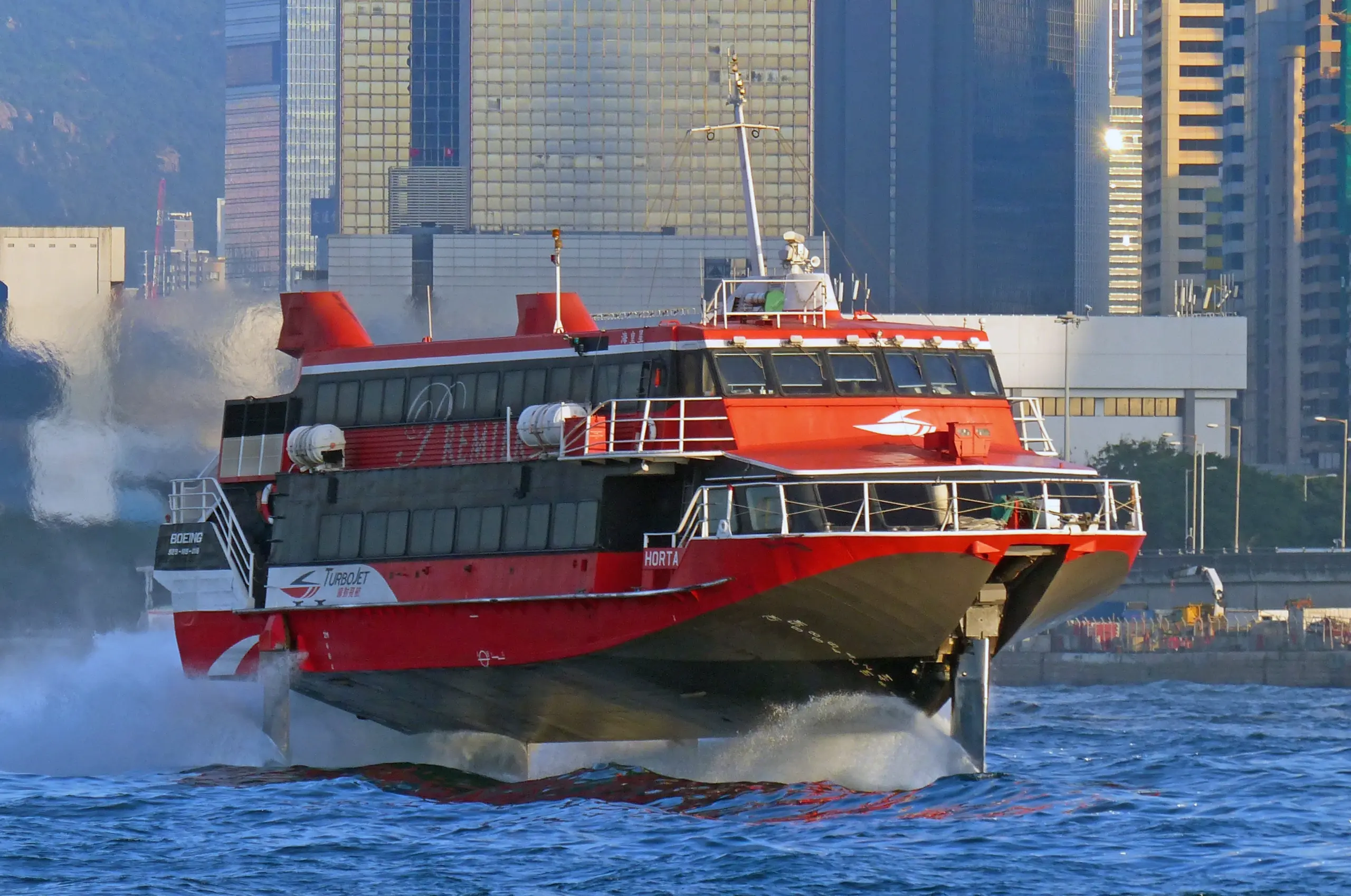
The Boeing Jetfoil was an impressive technical achievement; however, it was hampered by being limited to 1970s electronic and mechanical systems, and fairly low-tech materials that saddled it with a weight penalty. It also had a high power, high maintenance, and relatively inefficient gas turbine—the vessel was designed powered waterjet propulsion system (required to achieve the high speeds).
Huge advancements in electronics, composite materials, and computer-based engineering and design methods have made designing a reliable and efficient hydrofoiling vessel much more achievable than it was even 15 years ago. I also believe that a focus on maximum efficiency rather than maximum speed results in a safer, more reliable, and less expensive vessel (and gets the power consumption into a range where zero-emissions electric propulsion systems are feasible).