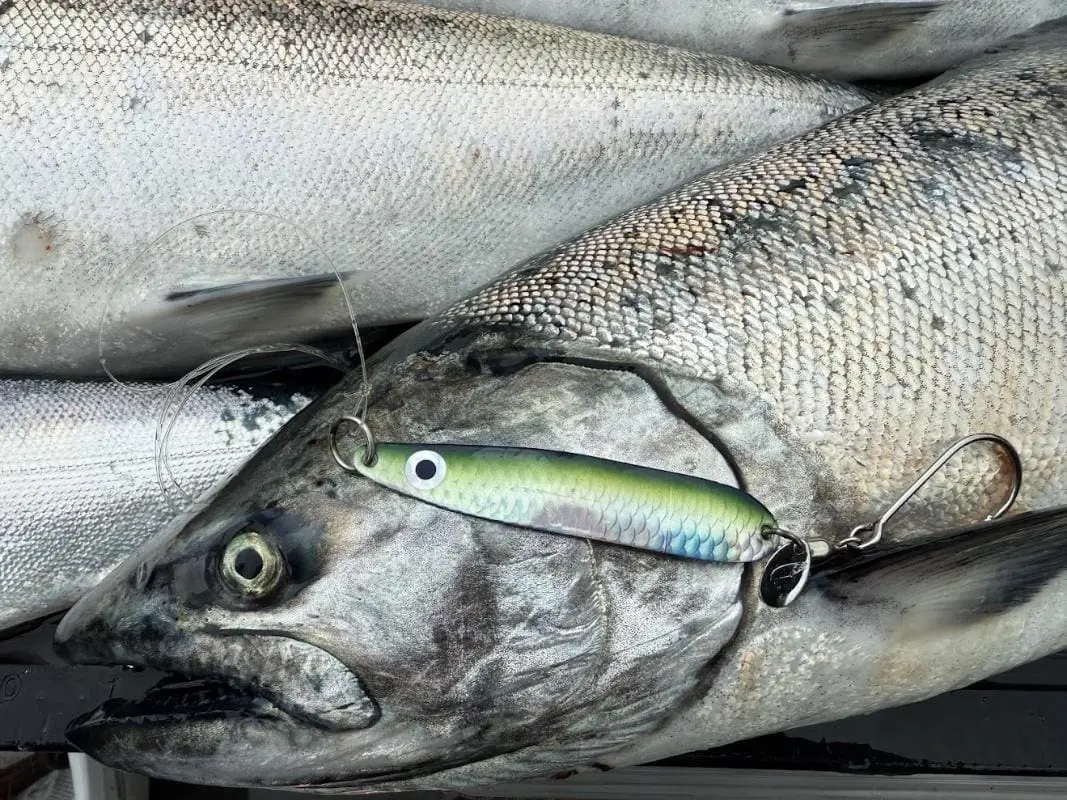
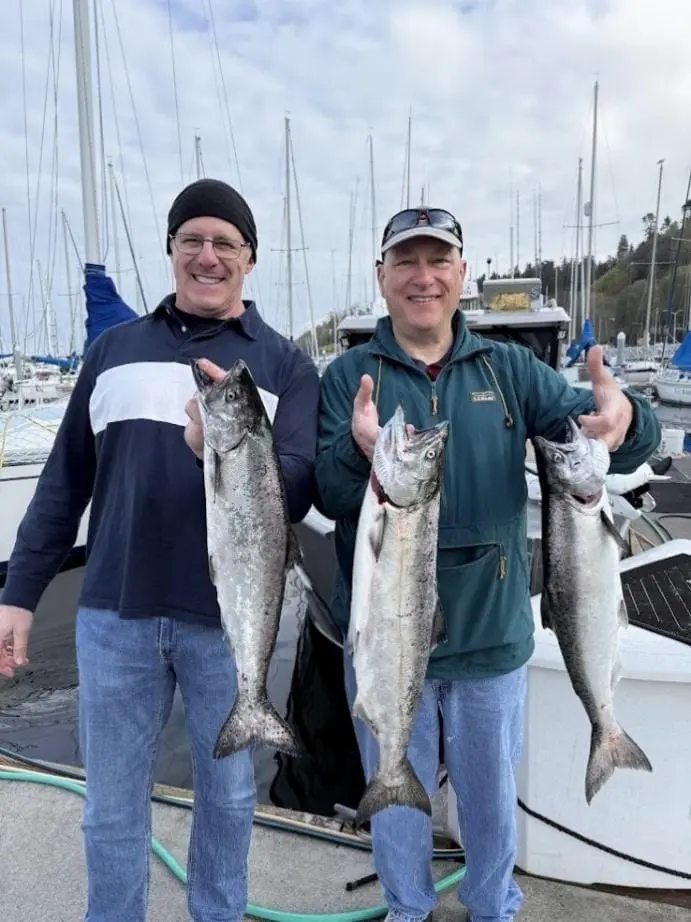
Cover image: This spring, blackmouth succumbed to the Super Hero Spoon from West Coast Tackle, a great representation that mimics herring.
As anglers around western Washington thaw out and we look ahead towards the summer salmon fisheries, our first warm up will arrive on April 1. While for some it is a day marked by mischief and play, sport anglers might have been fooled by our game department based on the history of our beloved and once fabled blackmouth history.
The Puget Sound blackmouth fishery was created in collaboration with the Washington Department of Fish & Wildlife (WDFW) back in the early 1980s to help stimulate opportunities for sport anglers to fish beyond the timeframe when anadromous Chinook traditionally wrapped up their returns to their natal rivers. The nickname “blackmouth” was used to identify juvenile king salmon that were kept in net pens around Squaxin Island for a year vs. 90 days as smolt before being released into the open water. Keeping these yearling fish created a resident king salmon fishery of juvenile fish that fed on the local baits: herring, squid, sand lance, and shrimp.
What was once a thriving hatchery program that stretched from the San Juans, Samish, Skykomish, Gorst, Green, Chambers Creek, Niqually/Puyallup, Lilliwap, Hoodsport, Skokomish, and Lakewood is now a thing of the past. We used to be fishing for winter blackmouth throughout October and November in a wide locale with some well-loved derbies such as Resurrection and Anacortes symbolizing a tune up and kick-off ahead of the summer salmon fisheries. What was once something to look forward to is now compressed into the central Puget Sound (areas 10 and 11) and will be limited to three days a week from Wednesday to Saturday until the harvestable quota has been reached.
With the blackmouth closure of the fishery in Area 5 (Sekiu) this year, it’s a big blow to sport anglers. Some hardcore anglers I know will migrate north to fish in Canadian waters, while some have chosen to hang their fishing hats until the summer fisheries.
While opportunities have dwindled, we are looking forward to the first glimpse of fishing in central Puget Sound for these denizens. Blackmouth are like my hungry teenagers, constantly on the move and on the chew. They have a distinct look with vivid black gums, larger spots, and that characteristic metallic scent that you can pick up when they are netted. It comes as no surprise they are powerful swimmers and engineered to eat.
A legal size 22” clipped blackmouth, on average, weighs in at around four pounds and is approximately two and a half years of age. A sexually mature fish is three years old and can weigh seven to eight pounds. A four-year-old fish can be between 12 to 18 pounds and a fully mature fish at five years, although rare to catch, can be a prized fish to find.
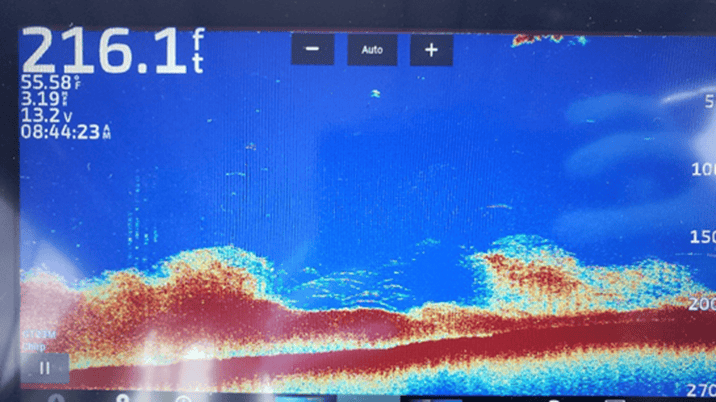
To target these fish, a combination of running lures or bait down deep will be the key to your success. Paying attention to locations such as reefs, bars, depressions, or otherwise points that collect bait on the optimal tide change will be areas to focus. These fish run like packs of wolves seeking to fill their bellies with each tide change.
My favorite setups during this time of year are running full-sized flashers utilizing glow and UV in colors such as white and green. Matching the hatch is important and, to start off, a 3” to 3.5” Cookies-and-Cream or variations of Herring Aid spoons are a great way to cover lots of water. It’s critical to keep your gear down at the bottom, often dragging the downrigger balls in the mud to ensure you’re stirring up lots of sediment, which creates curiosity and evokes the feeding instinct. Another good bet is to run whole herring behind the flasher or naked utilizing plug-cut herring creating a drill-like spin. We like using the Rhys Davis anchovy-sized helmets, which keep a tight roll or spin on the natural baits. Sometimes when the fish get finnicky, utilizing real baits are a good choice.
Be sure to keep in mind that fishing licenses will expire March 31, 2026. Don’t be delayed in renewing your 2026 license along with the appropriate catch cards. Fish of only clipped adipose origin can be retained and barbless hooks must be used. While the season is likely to be brief, I hope that you’ll be able to get out to dust off the cobwebs and stretch your lines out. Fish ON!