Volcanoes are a familiar backdrop in the Pacific Northwest, but did you know the region’s most active volcano is actually underwater?
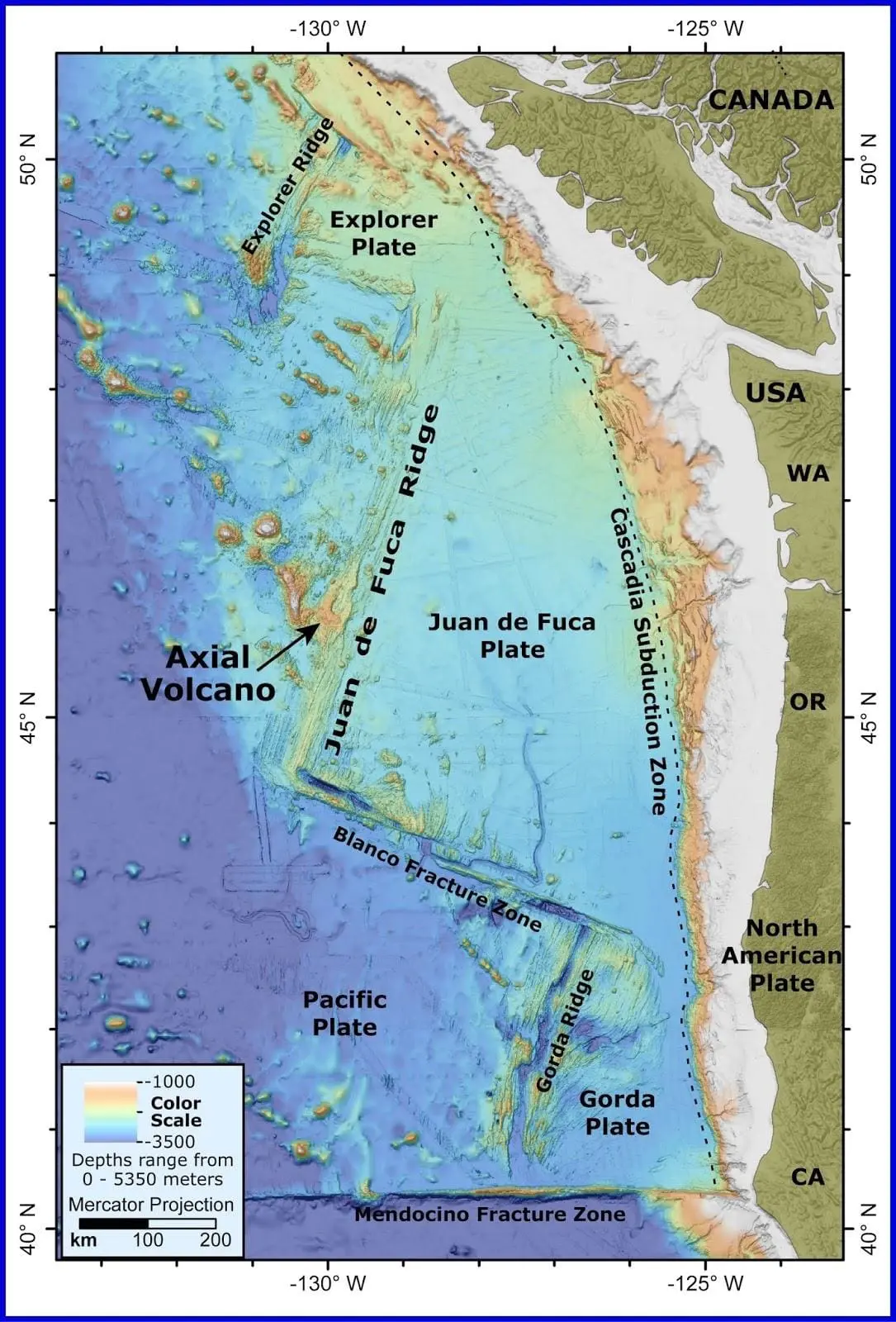
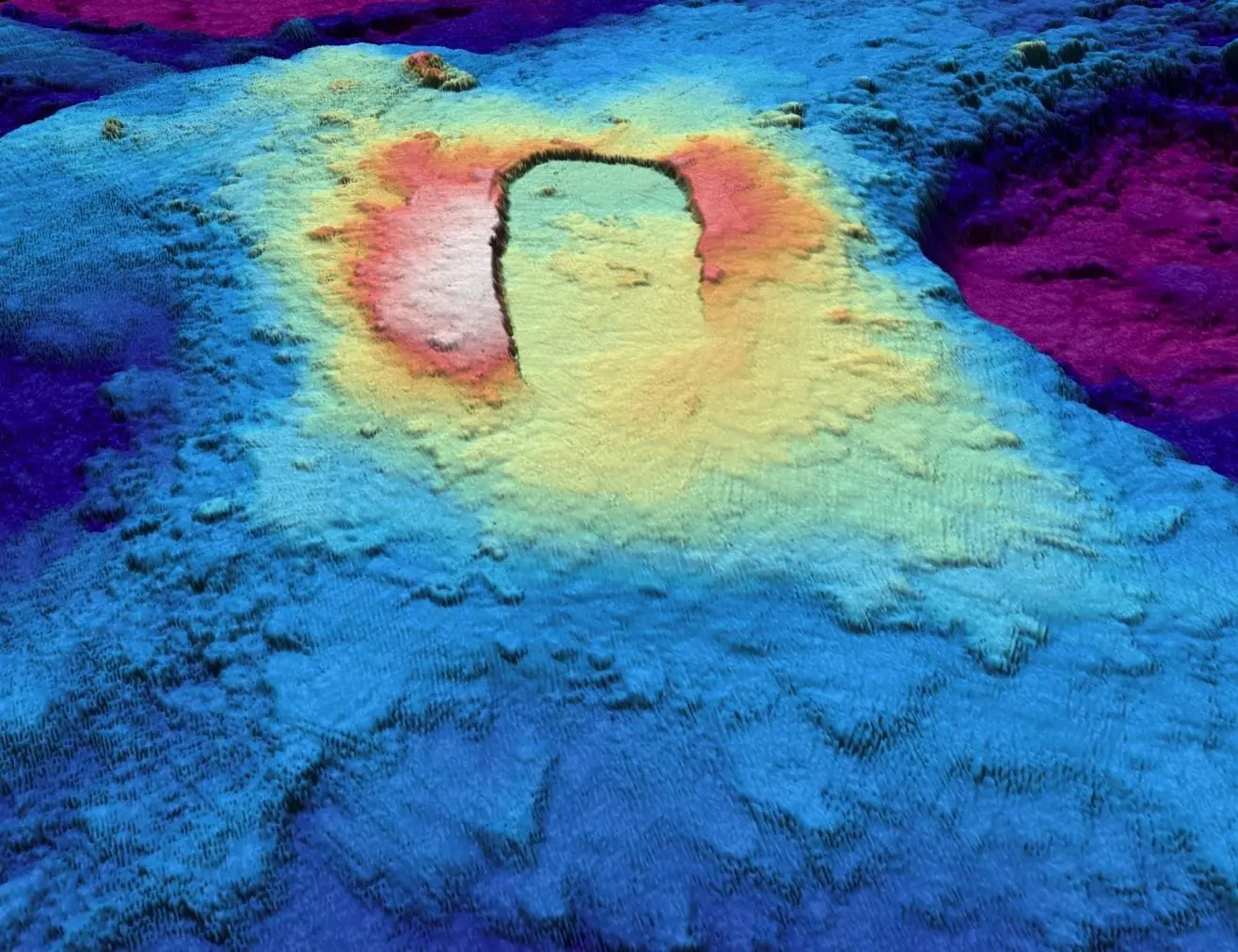
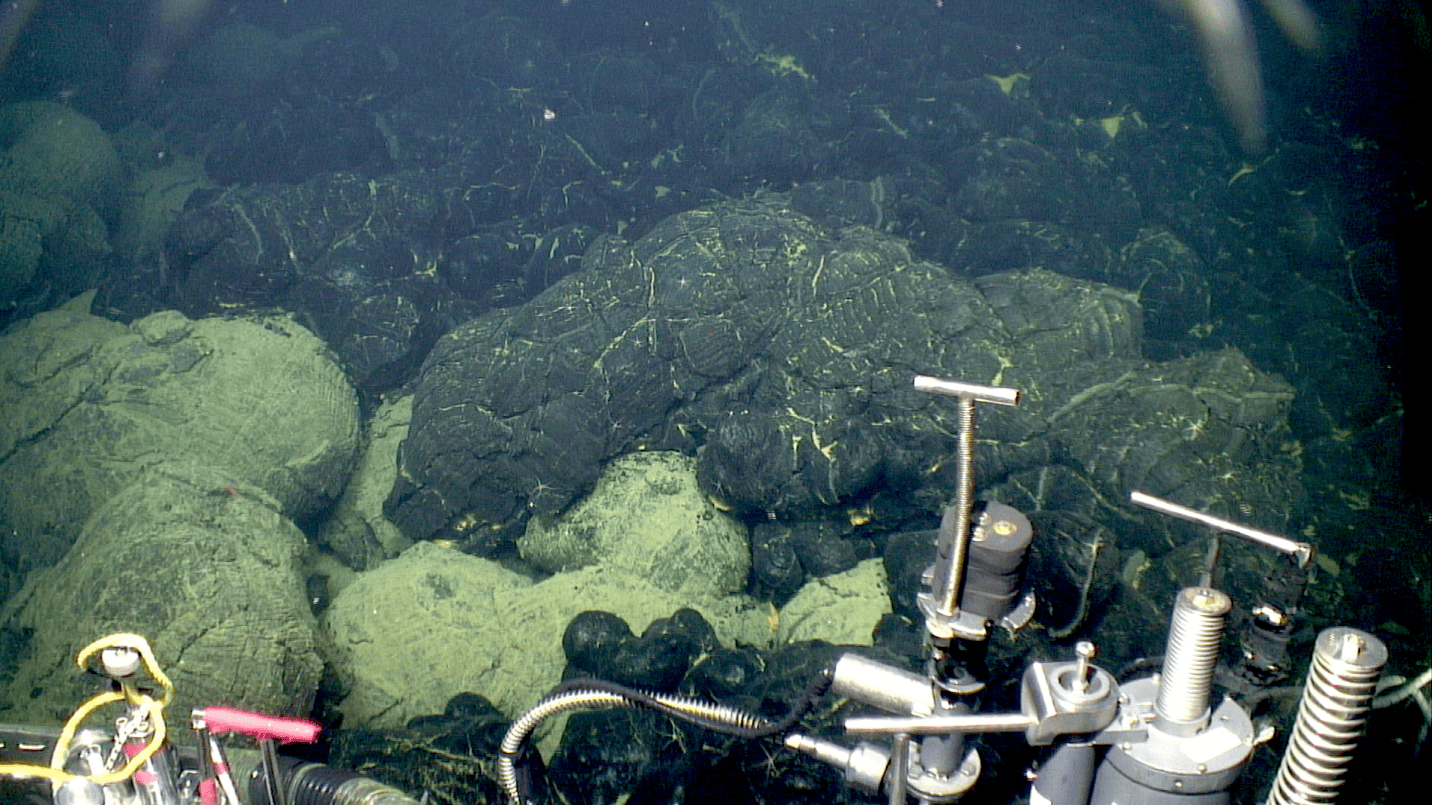
Axial Seamount is a large submarine volcano rising about 3,600 feet above the seafloor, situated on the western ridge of the Juan de Fuca plate. Despite several eruptions over the past 30 years (1998, 2011, and 2015), it poses no threat to nearby communities. Its remote offshore location 300 miles west of the Oregon coast, at a depth of nearly a mile down, and position along a spreading plate boundary, where tectonic plates move apart rather than collide, greatly reduce any associated hazards. Its eruptions also consist of slow, fluid basalt flows, similar to those of Hawaii or Iceland.
Bill Chadwick, a research associate at Oregon State University and a leading expert on Axial Seamount, also emphasizes that the volcano poses no risk of triggering the long-anticipated Cascadia Subduction Zone earthquake, commonly referred to as “The Big One.”
“During eruptions at Axial, a lot of lava comes out, but it’s very benign,” Chadwick explained. “There’s no effect on the sea surface. It’s a very well-behaved volcano.”
Axial’s frequent-yet-harmless eruptions make it an ideal natural laboratory for scientists developing long-term eruption forecasting models. Improving eruption forecasts, especially with more advance warning, could enhance safety for people who live, work, and recreate near hazardous volcanoes on land.
“I view it as sort of an ideal, natural laboratory,” Chadwick said, “because it’s very, very active, for one thing. Right after it erupts, it’s already re-inflating for the next time.”
Scientists forecast eruptions at Axial by monitoring volcanic “inflation,” measured by instruments on the seafloor. As magma accumulates in a reservoir beneath the volcano, the surrounding seafloor slowly swells. Both the amount of inflation and the rate at which it occurs can signal when an eruption may be approaching.
In 2014, Chadwick and his colleague, Scott Nooner of the University of North Carolina Wilmington, successfully forecasted Axial’s 2015 eruption. At that time, the inflation rate was steady, making predictions more reliable. “I was like, wow this works!” Chadwick recalled.
Since 2015, Axial Seamount has not been as easily predictable, mostly due to an inconsistent rate of inflation.
“The rate of inflation started out high, but it kept slowing, which makes the extrapolations more error-prone,” Chadwick said. Models were tweaked and reassessed. Chadwick made a series of eruption forecast time windows since 2019, the most recent of which predicted that Axial would erupt by the end of 2025. But, alas, Axial has remained silent.
2025 came and went without a blip from Axial Seamount, though the inflation data still indicates an eruption could be coming in the near future.
“If I keep moving the goalposts, eventually I’m going to be right,” Chadwick joked. He added that recent efforts have shifted toward incorporating seismic activity and broader physical changes within the volcanic system.
“We still think it’s going to erupt soon,” he added. “So we’ll see if 2026 will be Axial’s year.”