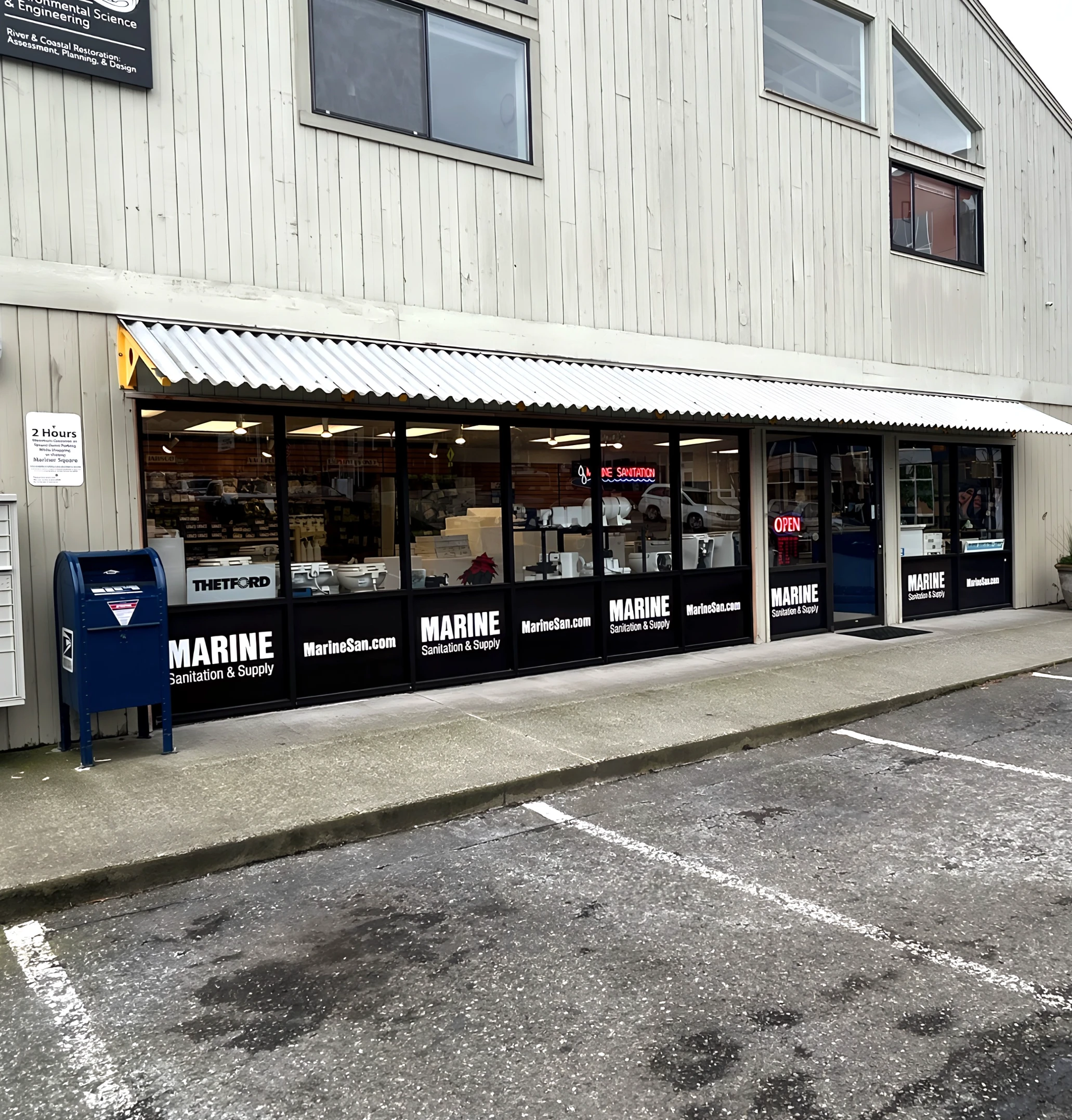
Image: The Seattle storefront of Marine Sanitation & Supply.
There’s a dating app for people my age—they call it “Carbon Dating.” But veterans of a sufficient number of trips around the sun will remember the standards for marine toilets prior to the 1970s. There were none. Marine heads typically discharged directly overboard, using a hand pump and flushing with seawater. For thousands of years, disposing of waste directly overboard had been the norm. Somehow, civilization advanced.
Throughout the 1970s, various states began adopting legislation forbidding the overboard discharge of human waste. Boaters operating within three miles of a coastline were required to pump waste into a designated onboard holding tank. The contents would be “held” until it could be transferred to a municipal sewer system or dumped when beyond the statutory limit. The federal government eventually adopted mandatory pumpout rules as well and assigned enforcement responsibility to the US Coast Guard (USCG).
Human beings, in general, are resistant to change. Boaters fussed about the expense of adding the tanks and establishing or rerouting sewer connections. More than a few became lawyers and philosophers on the matter. Counterarguments often included, “They can’t prove that sewage from boats creates a problem” and “The government doesn’t have the right to dictate how I flush the toilet. These changes should be voluntary, not mandatory.” And, of course, nothing was initially pumped out faster or with more enthusiasm than rumors and misinformation.
Amid all the outrage, hubbub, and confusion surrounding the mandatory use of holding tanks, a Seattle boat salesman, Dennis Massoth, sniffed out an opportunity. Massoth initially tracked and researched the emerging rules and regulations so that he would be able to give boat buyers factual information about the new requirements. As he dug into the new regulations, he learned about the equipment available from a variety of manufacturers and observed boaters struggling to separate fact from fiction. Massoth realized there was a need for a company specializing in marine sanitation systems.
Fifty years ago (July 1976), Dennis Massoth established Marine Sanitation & Supply in Seattle. To this day, the company remains one of the only and certainly the largest firm specializing in marine toilets and associated systems in the Pacific Northwest.
The laws governing discharge of waste from boats have become stricter since the 1970s. Prior to 2018, the law made exceptions for “treated sewage.” Boaters with equipment certified by the USCG to reduce fecal coliform content to less than 1,000 parts per million and eliminate floating solids were permitted to pump the treated effluent overboard. In 2018, the Environmental Protection Agency designated all the inland waters of Washington state a “no discharge zone,” whether or not the waste was treated to the USCG standard. That change rendered onboard treatment systems at least superfluous if not obsolete. As the decades advanced, the inventory and advice available at Marine Sanitation & Supply have evolved to remain current with changes in laws and regulations as well as advances in technology.
It’s possible to purchase a marine toilet from any number of outlets, and most sources are trustworthy dealers. What sets Marine Sanitation & Supply apart is that the firm specializes in marine toilets and associated products. When shopping for a marine toilet at Marine Sanitation, you won’t wind up talking with somebody who is an outboard motor expert or manages the beachwear department.
While a typical dealer might be franchised for only a single brand of marine toilet, Marine Sanitation & Supply carries several major brands. Rather than try to convince everyone who walks through the door that “BRAND X is the best choice, no matter what your needs might be,” the folks at Marine Sanitation & Supply can take the time to assess your particular situation. What type of boat do you have? How large? How many people aboard? How many days do you normally anchor out between visits to a marina? What level of convenience would you like to have? Answers to these and other questions enable the company to help prospective buyers evaluate their options and make a choice that best responds to their specific requirements.
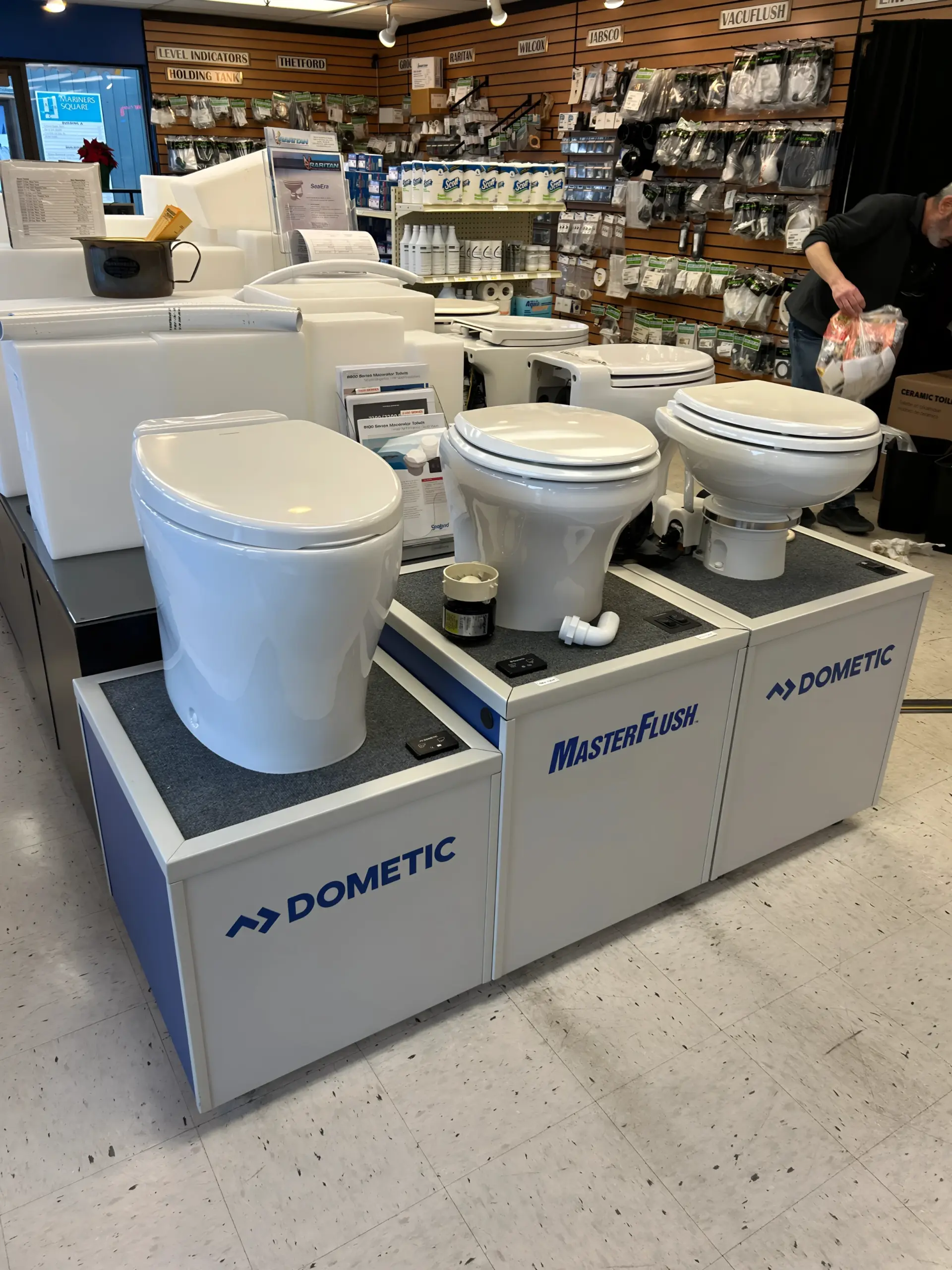
Nearly any conceivable option is available from Marine Sanitation & Supply. The firm offers VacuFlush equipment for boaters wanting a vacuum-based system. Electric flush toilets include MasterFlush, Tecma, and Raritan brands, with Marine Sanitation & Supply staff able to furnish any information required for factual comparison. Manually flushed models are offered as well, from manufacturers such as Groco, Jabsco, Raritan, Wilcox, and Lavac.
We hear more about composting toilets these days. These systems can be less complex than a traditional toilet and holding tank and utilize peat moss or coconut fibers as a medium for permitting the natural decomposition of human waste. Marine Sanitation & Supply carries the Nature’s Head brand of composting toilet and will gladly satisfy anyone’s curiosity about how the process works.
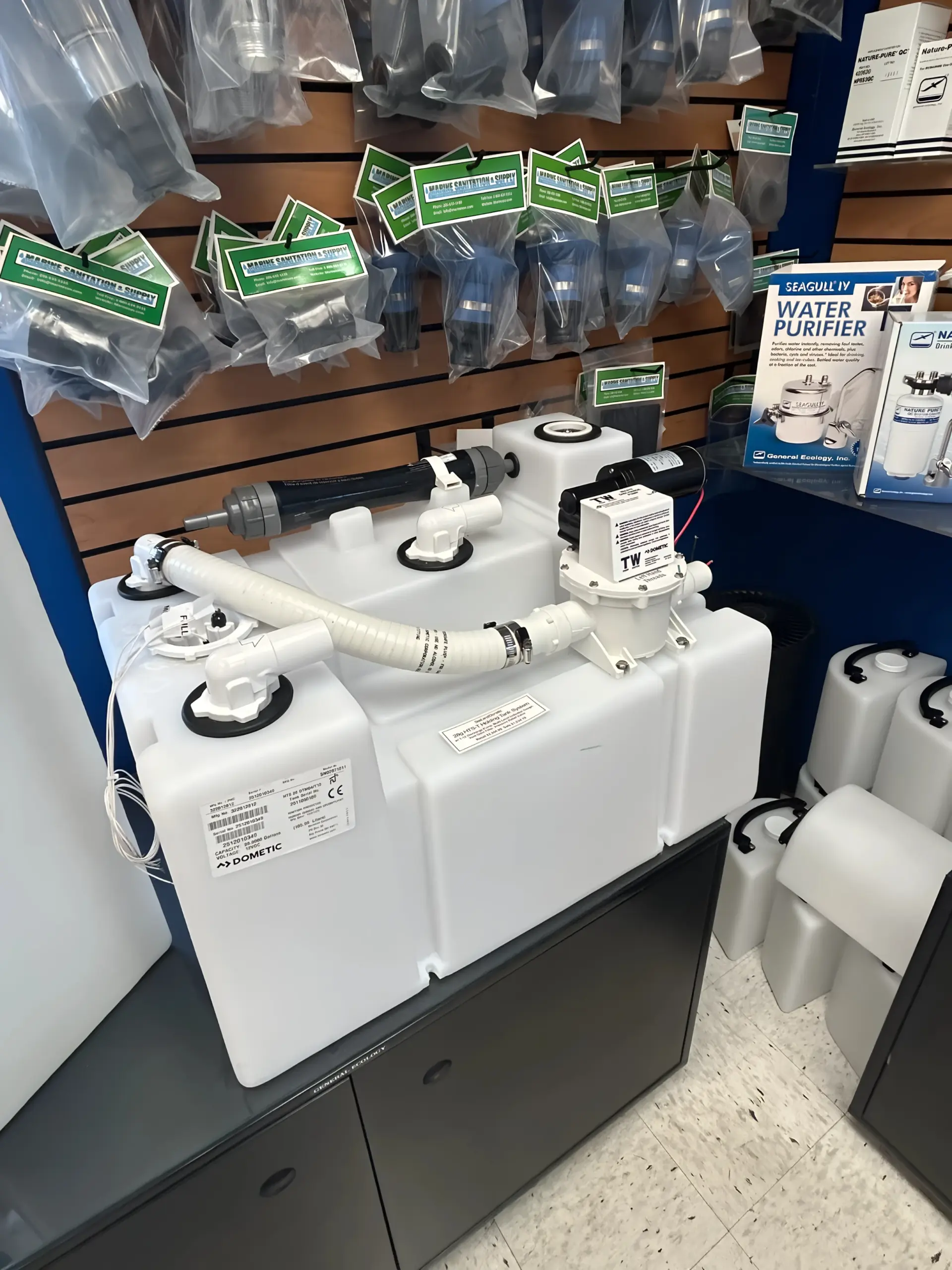
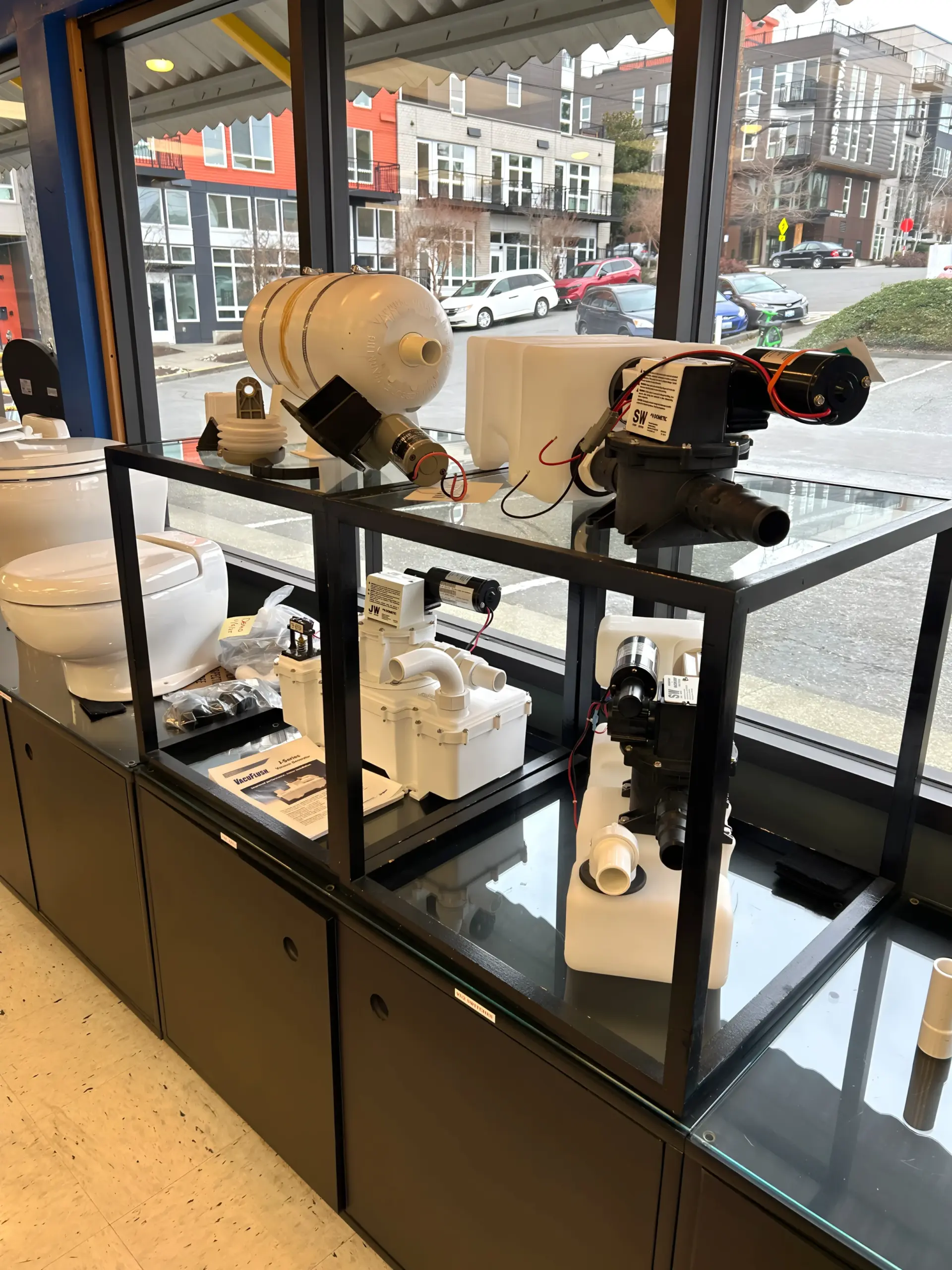
In addition to marine toilets, Marine Sanitation & Supply stocks holding tanks in a variety of sizes and can custom-order others. All the hoses, fittings, gaskets, seals, and miscellaneous parts required to create or maintain a system are available at Marine Sanitation & Supply. While the company doesn’t offer an installation service, they will gladly recommend qualified technicians with whom they have a good working relationship and who have established a consistent reputation for excellent customer service at equitable prices.
Marine Sanitation & Supply
Address: 1900 N. Northlake Way #121
Phone: (800)-624-9111
Website: https://marinesan.com