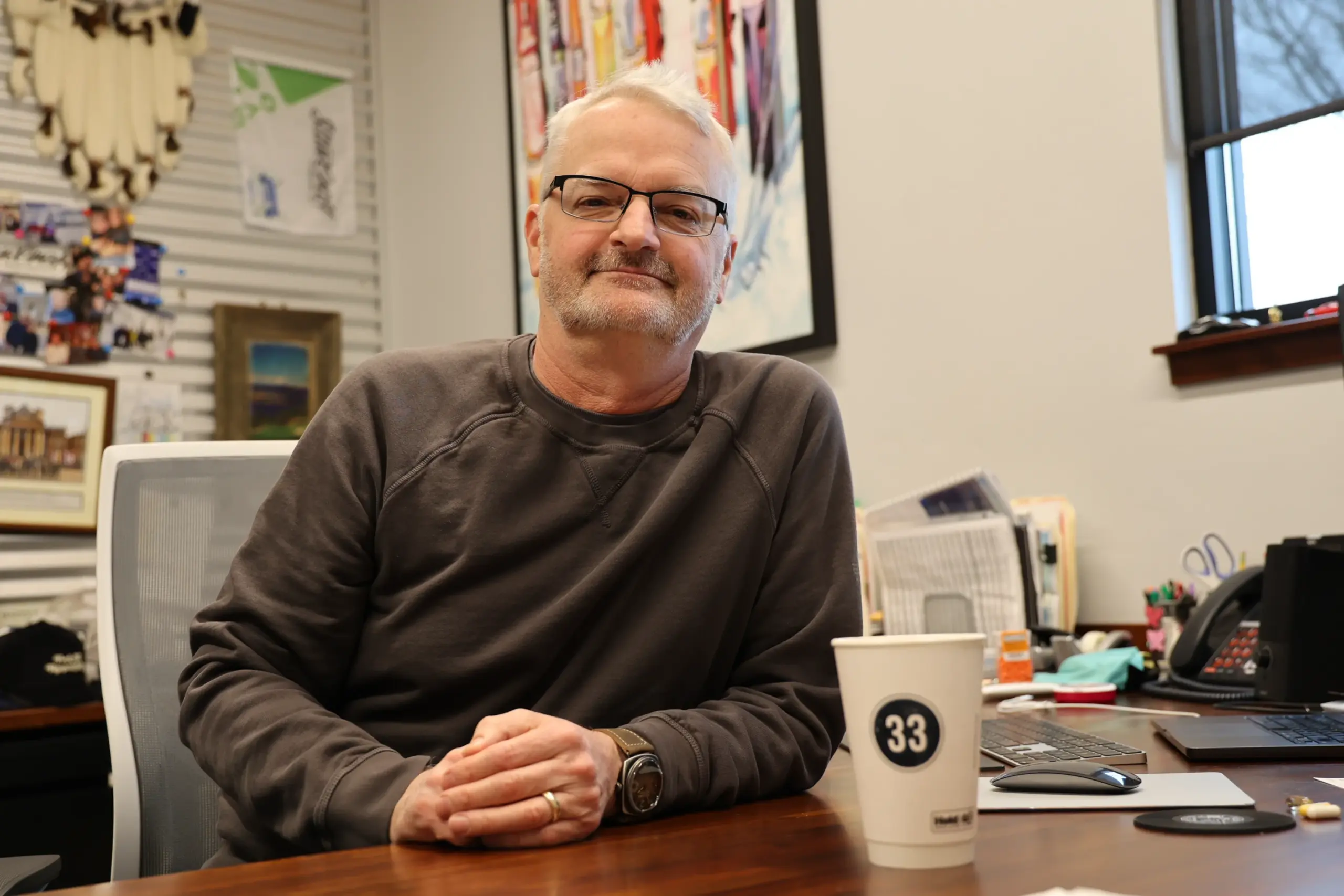
When it comes to wooden boatbuilding, magic is happening east of the Cascade Mountains in Idaho. I ventured to Hayden, ID, just north of Coeur d’Alene, to get the real scoop about Stancraft from the factory floor. One of the best ways to learn about a company is a sit-down with the boss, himself, in his office, and Stancraft president Robb Bloem was gracious enough to accommodate me.
The saga of Stancraft – third generation
For Bloem, Stancraft is a lifelong, even multigenerational, affair.
“My wife [Amy] and I had been dating since we were kids—16, 17 years old,” said Bloem. “Her grandfather was Stan.” Amy’s parents were Syd and Julie Young, the second generation of Stancraft ownership. Before Bloem could even imagine taking over Stancraft as an adult, he was enjoying their boats as part of idyllic teenage summers with his girlfriend-turned-wife. Amy and Robb got married in 1997 and, ultimately, ended up in Seattle for graduate school.
Bloem earned his MBA from Seattle University, and Stancraft, or rather what it could be, was the subject of his studies.
“I did a paper on the business, at least on what I thought the business could be,” explains Bloem. Stancraft started in 1933 in Montana during a time when wood was not just popular, it was the only option. “Interestingly enough, when Syd and Julie took over in ’68, they got out of wood like everyone did. They built fiberglass boats.” This second generation of Stancraft built fiberglass boats from 1968 to the early eighties, when obstacles like the oil embargoes pushed them to near bankruptcy. This era also led to the company’s relocation to Idaho. But wood boats would re-emerge in popularity and become Stancraft’s forte again thanks to a PR boost from an unlikely source: Hollywood.
“Syd will tell you that the movie On Golden Pond in ’81 got everyone in the world to get back into pulling their old wood boats out of the garage,” said Bloem. “That’s when he really started his restoration business, which was his focus.” During this time, Stancraft as a business mostly focused on refinishing Chris Crafts, Centuries, and Garwoods. But Bloem saw an opportunity to make boatbuilding the focus again.
“In my research for the boat business, in particularly wood, there were all these go-fast boats on the East Coast, cigarettes and all that,” said Bloem. “Some for a million bucks. They drove ’em for a year, and then they’d resell them for 500,000 bucks.” Bloem’s theory was that Stancraft could make gorgeous, go-fast wood boats that would be more elegant and desirable for the affluent clientele than the garnish cigarette boats that seemed more like a fad. “Find that same guy, but who wants to have a beautiful, handmade wooden boat versus a pink, purple, and orange cigarette boat,” he said. “Kind of bring it back.”
His academic business studies were always underpinned by those idyllic experiences from his childhood on the lake.
“We had been in the boats a lot as kids,” said Bloem. “Riding around with her [Amy’s] parents and always thought, like everyone else, they were gorgeous and beautiful. Just thought, maybe, we can build something bigger than the 26-foot speedster, or the runabouts that Chris Craft and Stancraft and Century all built.”
During this time, Syd and Julie had sold most of the company in 1997, except for the name, and were mostly retired. They would build a boat every couple of years.
“I saw the opportunity to build modern, big boats and make a business out of it,” said Bloem. “Honestly, I thought maybe if we could do a million bucks a year we’d be doing pretty good… I reached out in 2002 to Syd saying, ‘Hey, if I want to take a crack at this, would you be willing?’ He said ‘Sure, come on back’.”
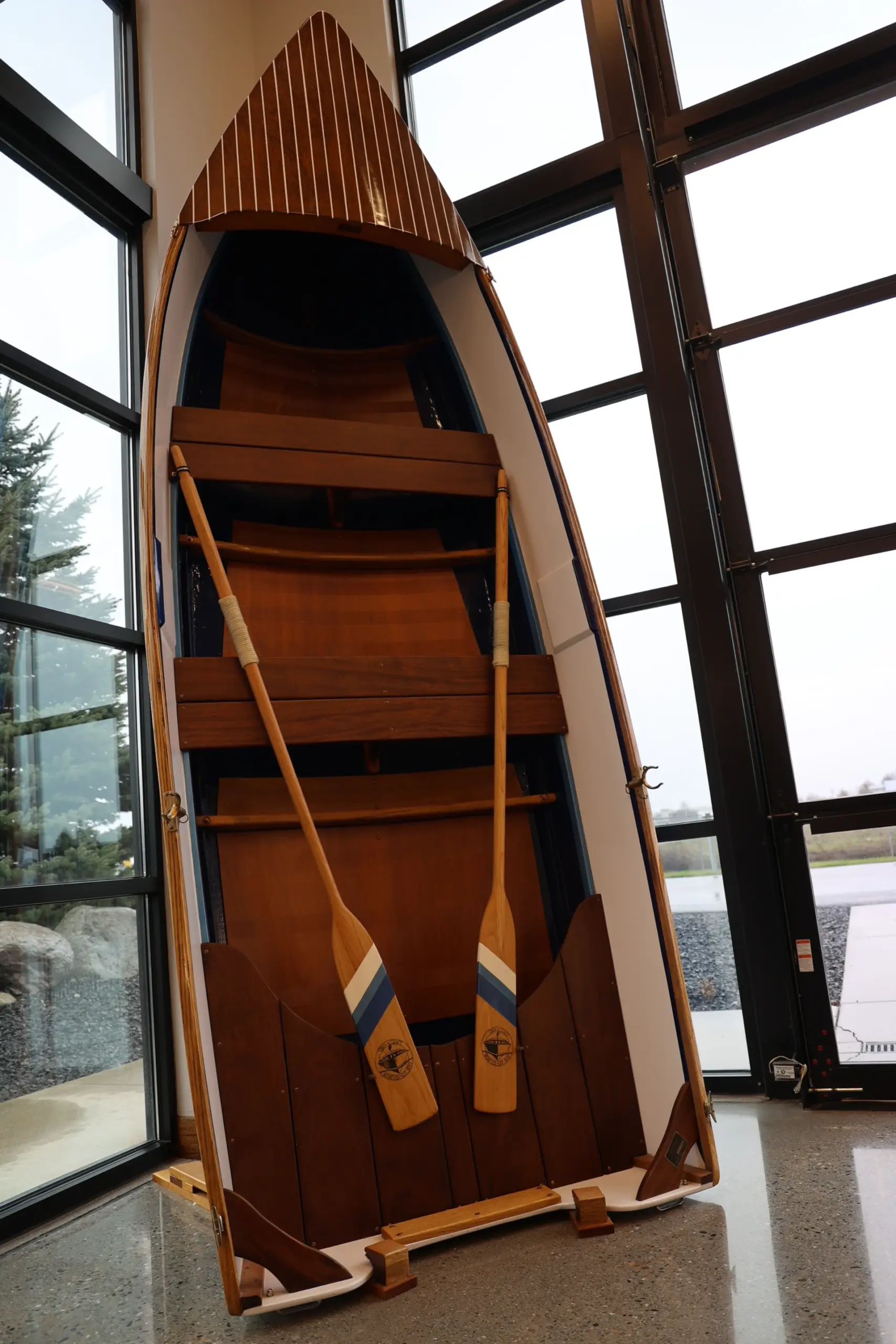
Bloem and his growing family moved back home to Post Falls, ID, in May of 2003. He started working with Syd and Julie in a 2,000-square-foot garage behind their house. They built the first third generation boats. For Bloem, kickstarting a new generation of Stancraft was as much personal as business.
“I’m born and raised Coeur d’Alene; Amy, born in Kalispell [MT], lived in Coeur d’Alene since age eight or nine,” said Bloem. “We were looking for a reason to get back home.”
Getting Stancraft generation three off the ground was the result of plain hard work. A motto that Bloem still lives by is “The Harder I Work, The Luckier I Get.”
“We worked really, really hard for a very long time. I built boats from 2003 to 2011, personally, in the shops,” said Bloem. “But we got lucky.” The rise of Stancraft’s third generation coincided with the rapid development of Coeur d’Alene as a favorite haunt of the affluent. The Golf Club at Black Rock opened in 2003 and The Gozzer Ranch Golf & Lake Club opened in 2007. “Those two communities timed really well for us,” he said. “When you have a lot of very affluent people moving to north Idaho at the same time, and you’re starting a very affluent focused business, it worked out pretty well.”
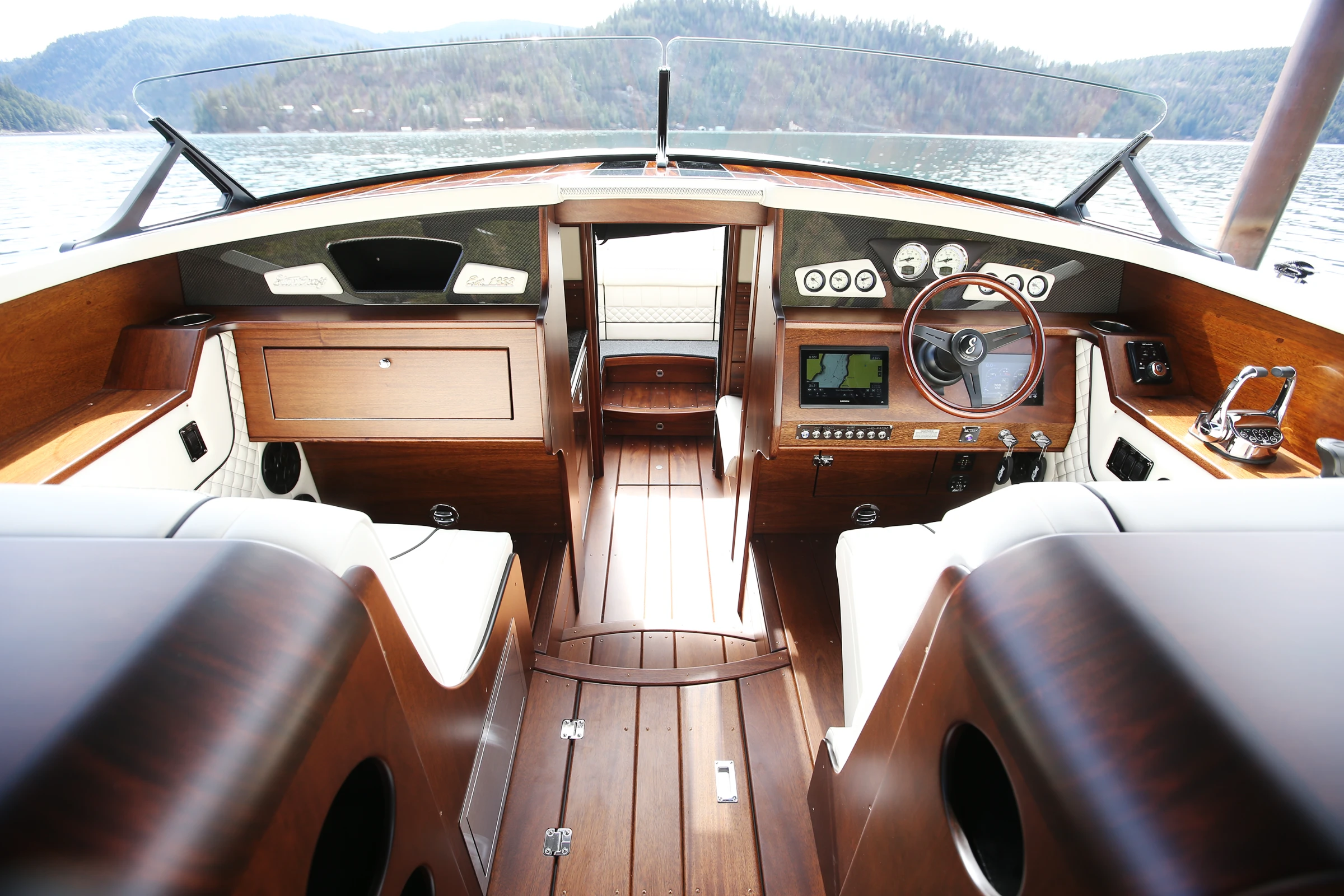
Around those parts, getting your Stancraft is a sign that you’ve made it. One can even throw the golf clubs into the Stancraft and cruise over to Gozzer Ranch for a few rounds. This is what success looks like in The West: The aspirational American lifestyle.
“We actually had multiple people buy boats before they bought homes,” said Bloem. “They knew they were coming to Coeur d’Alene, then bought a Stancraft, and then bought a house.”
Bloem returns to his “harder you work, luckier you get” philosophy. “If you asked me in 2003 or 2004, ‘would we be what Stancraft is today?’ I certainly wouldn’t have predicted it for sure,” said Bloem. “In a great way. Wonderful way.
“It’s been great to come back home and create all these great jobs back in little Coeur d’Alene, Idaho, and give north Idaho something to be super proud about,” added Bloem.
What is a Stancraft?
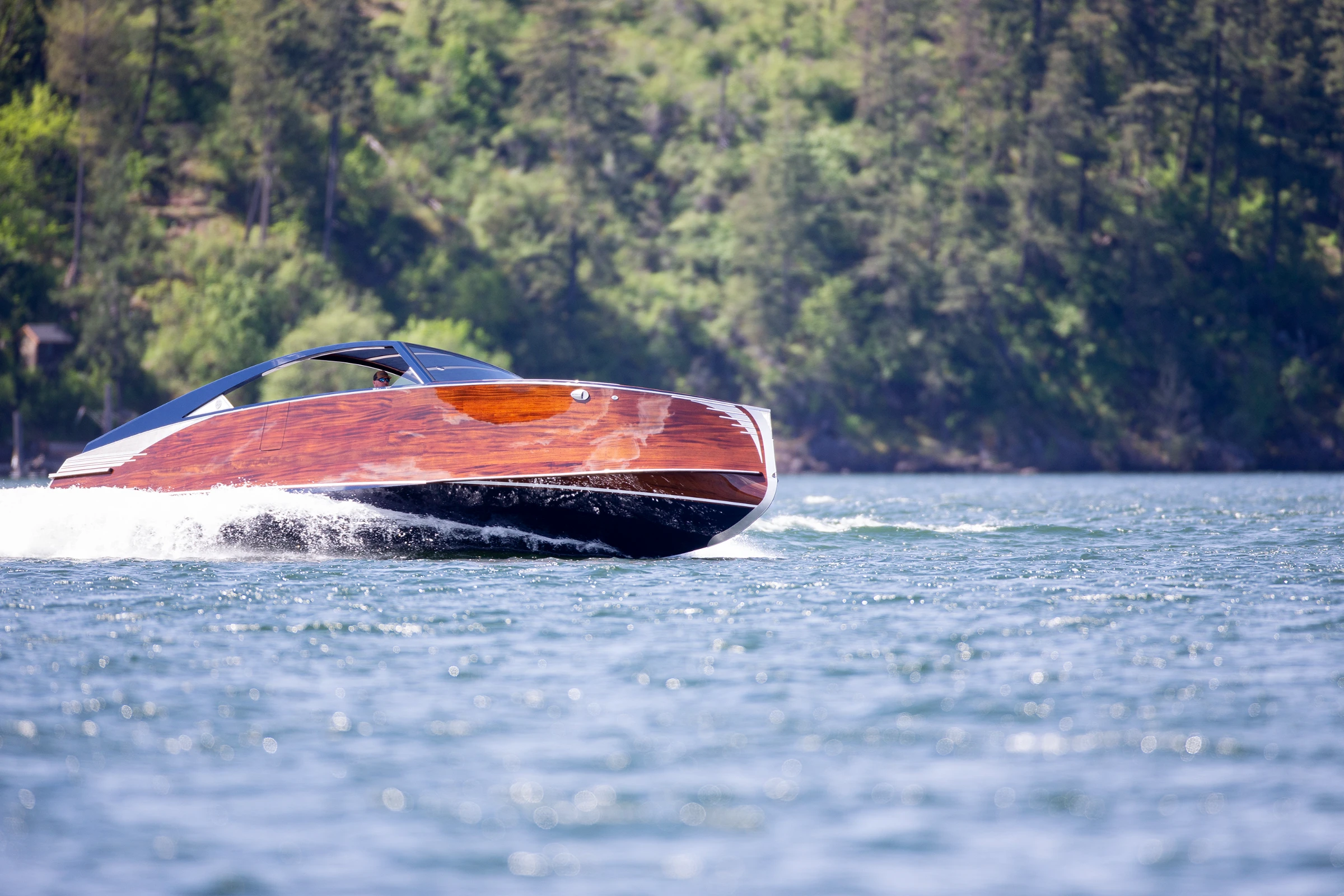
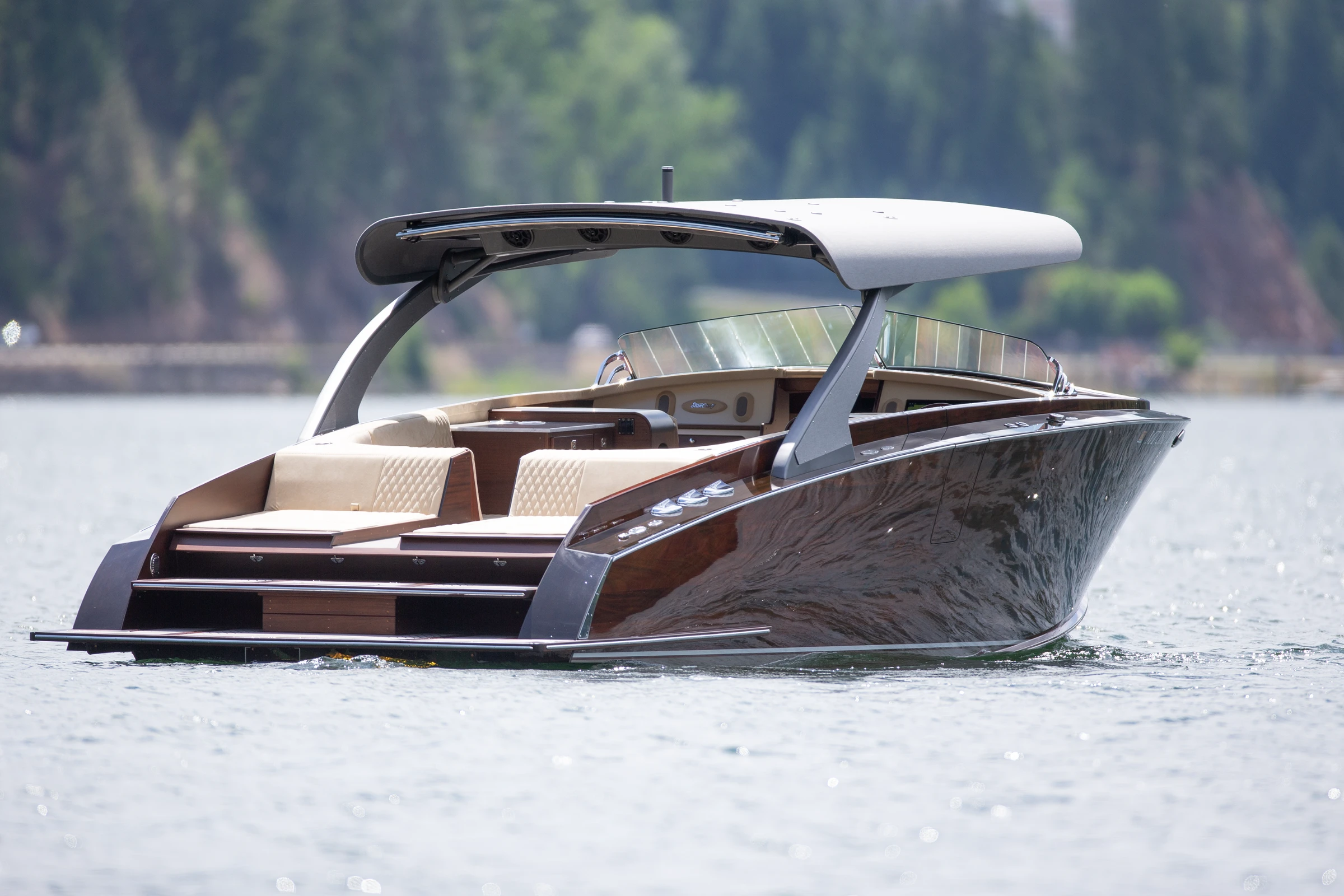
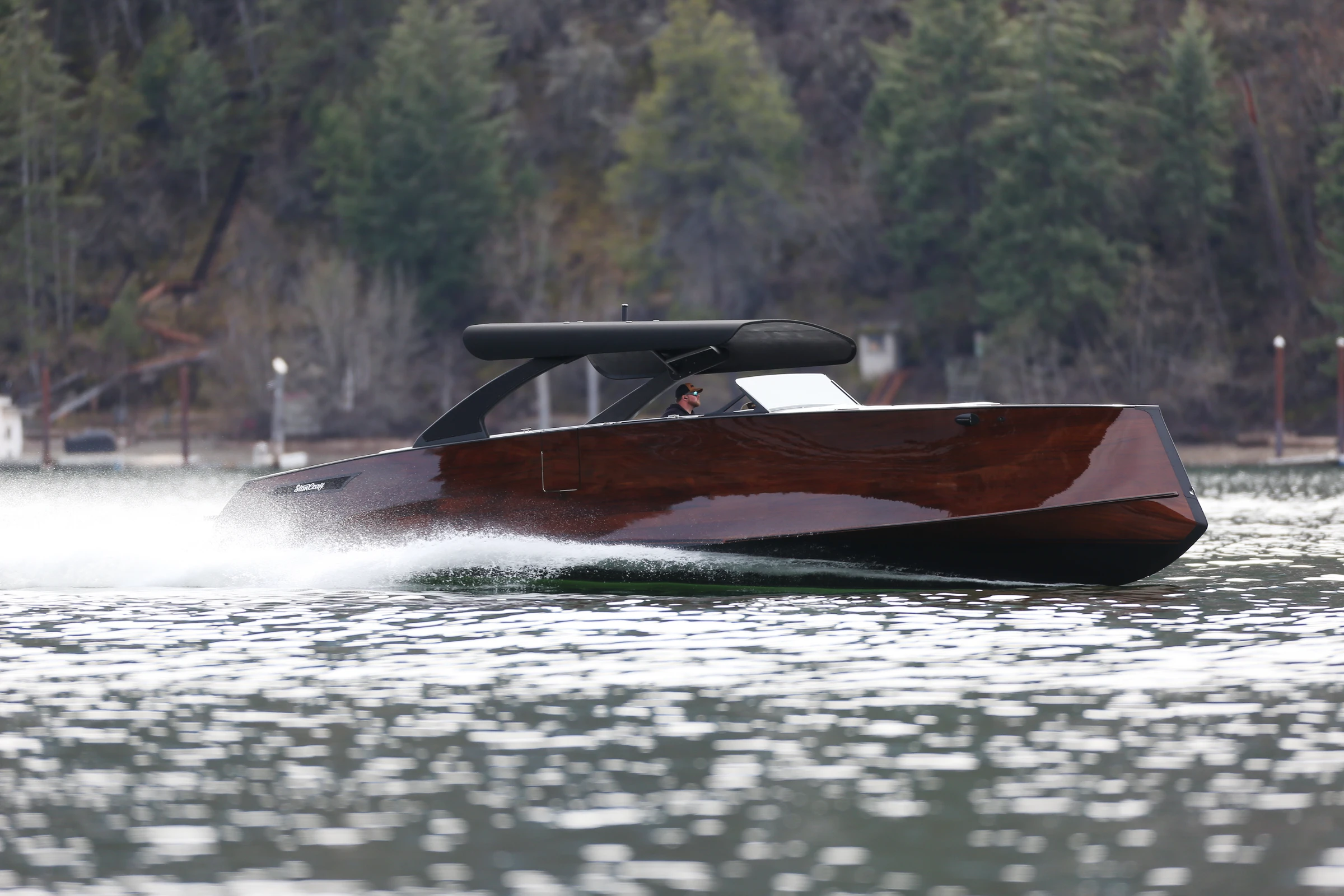
What makes a Stancraft a Stancraft? Bloem believes it’s a combination of ride quality and truly original designs. One of the iconic Stancraft mainstay builds is the Hammerhead series.
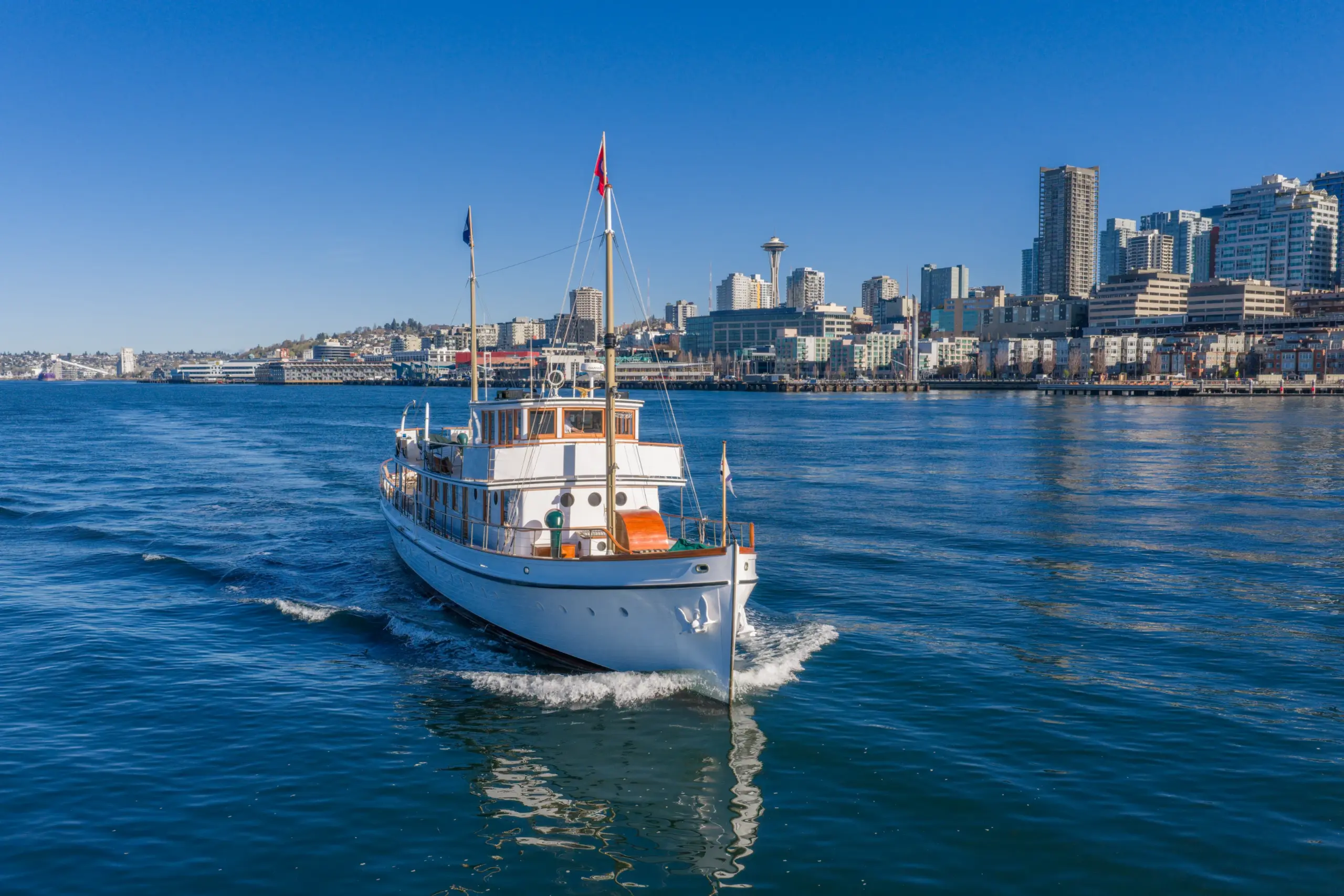
“The Hammerhead is very unique to Stancraft,” said Bloem. The reverse sheer of the bow and art deco styling was inspired by a famous vintage yacht called the A Boat.
“The ride obviously is something we’ve prided on ourselves our entire lives, careers, certainly from the days of Syd’s designs,” said Bloem. “And not just the sounds and the romanticism of it, but the actual performance and the way the boat can slice through water versus any fiberglass boat.”
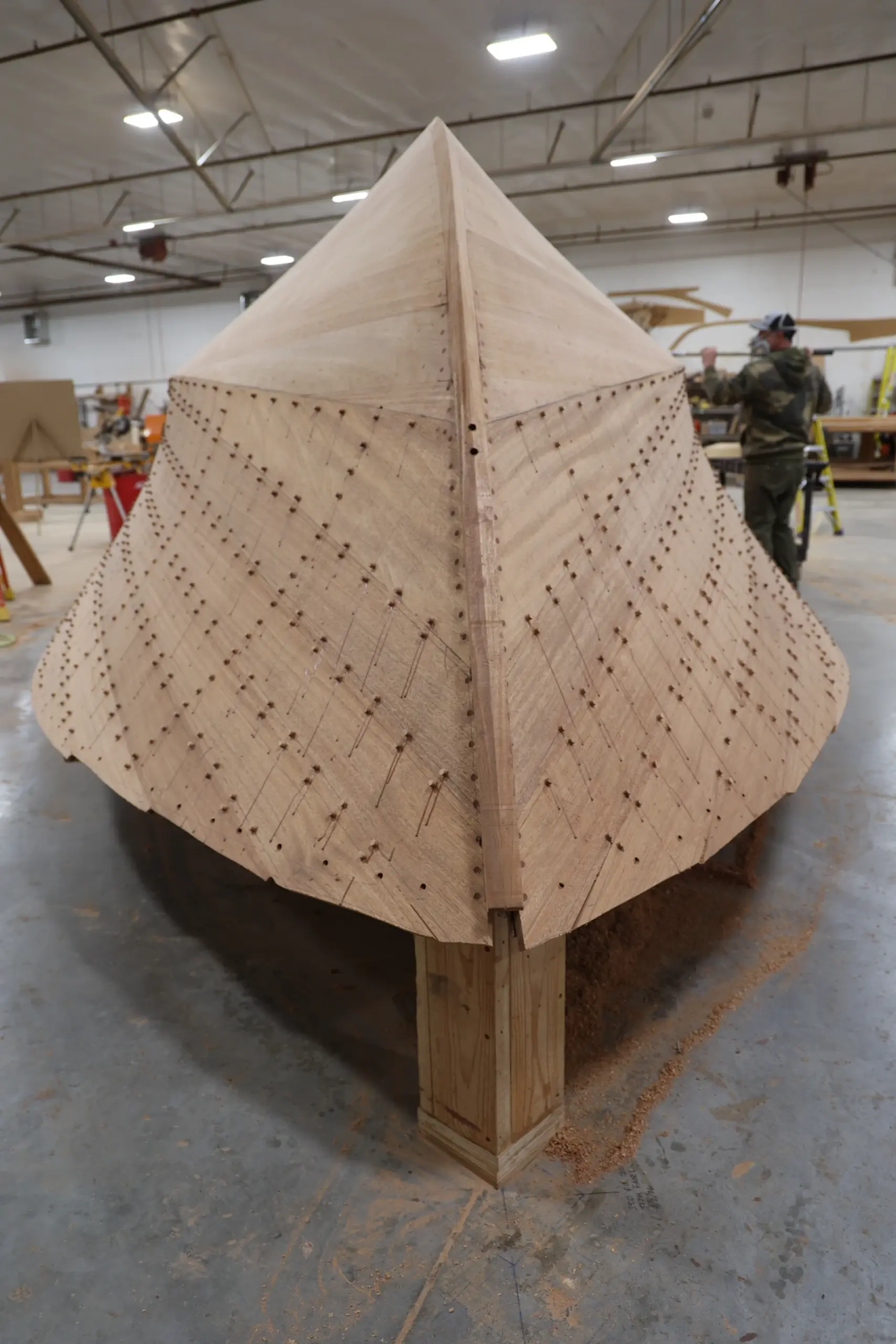
He points to the traditional plank-on-frame construction. “They are so structurally sound, so much more vertebrae to a wooden boat, or at least our version… old-school plank-on-frame. There’s just so much more structure to it that it gives it that ability to break water versus being broken by water.”
Another key factor Bloem highlights is that they do almost everything—from milling the wood to final finishing and upholstery—in-house.
“Everything on that boat is made by someone at a Stancraft facility. The originality is through and through,” said Bloem. “You can park seven of our Hammerheads side-by-side and each owner will have their own signature on each boat and look very different.” Doing everything in-house is also the best way to ensure quality control and scheduling timetables.
“Everybody comes for the beauty and they buy for the ride, that’s the joke,” said Bloem. “And we encourage people to come to the shop because we do a whole lot of tours annually. It’s fun to show off ‘Santa’s little workshop’ out there.”
The tour – Santa’s workshop
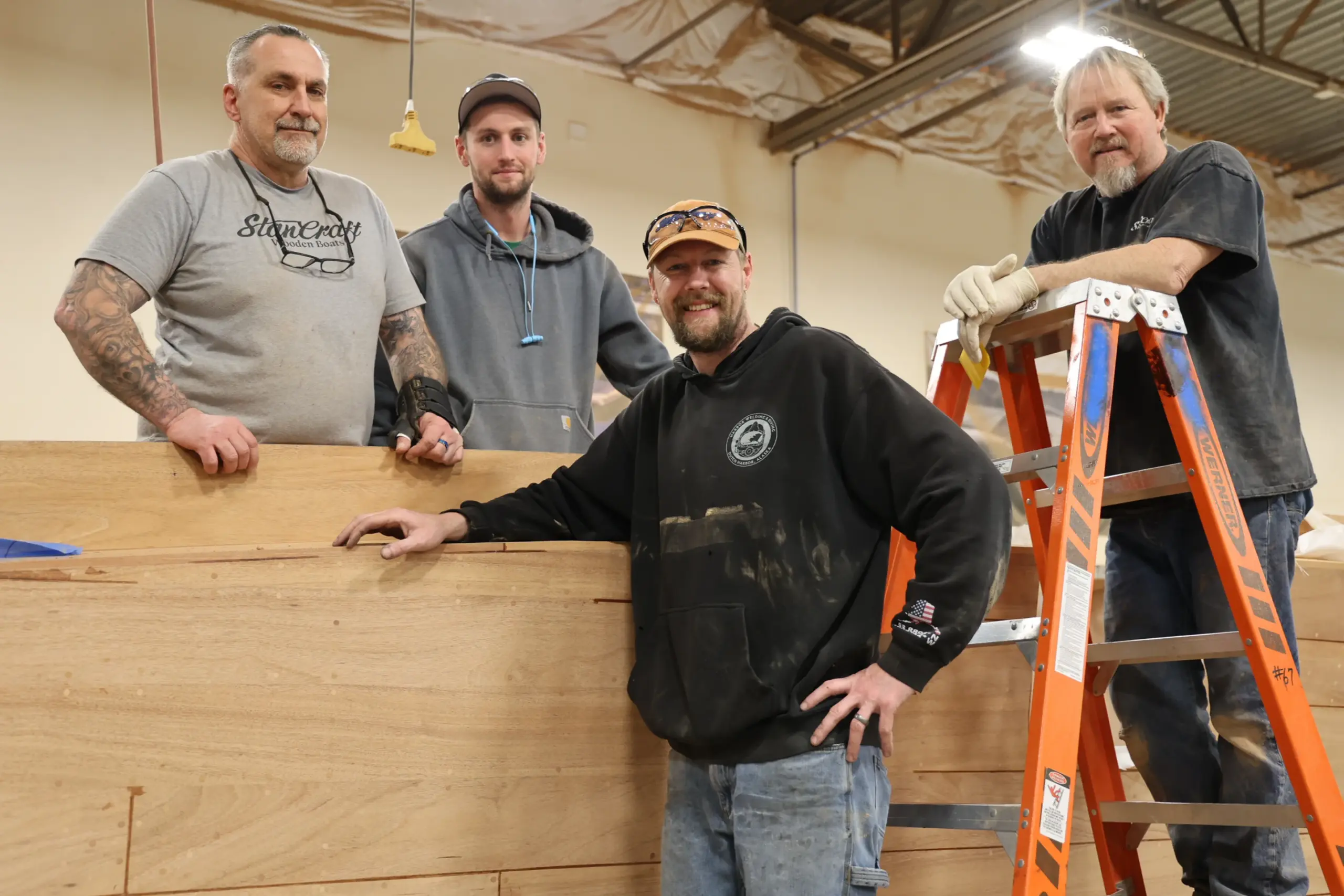
For the factory tour, I’m in the capable hands of chief operations officer, Jory Schmeling. After 16 years working at Stancraft, nobody knows the build process like him.
“My father was in the tugboat industry up here for 35 years, so the fact that we have a marine construction company and some tie to that is just special to me,” said Schmeling. When he first started working at Stancraft, there were only about a dozen employees. These days, Stancraft averages between ten and 15 new boat builds per year and there are around120 employees.
We first bop into the refinish building. Taking care of existing Stancrafts is a major part of what they do. According to Schmeling, about 70% of Stancrafts afloat today are within 200 miles of the factory.
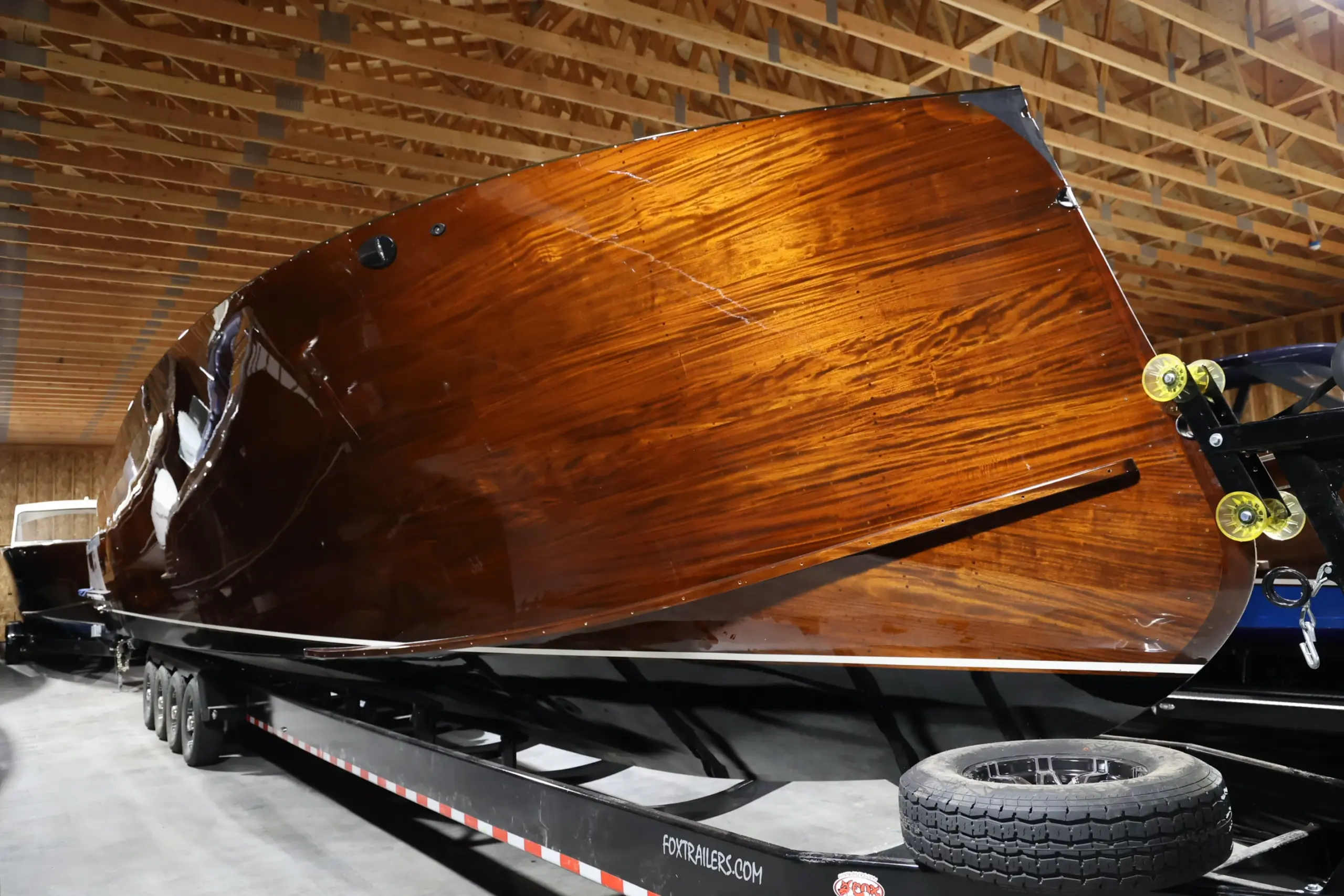
“At this stage, all we work on is Stancrafts, as that’s all we have the capacity to do in the off season,” Schmeling said, pointing out the various Stancrafts in varying stages of revarnishing and patch ups. One boat is getting a final application of shine coat on the topside. After the application, the boat will dry for one to two weeks before being sanded and buffed. “Some boats need a deck-stripe patch up,” he adds. “Some boats are going all the way down to raw wood. Some boats are just getting new bottom paint.”
We approach a Stancraft that was taken all the way down to the raw wood on the topside for a total reapplication of varnish. A few hullside planks were replaced as well.
“Typically I tell everybody there are two enemies to these wood boats: sun and the human driving it,” explains Schmeling. “Keep it covered when you’re not using it. Wipe it down. Don’t run into objects—walls or docks.” Following these simple rules generally reduces maintenance to a new shine coat every four to six years. Stancraft prides itself on its service after the boat purchase; working with clients to plan and budget out maintenance is par for the course.
“We try to give them that guidance. A lot of people worry about maintenance on a wood boat,” said Schmeling. He points to another boat and describes how the owner is applying shine coat to the topsides this year and did work hullside last year. “Perfect example of him breaking up that upkeep and maintenance of the boat to not get hit all at once,” he said. “He enjoys the boat over the summer. We take it in the offseason to do seasonal work.”
We venture into the next building to the really good stuff—the mill and a computer numerical control (CNC) machine shop. I take a deep inhale as we enter the mill and let the smell of freshly cut African mahogany fill my soul. Schmeling starts talking about Stancraft construction.
“The style of building we do is carvel plank wood boats. Essentially board-on-batten, pirate ship—old as it comes, right?” grins Schmeling. Carvel plank wood building is one of the oldest kinds of wooden boatbuilding—basically plywood-on-frame construction that’s typically painted.
“Handcrafting dreams, one boat at a time,” adds Schmeling. “There’s a reason it worked for so long, hundreds of years before we got here.”
Stancraft does all their milling in-house, and about 8,000 board feet of the African mahogany is stacked before us. Each Stancraft is roughly 98% mahogany, mostly sourced from Ghanaian khaya (the tree from which the lumber “African mahogany” comes from). Schmeling personally orders the estimated needed lumber a year ahead of time from reliable buyers he’s been working with for years.
“I need to make sure there’s wood here, because if there’s no wood then 120 people lose their jobs,” said Schmeling. “I’ve lost wood in civil wars, literally—in civil wars in Africa. I’ve lost it in the Congo, at ports. You’ve got to have a backup plan for a backup plan.” They’ve also collected a handful of oddities that arrived with the wood deliveries, including exotic lizard specimens and a bullet. One development in the world of lumber that Schmeling is appreciative of is the addition of Africa mahogany to “The Sidings Index.”
“The Sidings Index is an international order that ensures that we’re managing old growth forests and not decimating them, similar to what’s happened to Honduran mahogany, which isn’t exported anymore,” explains Schmeling. “They had to figure out a permitting process, which was a small hiccup in the industry, but we were well ahead of the curve on that. I have great lumber buyers who kept me in the loop.” The Stancraft building process has become so efficient over the years that the only waste is sawdust. The wood scraps are utilized in other build processes to make every bit count.
We move into another facility, where the boats start to take form.
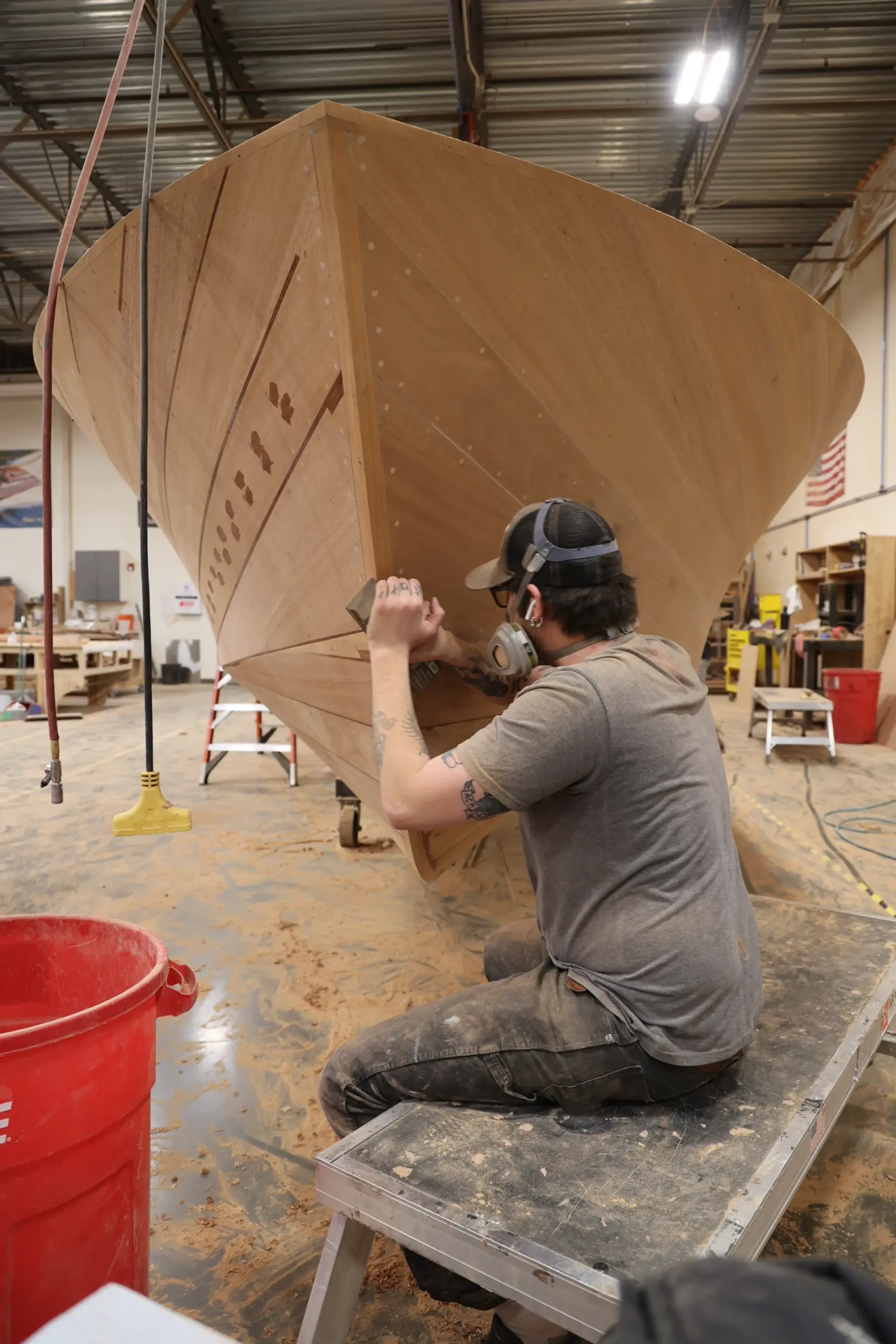
“This building here is, essentially, where every Stancraft gets its start,” said Schmeling. We come across a beautiful hull in the process of being plugged, a sight that would bring any wood construction enthusiast to happy tears.
“Visually, one of the most favorite parts of the boat for me,” said Schmeling. “I love a plugged boat; says something special.” All the fall from cutting lumber throughout the entire process goes into a bin and one of the company’s oldest employees, who has been at the company 20 years, hand cuts all the wood plugs used at a drill press. “And then he sits here and hand pounds every single plug in. One more way to utilize our scrap and use the product that was cut off back into the boat itself.”
Around 90% of Stancrafts built today are twin-engine boats with double-planked hulls and bottom sides. Schmeling points out the quarter-inch layer of mahogany plywood behind the 9/16” mahogany on the hull. The plywood is 1088 British Standard grade, meaning it has been run through an X-ray machine to ensure there are no voids in the lamination process to collect dry rot—a great enemy to wood construction.
“The bottom of this boat is 9/16th double planking, with a vinyl tarping layer underneath this. A quarter inch, 1088 plywood, and then to the frames,” said Schmeling. “That vinyl layer in between is something signature to us.” He explains how the vinyl tarping layer helps the boats maintain structural integrity with seasonal expansion and contraction in the wood. It’s also extra reinforcement during worst-case scenarios. “It’s saved our boats before,” he said. “Someone has actually hit a deadhead before and snapped a bottom frame or two going up the Joe River. It did not puncture that vinyl tarping player, although it busted five planks and two frames. That vinyl tarping layer prevented the boat from taking on any water or sinking. It’s kind of a neat thing. It’s going to help with your launches, ultimately help create the durability of the boat.”
Schmeling waves to friendly employees. The vibe is cordial, calm. Quietly busy.
“One neat thing about this process that I was always proud of when in the shops when I was out there was using my grandfather’s hand planes,” he motions to the nearest wood hull under construction. “When this is in its raw form and it’s just frames, we actually use hand planes to faire the bottom and the sides of our frames. Which, in today’s age, it’s a very old-world tool that’s not being used. I always thought it was neat for me that I was able to make a living with my grandfather’s tools. In a modern era, crafting a handmade product in the USA—it’s very special.”
We exit the facility and pass a completed boat doing a full float and engine test in a float pool outside. Every boat gets a full float test with all its systems.
Next stops are the finishing department and then final assembly. At this point, the boats have been entirely built only to be disassembled again to be fully finished and gradually reassembled for a final time. We check out a hardtop Hammerhead-style boat, a very Stancrafty build. All told, taking a newly constructed boat and putting it through the finishing process, from initial sanding to final varnish applications, takes six to eight weeks.
“Finish is one of the tougher problems to work on,” explains Schmeling. “You can’t throw bodies at it. You can’t cheat it. It has to have certain dry time. Certain time to gas off. With building, you can throw bodies at it. But with finish, it’s finish; it just takes time and science.”
Thousands of labelled, newly machined components sit on tables. Every Stancraft has between 200 and 600 essential, individual pieces. Messing up or misplacing even one of them can cause real delays, and time is money on the factory floor. The components mostly need to be hand-finished as well, typically with an epithane varnish that brings out the amber tiger-eye hue of the mahogany.
“While varnish is awesome, it’s very soft,” said Schmeling. “When you’re working on the boats, especially during the early stages while it’s still soft, you don’t wear metal belts. You take your rings off. You put hands on with too-fresh varnish, you will leave a dent with a ring.”
The final assembly facility is large and brightly lit, full of busy workers bringing the boats together in one final phase that usually takes about three weeks. Rigging teams pull wires. Others build mounts and panels. One point of pride for Stancraft is the in-house upholstery department. These days, a great professional upholsterer is a unicorn.
“Everyone staying on schedule is key. If you’re not, communicating that is essential,” said Schmeling. “Sometimes you cause damage and you go backwards to go forwards.”
The future – 50-footers, commercial craft, and electric propulsion
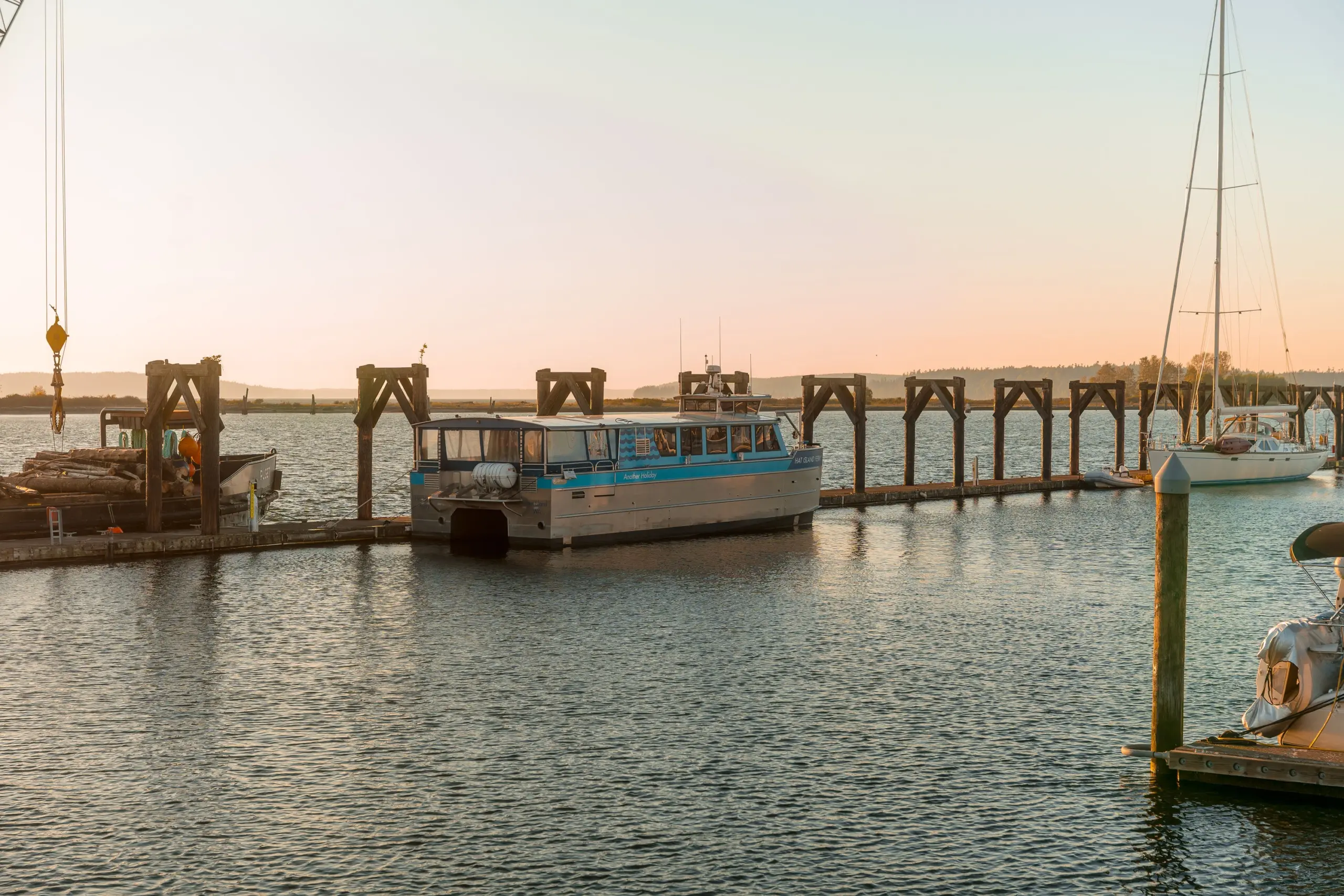
One build, in particular, surprised me—a commercial passenger vessel. The client is Gozzer Ranch, and the US Coast Guard-approved passenger vessel will be a favorite lake transport option.
“There is a lot of criteria to meet US Coast Guard standards, but we’re proud to honor that kind of build and work with that level of craftsmanship. Very neat boat,” said Schmeling proudly. The vessel was slated to be splashed in a few weeks. This is Stancraft’s fifth or sixth passenger vessel. “I’m confident that this will go sell another one of these in the next 12 months,” he adds. “Once they get in this, they won’t want to get in another one.”
Staying with the industry and taking new opportunities is the name of the game for the business.
“There’s no sense in staying stagnant, keep learning and getting better,” said Schmeling. “Take on that next challenge. The world keeps moving and so do we.”
The last stop of the tour is the storage facility. Although quiet and dimly lit, in some ways it was the most impressive building of all in that it housed perhaps two dozen fully complete Stancrafts. This, where I stand, is possibly the highest concentration of top-quality, carvel wood plank mahogany boats on the planet, representing millions of dollars’ worth of assets.
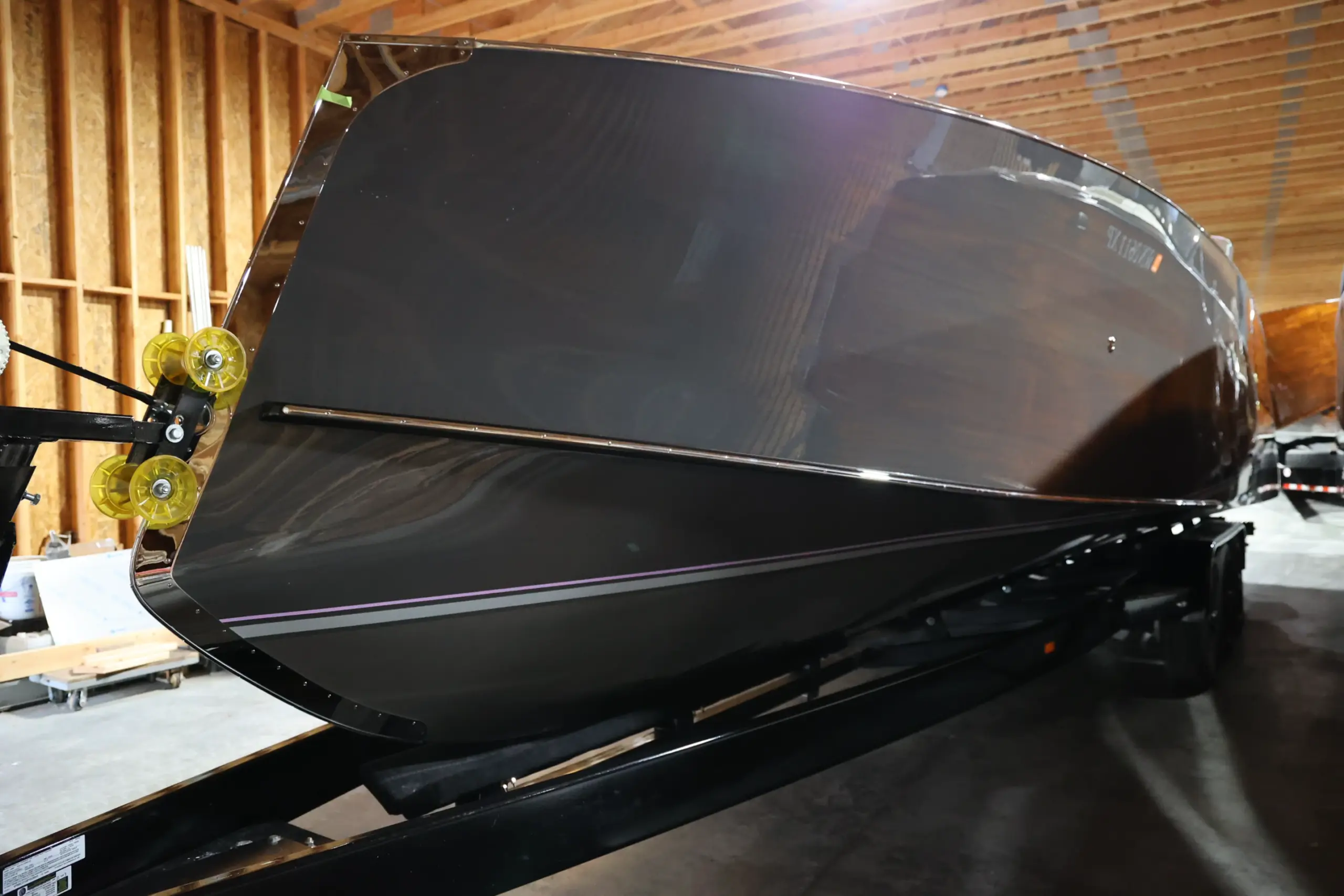
Two boats stand out and show new horizons for Stancraft as it nears 100 years in business. The builder’s first electric boat sits sleek and silent with a gray finish. It is scheduled to splash and do tests later in the week. The other is Stancraft’s first 50-footer that elegantly looms above me under a beam of light in all her tiger-eye amber glory. This boat is the largest Stancraft has ever built and will be hitting the water in Sand Point on Lake Pend Orielle this summer.
“I think both those boats will expand what we do,” Bloem said in his office. “I think we’ll build more electric boats and I know we’ll build more 50-footers. When we broke the 40’ threshold here about five years ago, it broke that barrier. We build a whole lot of 40-footers now.”
Similar opportunities exist with electrical propulsion.
“People love the electric theory and Tesla and all the cars—all that stuff. So it’s a no-brainer to go that route,” said Bloem. “And the bigger boats open up more of your neck of the woods. That boat was literally designed for someone in the San Juans. They ended up not building that boat, so we ended up building it for a guy here on a lake. But that design will open up some opportunities for some bigger water.”
Although most Stancrafts live on the inland waters of Idaho, they are also found in Puget Sound, Canada, and on the East Coast in Intracoastal Waterway states, like North Carolina and Florida. All told, Bloem reports building about 600 boats since 2003. Stancraft is also opening a new office in Kalispell, MT.
“It’ll be a satellite office, we’re not going anywhere out of here,” he clarifies. “Our home is Coeur d’Alene; our home is Idaho.”
The Takeaway
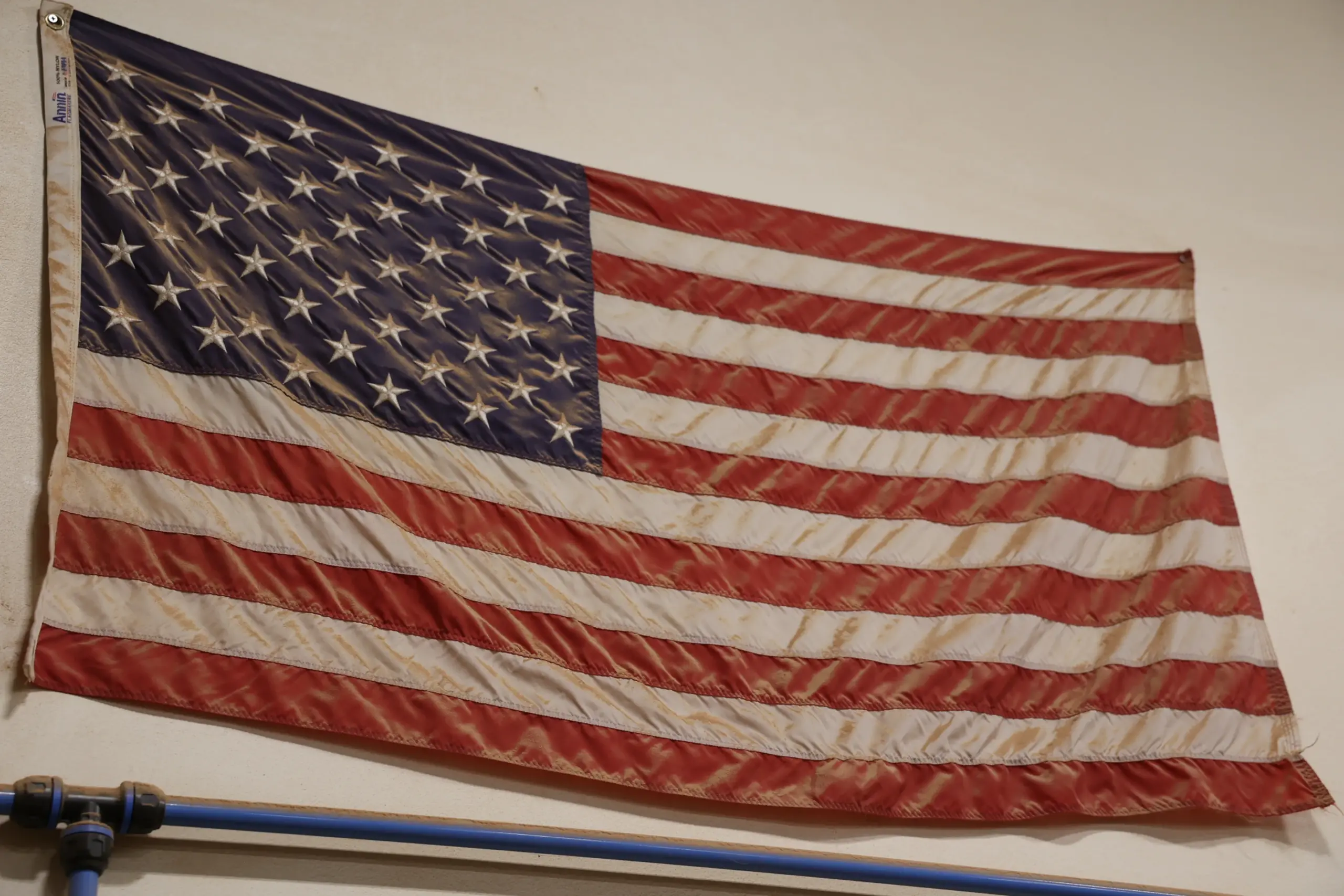
At the end of the tour, Schmeling and I stand in a moment of reflection. An American flag covered in fresh sawdust hangs from the corner.
“I love what we do,” said Schmeling. “The boats are amazing. The ownership more amazing. The coolest thing.” He talks about his past stints as a chef, in construction, and as a small business owner. But for him, building Stancrafts isn’t just a gig. “We do things right. We’re proud of what we do. We stand behind our product and that’s just something different. The ownership is just something special to me. They are someone I aspire to be. What they do for the community, what they do for their staff. What they do in all aspects… they are just truly good humans that a lot of people are proud to work for. I consider them family.”
We shake hands and part ways, Schmeling with a hundred things to do, no doubt. On my way out of the shop, I fall into a friendly conversation with Sam Anderson, a finish worker who seems to be in his twenties. He is sanding an engine hatch.
“This will have wood exposed, and this will all have upholstery in a U-shaped seat at the end. And it’ll open this way, it’s the back. This will face the bow,” he said, describing what the final product will look like. “I love to watch the shape it turns into; how they build to how they have to finish it to turn out. It’s just my favorite process to go through. It’s very satisfying watching it go from this to going out there and being all finished and then being upholstered and everything. It’s awesome to watch it turn out.”
Anderson dons his ear and face protection and gets back to sanding. Sure, one can go on about the exciting trajectory for Stancraft; the bigger, electric, and commercial builds. The original designs, smooth ride, and head-turning quality; the three-generation legacy and expansions. But at the end of the day, I’m struck that young Anderson earnestly sanding the engine hatch may be the visual that encapsulates what Stancraft is all about to me. Bloem probably looked similar back in 2003, when he took the helm and was sanding inside boats himself in that 2,000-square-foot garage, hoping his vision for the venerable company was going to pan out. It’s not often a nearly century-old American wooden boat company gets a meteoric ascent after a generational rebirth, but in Hayden, ID, I bear witness.
Maybe it is true, after all—the harder you work, the luckier you get.