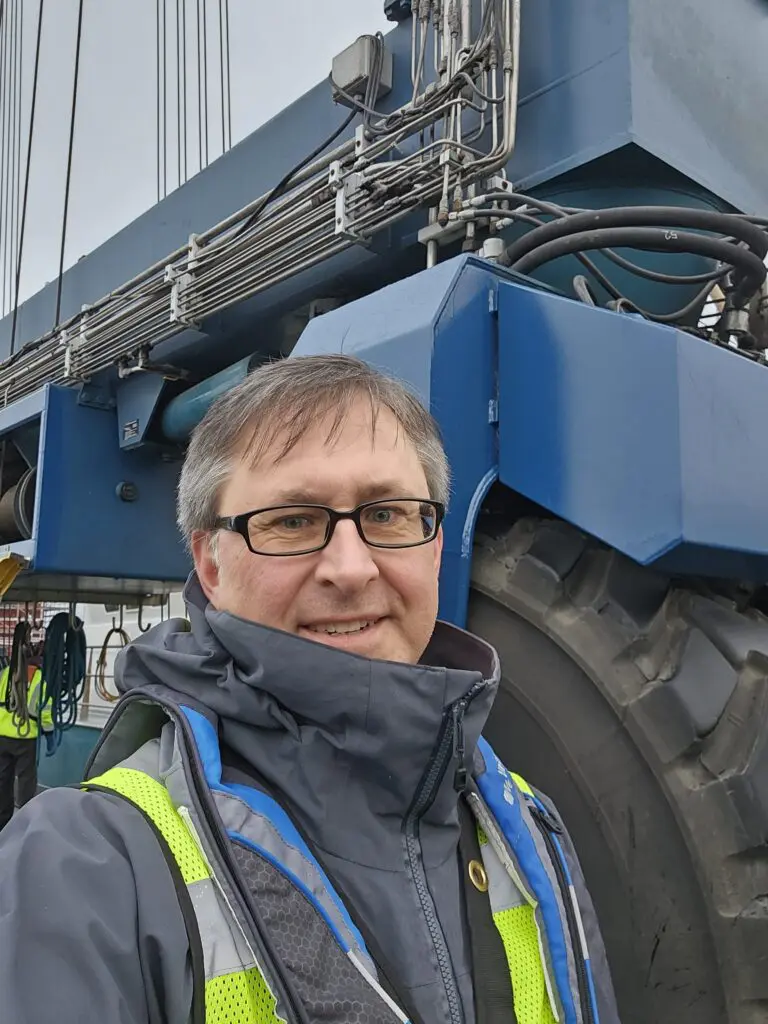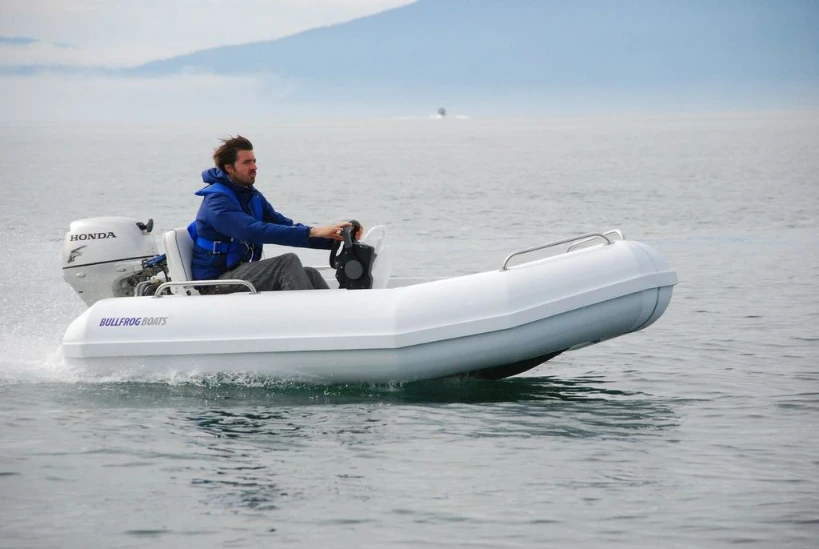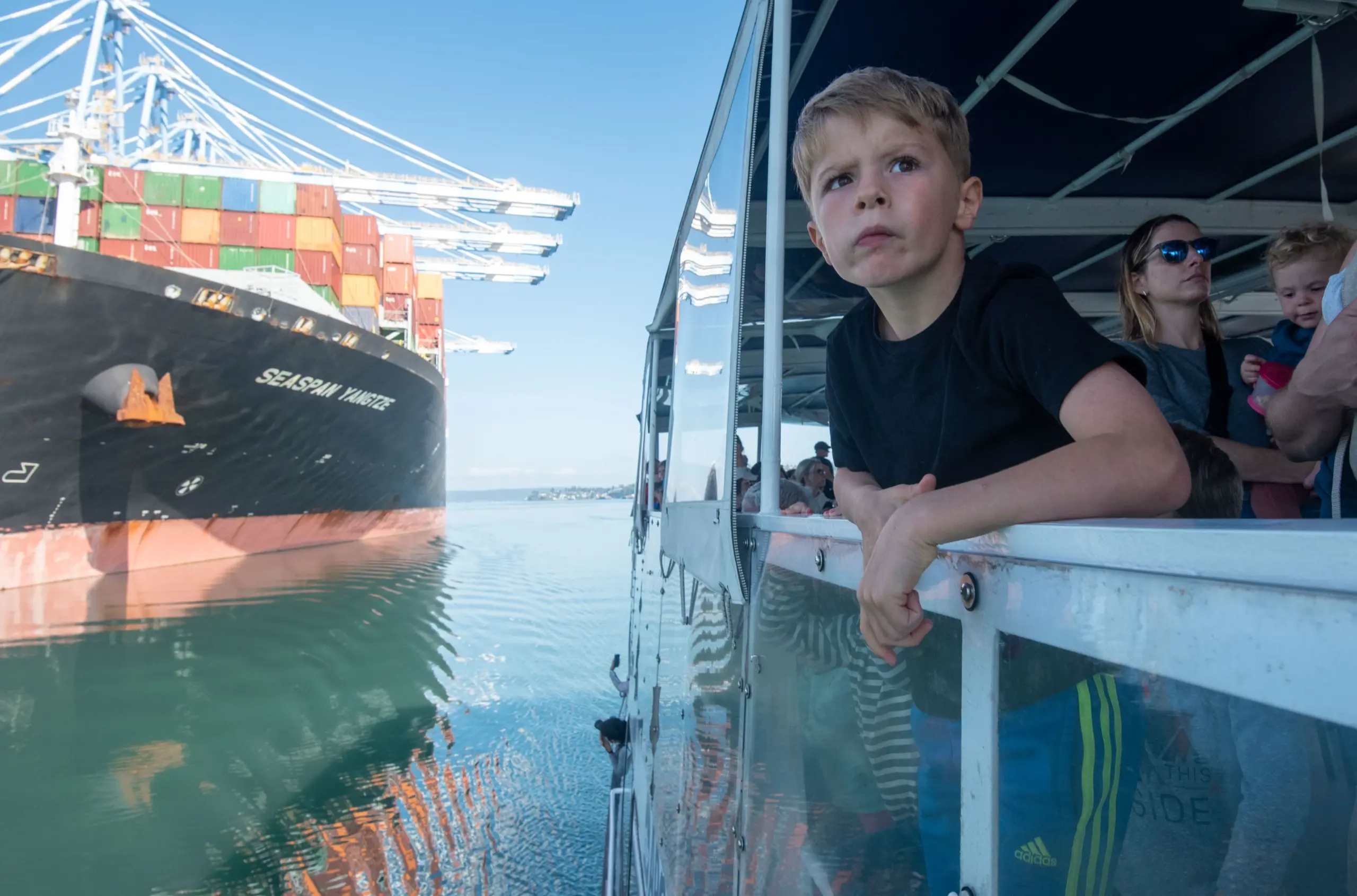
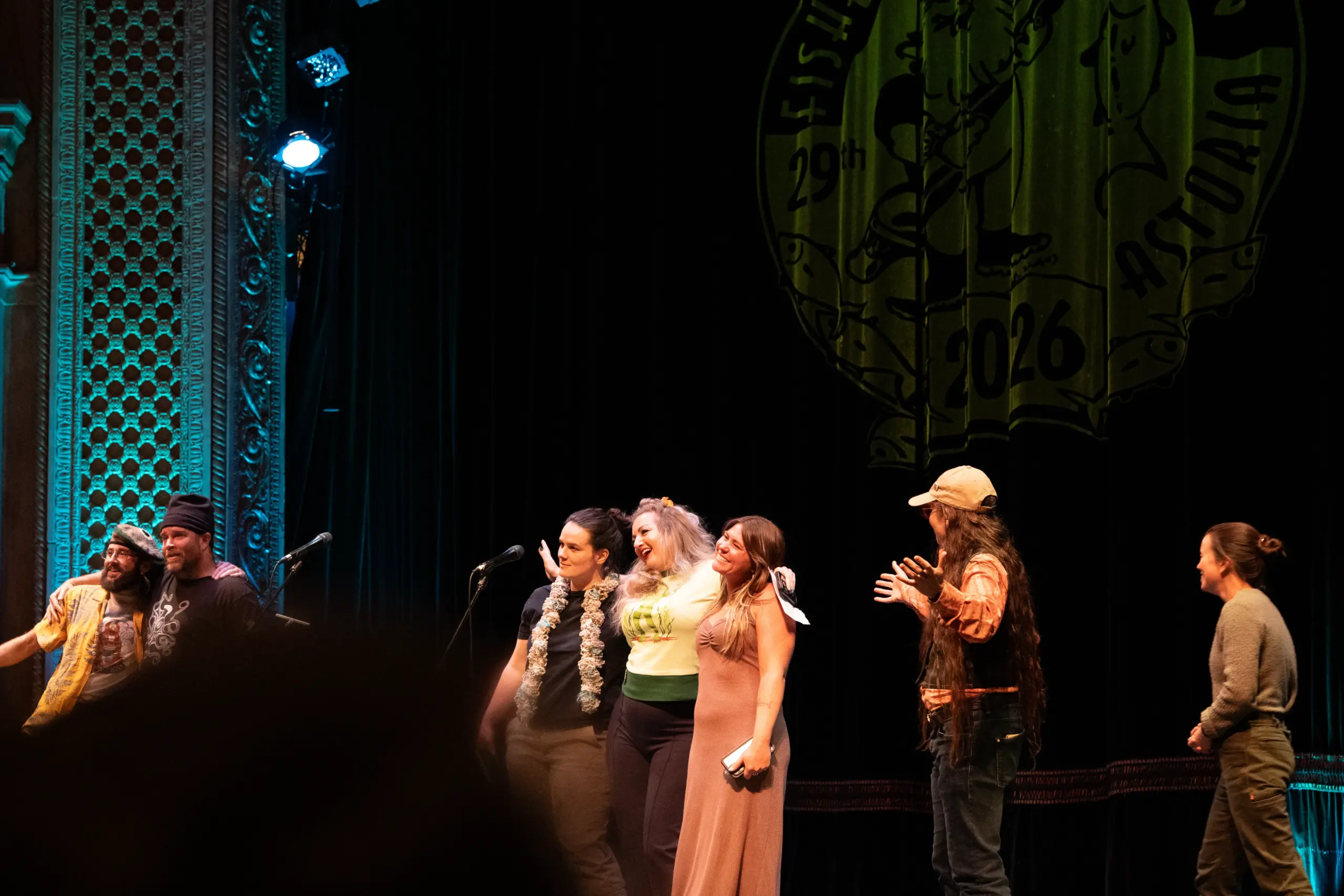
For about a year, I worked as an at-sea observer on groundfish trawlers. I often worked with captain John, a retired commercial pilot, who said he loved leaning into the fisherman stereotype. He showed up everywhere in gunky old sweatpants and an Alaska Ship Supply hoodie. John’s was a simple life; monitoring the fish finder, watching movies, and consuming canned food recipes. John was smart and content, but many of the fishermen I met needed more. They were holy men, philosophers, and—my favorite—poets. While we dragged a net, going four knots while the ocean’s mood shifted, I also scribbled poems. And many times, fisherfolk mentioned an event that might interest me: “Have you heard of the FisherPoets Gathering?” This February, I finally attended.
In 1998, Jon Broderick, former schoolteacher and longtime commercial fisherman, started the FisherPoets Gathering to get a few fishing friends together for art and story. For one weekend each year since, artists who happen to be fishermen gather in Astoria, OR, to share their art. The meeting now attracts men and women from both coasts. Doreen Broderick, Jay Speakman, and many others stepped in to help as the gathering grew. The event is now supported by Oregon Sea Grant, the Columbia River Maritime Museum, the Oregon Community Foundation, and a host of other families and businesses. The website warns that FisherPoets is “cobbled together every winter,” but my impression was of a well-oiled production.
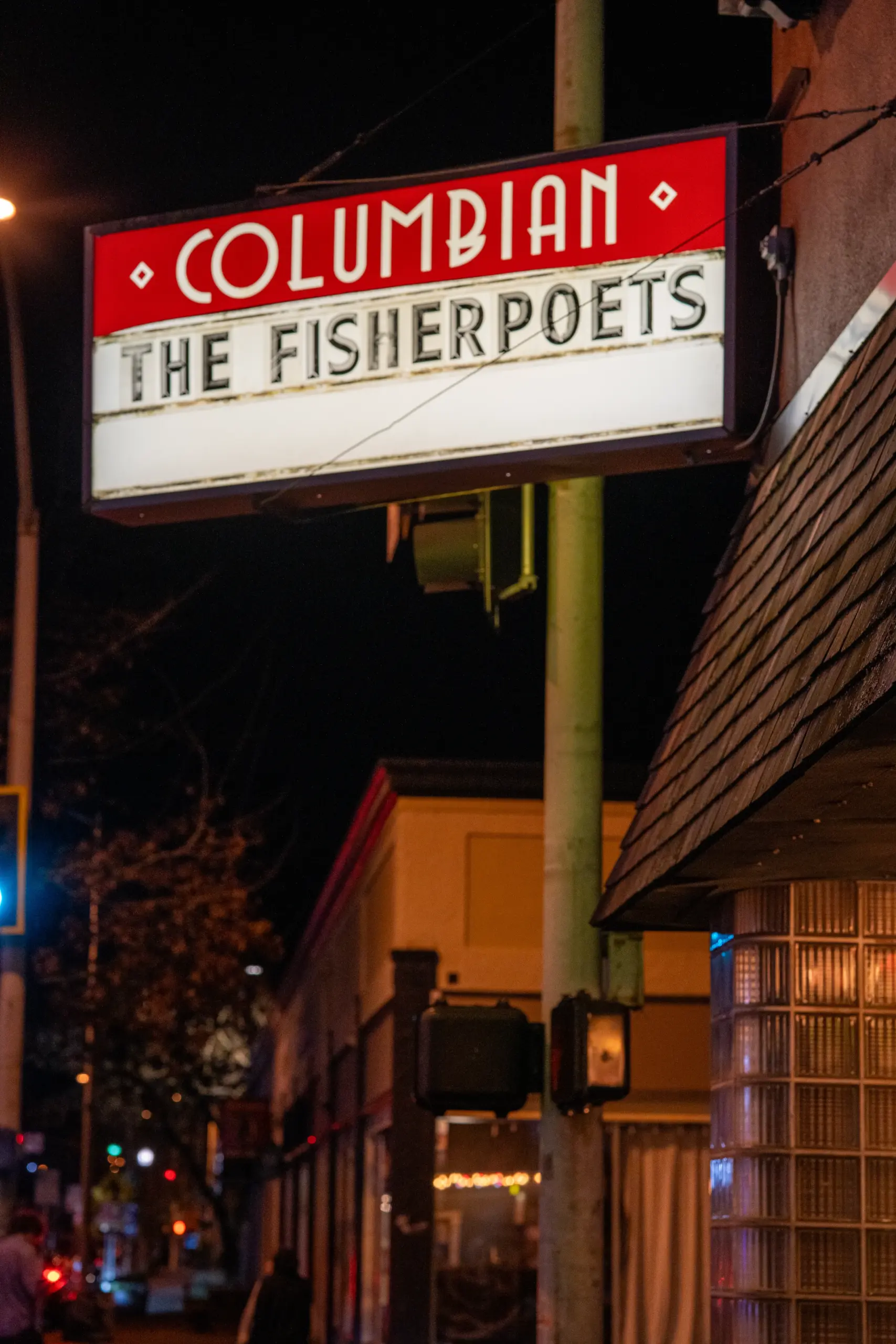
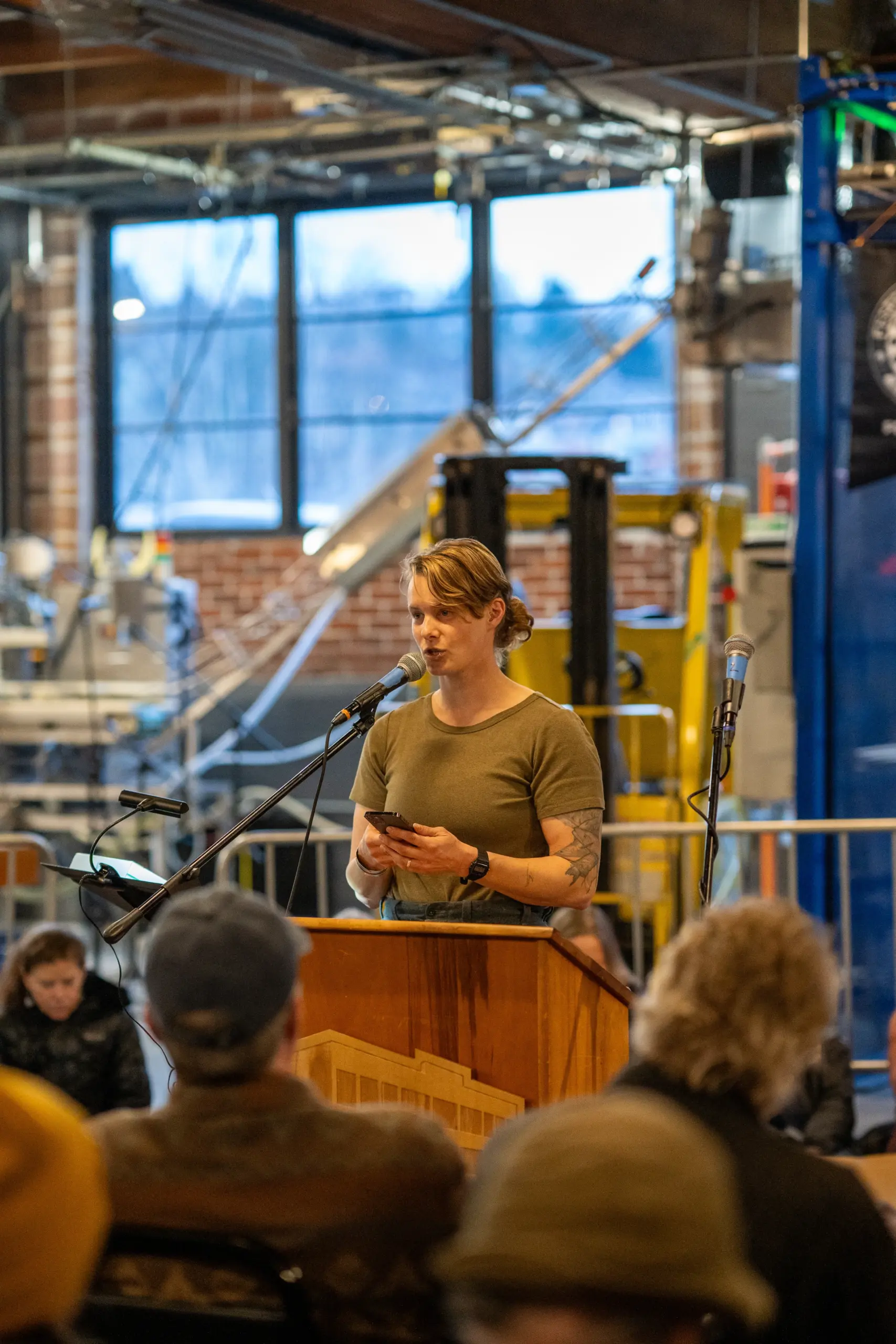
The headquarters of the gathering is “The Gearshack,” just across the railroad tracks from the terminus of the Columbia River. All must stop in to purchase a pin for event access and to buy books or enter the silent auction. From there, attendees walk to workshops, art shows, and industry or environmental lectures hosted at local institutions like the Astoria Public Library. After 17:00 hours, breweries, galleries, and theaters take over, offering stages for bards to mesmerize audiences. This year, seven different venues ran concurrent shows, hosting three artists every hour. It’s an extreme bar crawl of song and verse, performed with the occasional drum or guitar, or even the occasional Scottish accent.
FisherPoets destroys the idea that fishermen are too tough for feelings. Kell Riggle, editor of the literary magazine Sea Lemon, told the audience, “My Irish aunt taught me how to read poetry with emotion, so if I weep, I invite you to weep with me.” By 22:00 hours on Friday, February 27, 2026, The Columbian Theater became a net full of fishermen, every ear hooked—standing room only—as the competitive Poetry Slam commenced. Moe Bowstern won with a powerful poem, True North. My favorite lines read as follows:
“There exists on earth a magnetic equator, an irregular, ever-changing line, where the vertical component of the magnetic field is zero.
There exists within each human heart a desire to belong, to locate oneself in that belonging.”
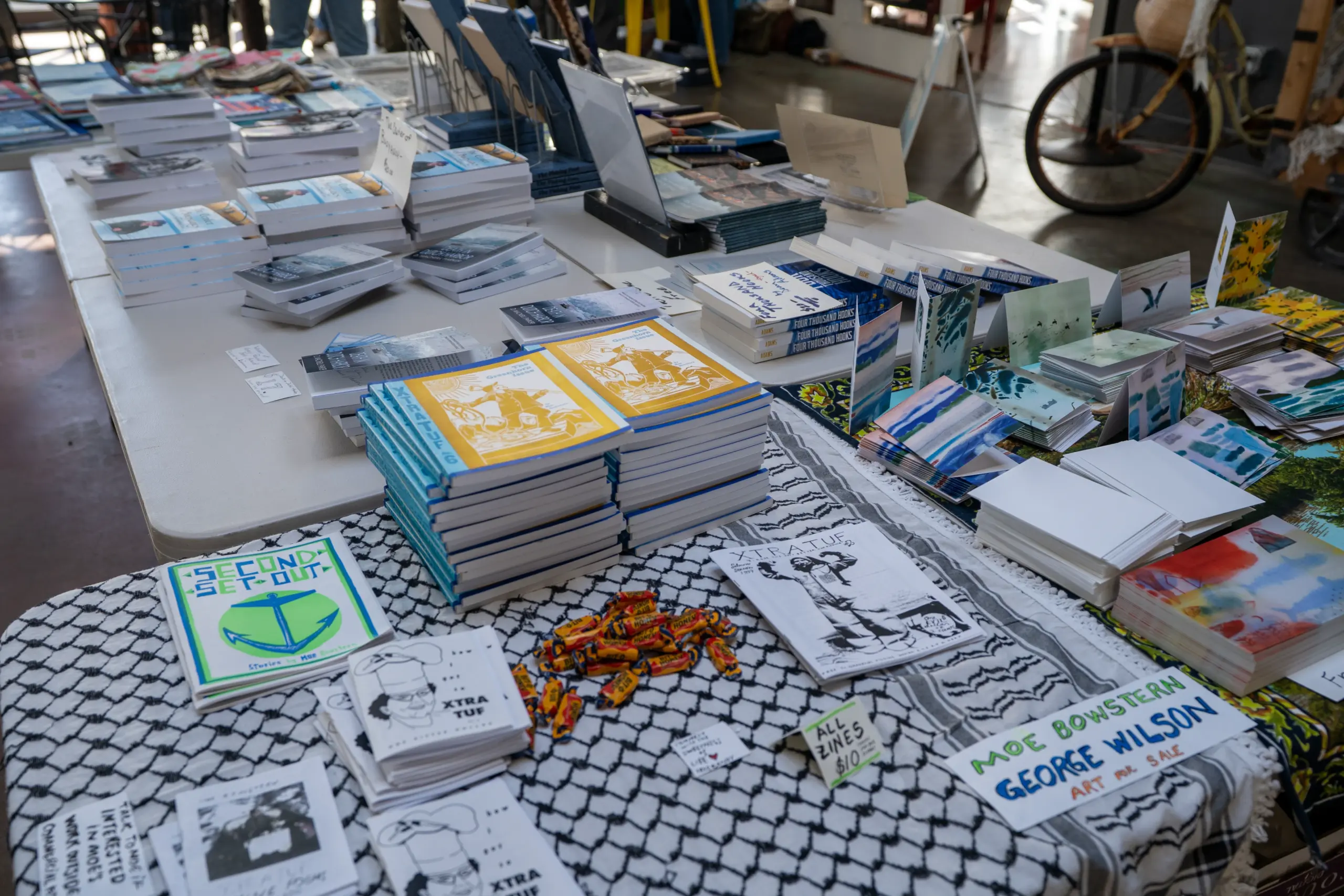
I worried that I wouldn’t belong at this event as a non-commercial fisherperson, though I’ve been working at sea for a decade. What I actually found was, at FisherPoets, everyone is welcome. You might find yourself in easy conversation with an author you admire. Less than an hour after arriving, I noticed Lara Messersmith-Glavin’s fabulous book, Spirit Things, lying on a table. I picked up the book next to it, Ruiner, the first in Messersmith-Glavin’s new political fantasy series. I felt eyes on me, and there she was. I congratulated her before she had to dash.
I found the audience at FisherPoets to be as brilliant and welcoming as the readers. During a workshop, my neighbor, Naomi, went from describing the intricacies of a chosen object to asking a question I ponder a lot: “Are we allowed to have social and emotional needs during times of social and political turmoil?” Saturday night’s on-site poetry competition at the elegantly restored 1925 Liberty Theater introduced more creative onlookers. This year’s prompt was to write a poem from the perspective of a piece of fishing gear about to fail. The winning poem was a genius rhyme about rain gear.
As I drove home over the Astoria-Megler Bridge, I felt my mind slipping back out to sea aboard John’s trawler. There always came a time when the crew fell quiet, into the depth of their own thoughts, as we slung fish in a swell of slime. I know that, for many, this is when inspiration struck. I felt grateful for those who gave into this inspiration and to all who aren’t afraid to work with their hands. And I felt grateful to be able to sit still and listen at FisherPoets this year.