Spring and early summer is often misunderstood as a fun-in-the-sun paddling season in the Pacific Northwest. Many assume both air and water temperatures will be warmer but, in reality, spring and early summer often brings some of the coldest water temperatures of the year due to snowmelt. In recent years, colder and wetter spring weather has also continued well into mid-June.
Dressing for spring and early summer paddling is not much different from winter paddling, though gear choices vary depending on the type of paddling, water conditions, and weather.
Surfing and downwind paddling
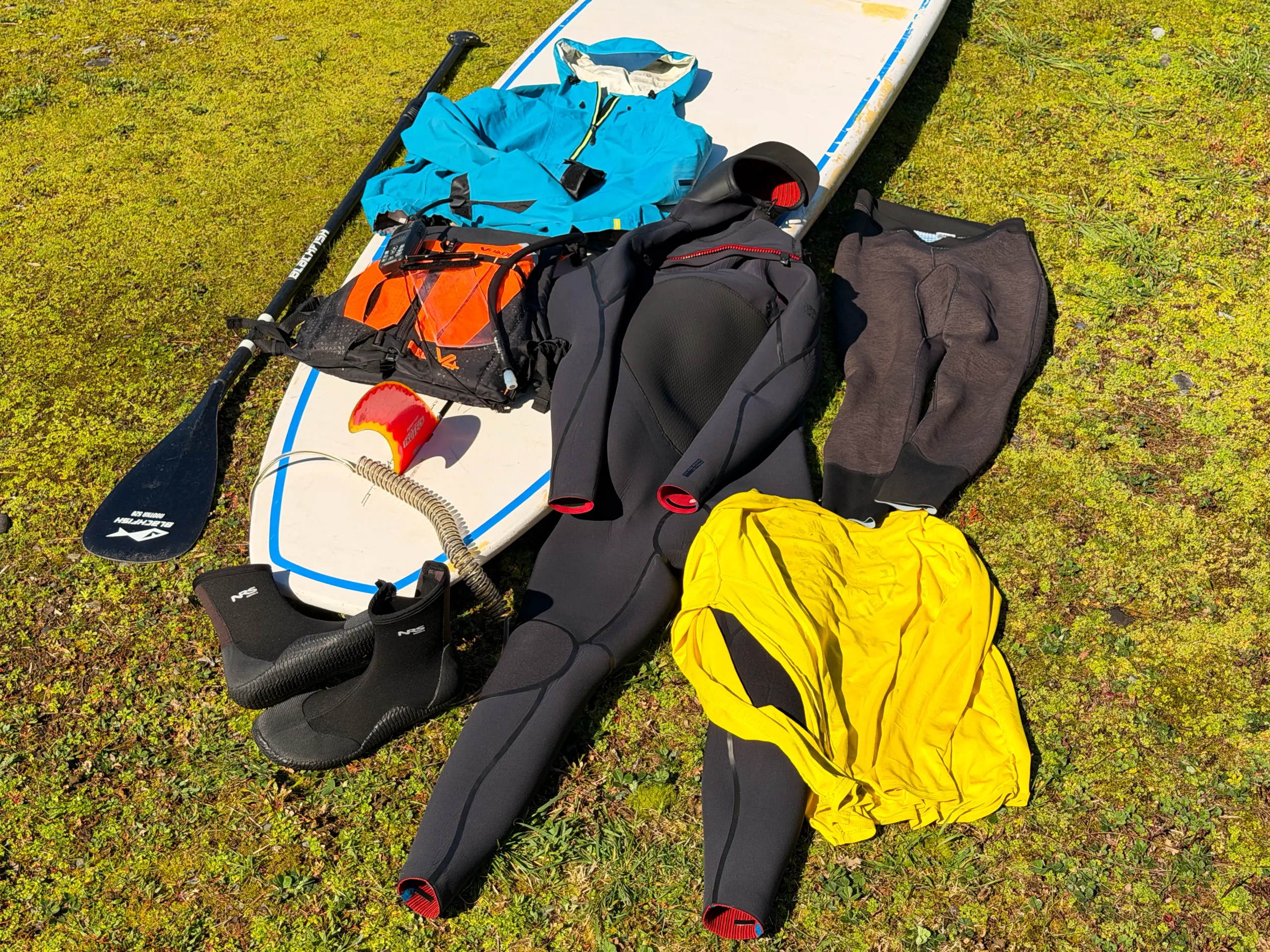
For coastal surfing and downwinding in frigid water, 5/4 mm hooded wetsuits, 5 mm to 9 mm booties, and thick paddling gloves are common. Some paddlers prefer drysuits as well. A Gore-Tex or similar waterproof-breathable paddling jacket, anorak, or neoprene paddling jacket can help reduce wind chill. Paddling and surfing helmets not only provide head protection but also help retain warmth.
Note that full surfing wetsuits are not fully seam-sealed or completely dry. Some models include merino wool or fleece linings for added insulation.
Touring and open-water paddling
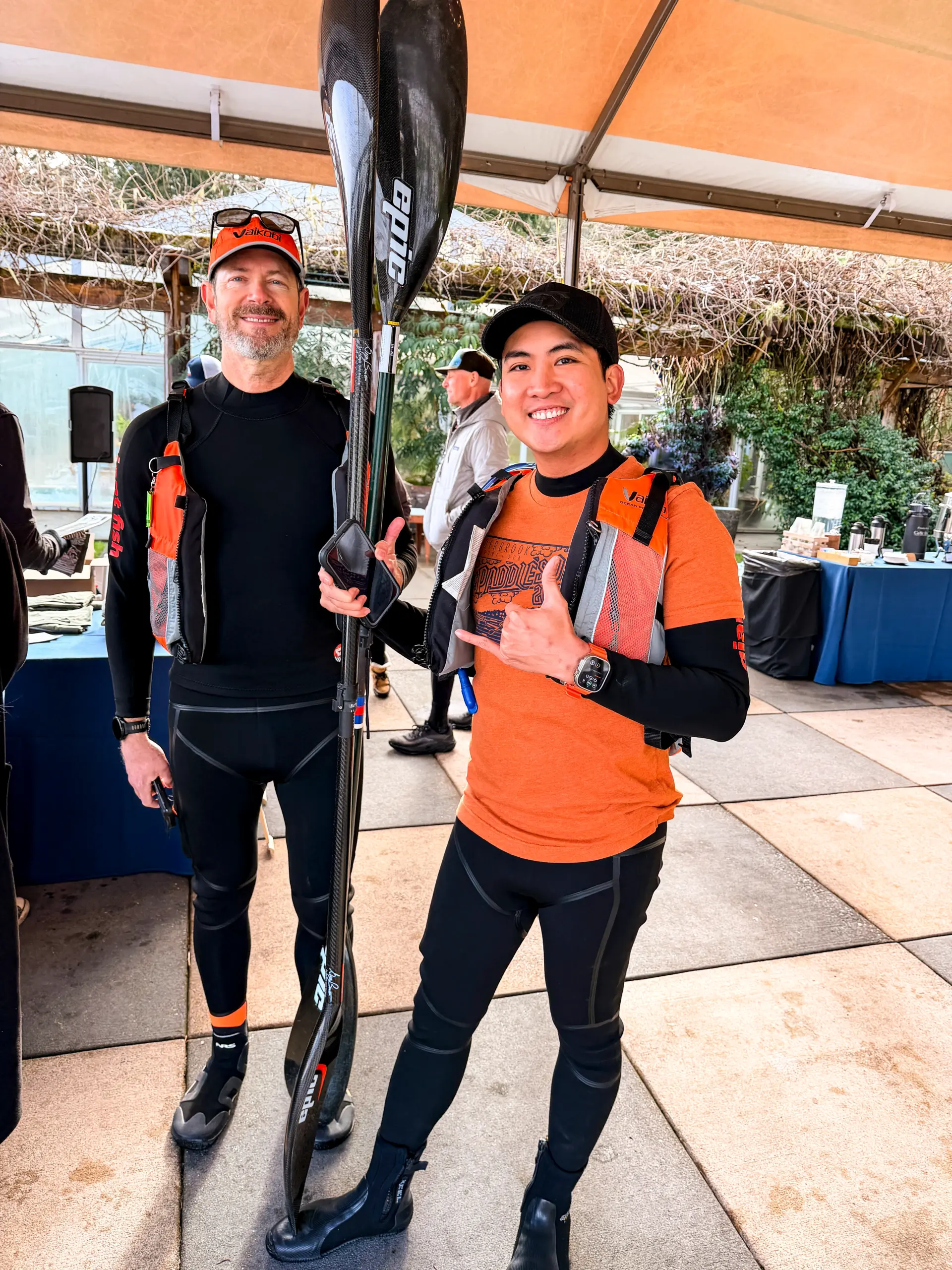
Similarly warm wetsuits or drysuits are recommended for open-water touring. I use the low-profile Vaikobi V4 life jacket, which comes in high-visibility colors, offers two front pockets, provides some added warmth, and includes a built-in sleeve for a hydration bladder.
The Mustang Khimera is another popular vest-style life jacket with dual flotation—combining interior foam with a CO₂ inflatable option for additional buoyancy.
Casual paddling, fitness, and race paddling in protected waters
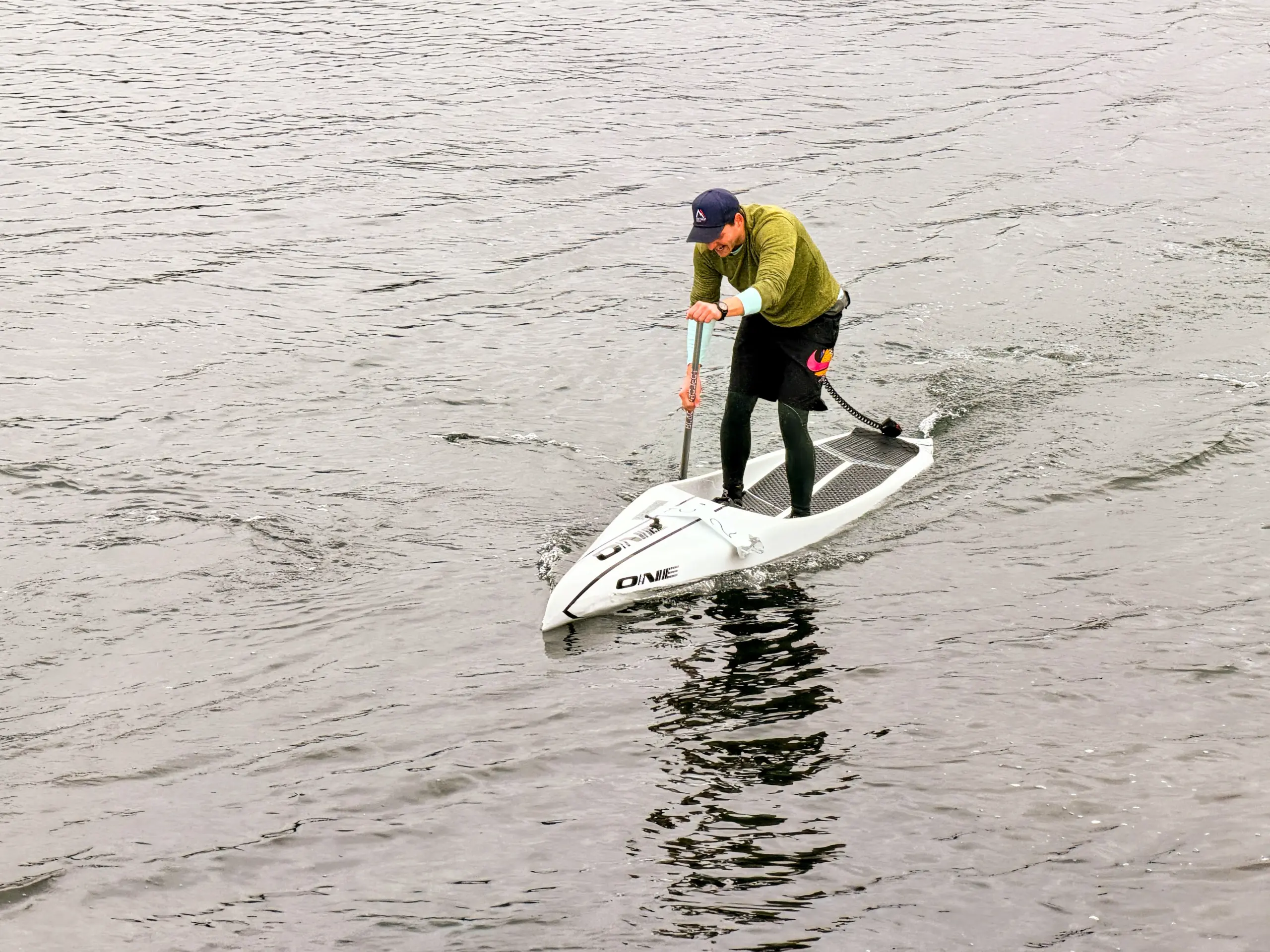
Those paddling casually, racing, or for fitness paddling in protected waters typically prefer lighter neoprene, such as 0.5–1 mm paddling pants, paired with a similarly weighted top from brands like Vaikobi or NRS.
For the occasional string of warm days, if capsizing or falling off are unlikely, a rash guard is an option with wetsuit pants, along with a life jacket. Add a wide-brimmed hat to reduce sun on your face.
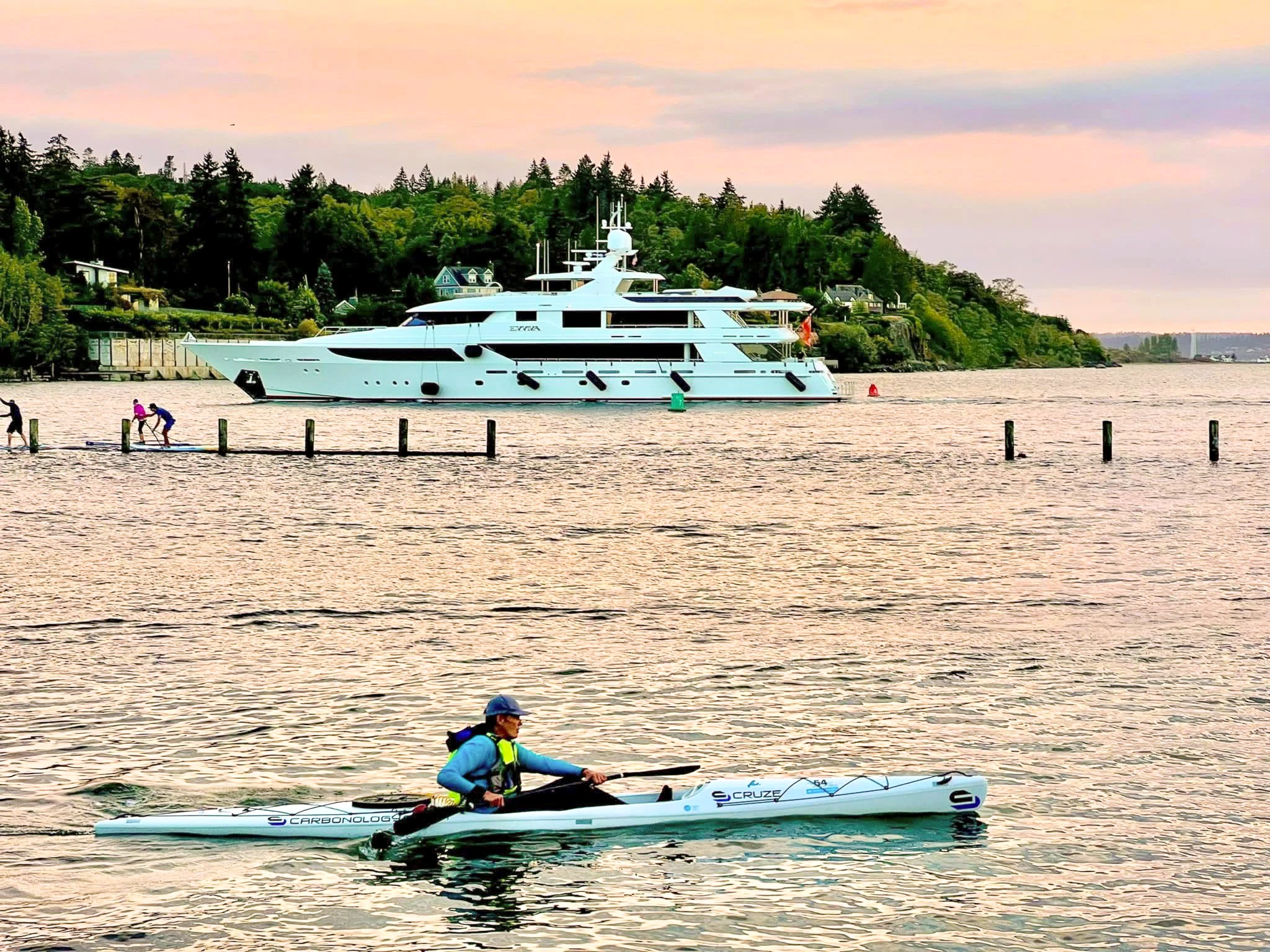
Paddleboard racers often wear waist-belt PFD packs for greater mobility and to prevent overheating. Kayakers and those seeking additional warmth may add a neoprene or Gore-Tex paddling top and standard vest-style life jacket, which help retain heat on colder, rainy days.
Tip: Test your waist-belt PFD before use by pulling the deployment tab while floating in chest-deep water. Then, while holding your paddle, climb back onto your board—often more challenging than expected.
Carrying extra clothing and gear
Extra clothing can be stored on a paddleboard in a dry bag or kayaking-style deck bag secured under bungees. Kayakers and touring surf ski paddlers can store clothing in dry bags inside storage hatches. I typically pack a small neoprene hood with a sun brim, paddling gloves, and snacks.
I keep my phone in a waterproof case and/or carry a VHF radio on a tether attached to my life jacket, along with an energy bar and a whistle. I also carry a suction-cup LED light for my boat or board at dusk and after dark, storing it in a hatch until needed.
I advise paddlers to always wear a leash while paddling a paddleboard, SUP, or surf ski—especially in open water—to stay connected to your craft after a fall or capsize.
For more detailed guidance, check out my book, Paddling the Salish Sea: 80 Trips, from Mountaineers Books, which includes an extensive chapter on pre-trip planning and a checklist to help ensure nothing is left behind.