Last updated February 5, 2026:
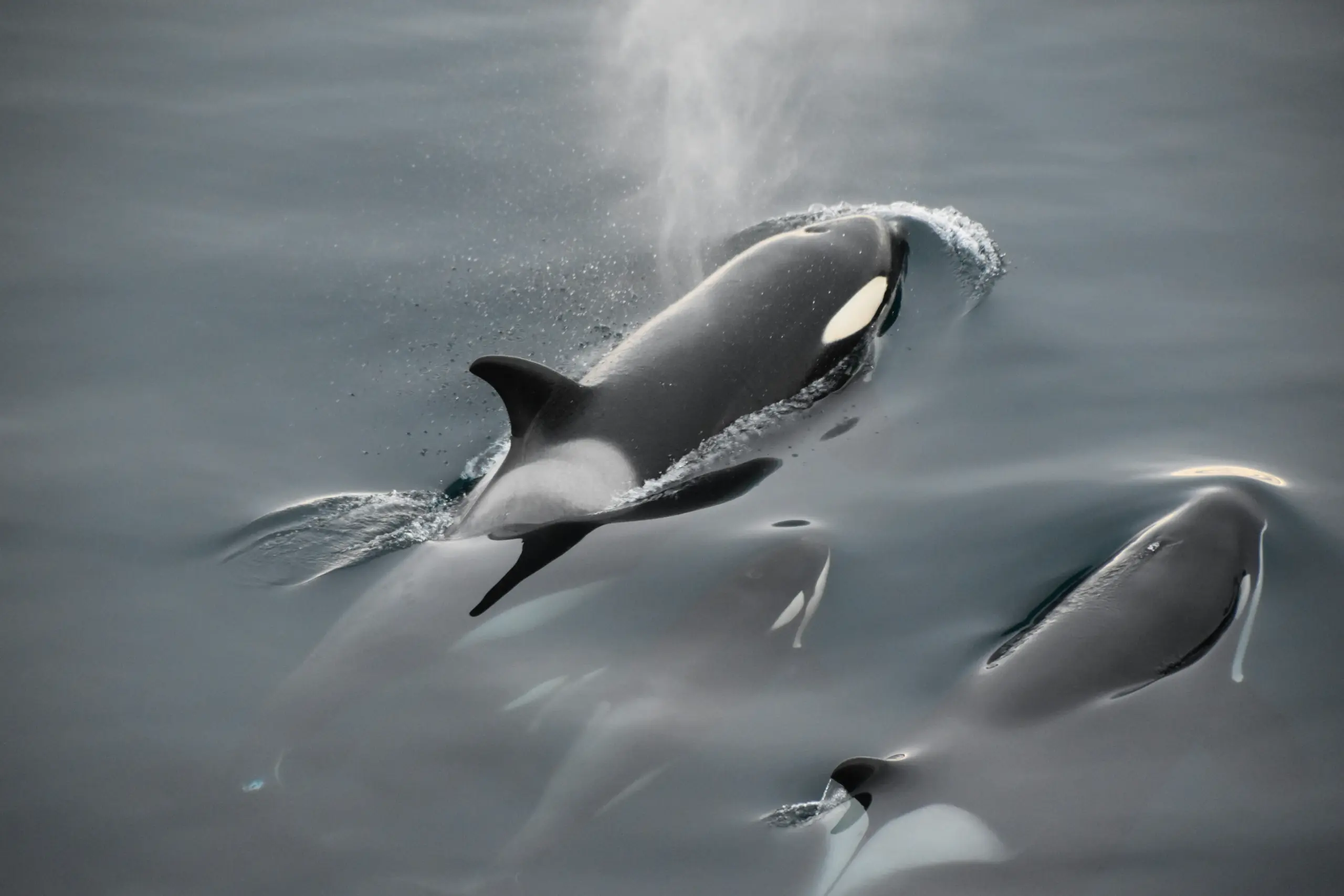
Since the beginning of the year, there have been several encounters with the Southern Resident Killer Whales (SRKWs). Scientists documented multiple sightings of the newest addition to the population, K47, who was first observed on December 10, 2025.
On January 3, K-pod was spotted near Eagle Point on the west side of San Juan Island, including new calf K47. The identity of K47’s mother remains unconfirmed, though the calf was seen associating with K36 (Yoda) and later K43 (Saturna). Other whales present during this encounter included K20 (Spock), K45 (Prosper), K37 (Rainshadow), K27 (Deadhead), K14 (Lea), K35 (Sonata), and K42 (Kelp).
Members of J-pod were sighted on January 20 near Race Rocks Lighthouse at the southeast tip of Vancouver Island. Whales observed included J37 (Hy’Shqa); J40 (Suttles) and her calf, J63; J41 (Eclipse); J58 (Crescent); J44 (Moby); J49 (T’ílem I’nges); and J39 (Mako), along with matriarchs J16 (Slick) and J19 (Shachi).
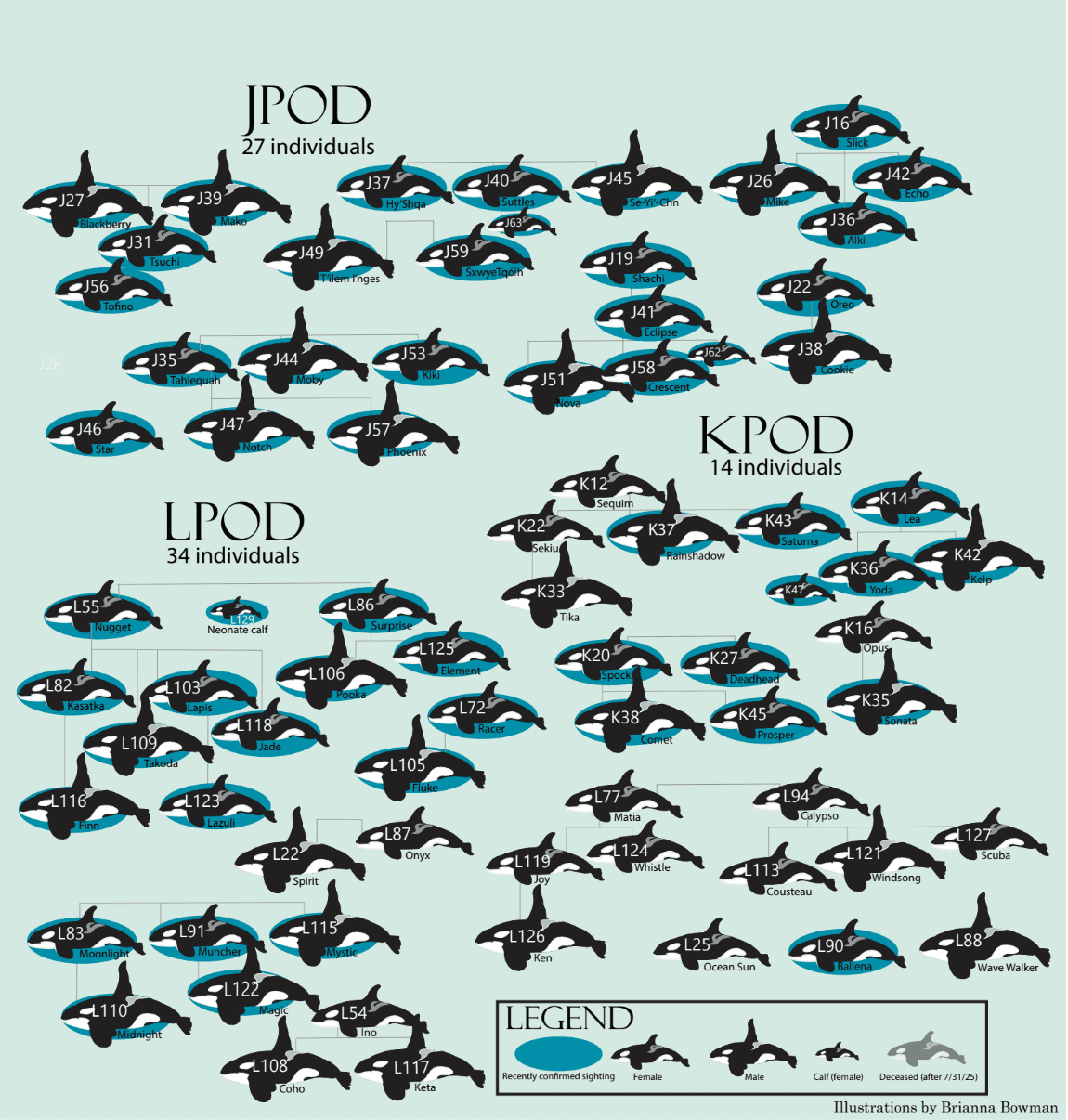
K-pod was seen again on January 21 near Saratoga Passage. During this encounter, K47 was observed traveling with K45 (Prosper). Prosper’s brother, K38 (Comet), and aunt, K27 (Deadhead), were also nearby.
Later that day, J-pod, along with Bigg’s (transient) killer whales, was observed northeast of Discovery Island after transients were detected on regional hydrophones. Sightings included J31 (Tshuchi), J39 (Mako), and J27 (Blackberry), along with members of several matrilines, some traveling in the wake of a freighter. J53 (Kiki) and J56 (Tofino) were seen chasing salmon. Additionally, J37 (Hy’Shqa), J46 (Star), and J59 (SxwyeTqólh) were observed following the J40 matriline, along with J38 (Cookie) and J49 (T’ílem I’nges). All members of J-pod were accounted for except matriarch J16 (Slick), who had been seen the previous day and was likely nearby.
There have been no confirmed sightings of L-pod since November 2025. According to Search for Killer Whales, a citizen science organization that collects killer whale data in Oregon, this likely indicates that L-pod has moved toward the continental shelf and may be traveling north or south along the West Coast. Perhaps you’ll be the one to spot them in your corner of the ocean.