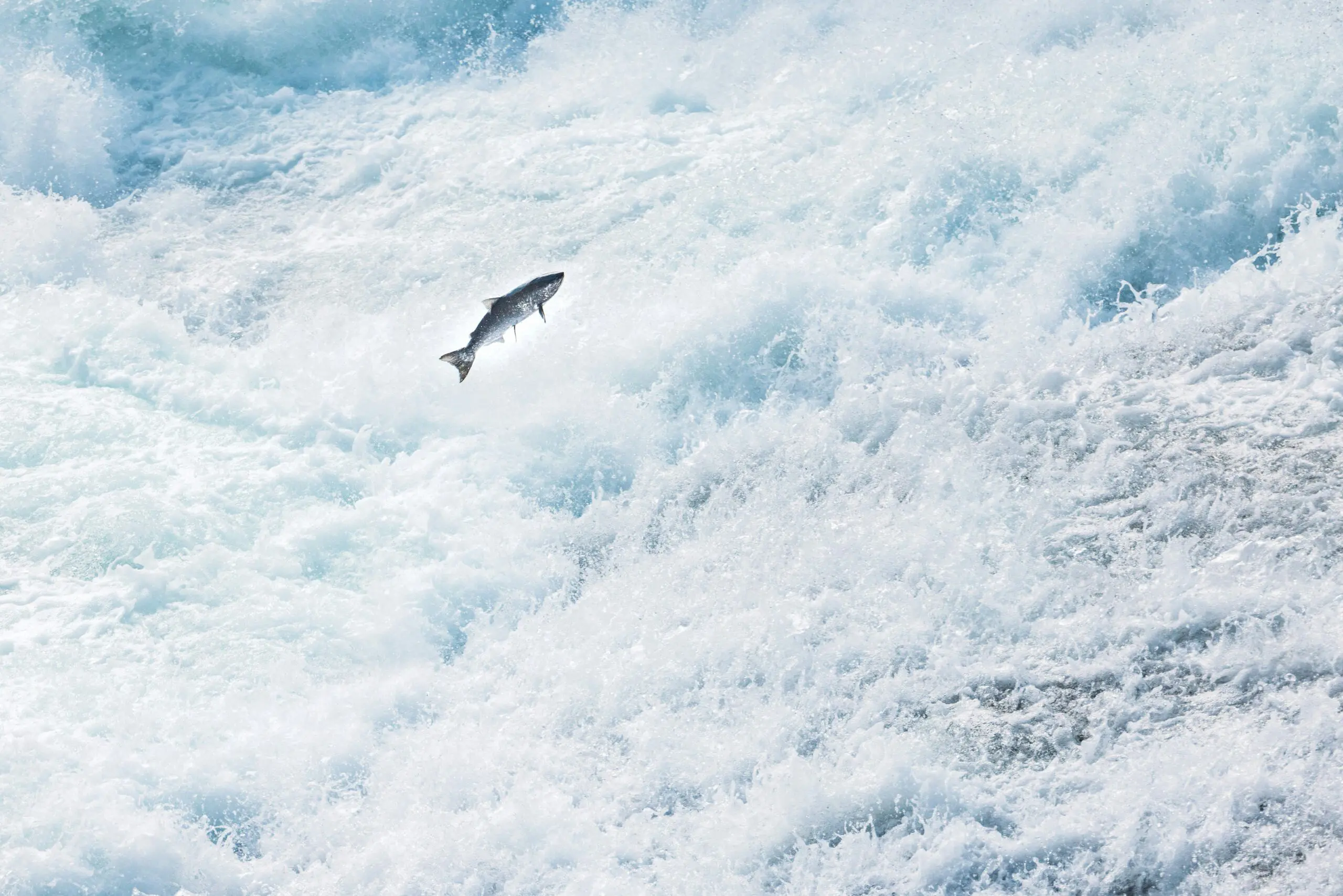
In the department of positive environmental news, Chinook salmon are impressing biologists and tribal members with their remarkable comeback on the Klamath River. In mid-November 2025, 140 fall-run Chinook were reported on the far reaches of the upper Klamath River tributaries, returning to spawn after nearly a century of absence.
The Klamath River, which flows from its headwaters in Oregon to the Pacific Ocean on the California coast, was once the third largest salmon-producing river on the West Coast. For millennia, local tribes such as the Hoopa, Karuk, Klamath, Modoc, and Yurok thrived in the region and relied on the river’s salmon runs for food, culture, and ceremony.
About a century ago, the Klamath Project, a water-management project run by the United States Bureau of Land Management to supply water to farmland in the newly white-settled area of the Klamath Basin, dramatically altered the river’s ecosystem. Hydroelectric dams built by power companies soon followed, providing electricity to the region but creating a significant problem: none of the dams had fish ladders or other passage structures. As a result, the dams immediately blocked salmon from returning to their historic spawning grounds in the upper basin and their populations plummeted.
After decades of disputes over water rights and land usage between tribes, famers, and government agencies, an agreement was reached in November 2020. PacificCorp, the utility that owned and operated the dams, was required to find a means for fish passage. Ultimately, complete removal of the dams proved the most cost-effective option. The Klamath River then became the site of the largest dam removal project conducted in the United States.
The removals began in January 2024, first with draining the reservoirs, and then the deconstruction of the dams themselves. By October 2024, biologists recorded salmon returning to stretches of the river that had been inaccessible for more than a century.
Now, the milestones keep coming. Chinook salmon were spotted passing the Keno Dam on September 24, 2025, and another was seen on a camera at the Link River fish ladder on October 6. A radio-tagged salmon was detected in the Williamson River on October 10 along with many other salmon. At the end of October, tagged fish were found on the west side of Upper Klamath Lake in Pelican Bay and in the Sprague River.
Biologists have deployed additional monitoring equipment to keep up with the salmon’s triumphant return. Conditions in areas like the Upper Klamath Lake were considered unfavorable for the culturally and ecologically significant fish, so biologists were unsure of how long it would take salmon to return. To the relief of many, their expectations have been exceeded: salmon are reaching spawning habitat on the Williamson River and navigating past existing dams such as the Keno Dam.
“What we’re seeing now is incredibly encouraging and the result of strong collaboration among state and federal agencies, Tribes, and conservation partners who have all been working towards this moment for an incredibly long time,” said Mark Hereford, Klamath fisheries reintroduction project leader for the Oregon Department of Fish and Wildlife. “It is incredible to be a part of this historic return and see where these salmon go and what they do.”