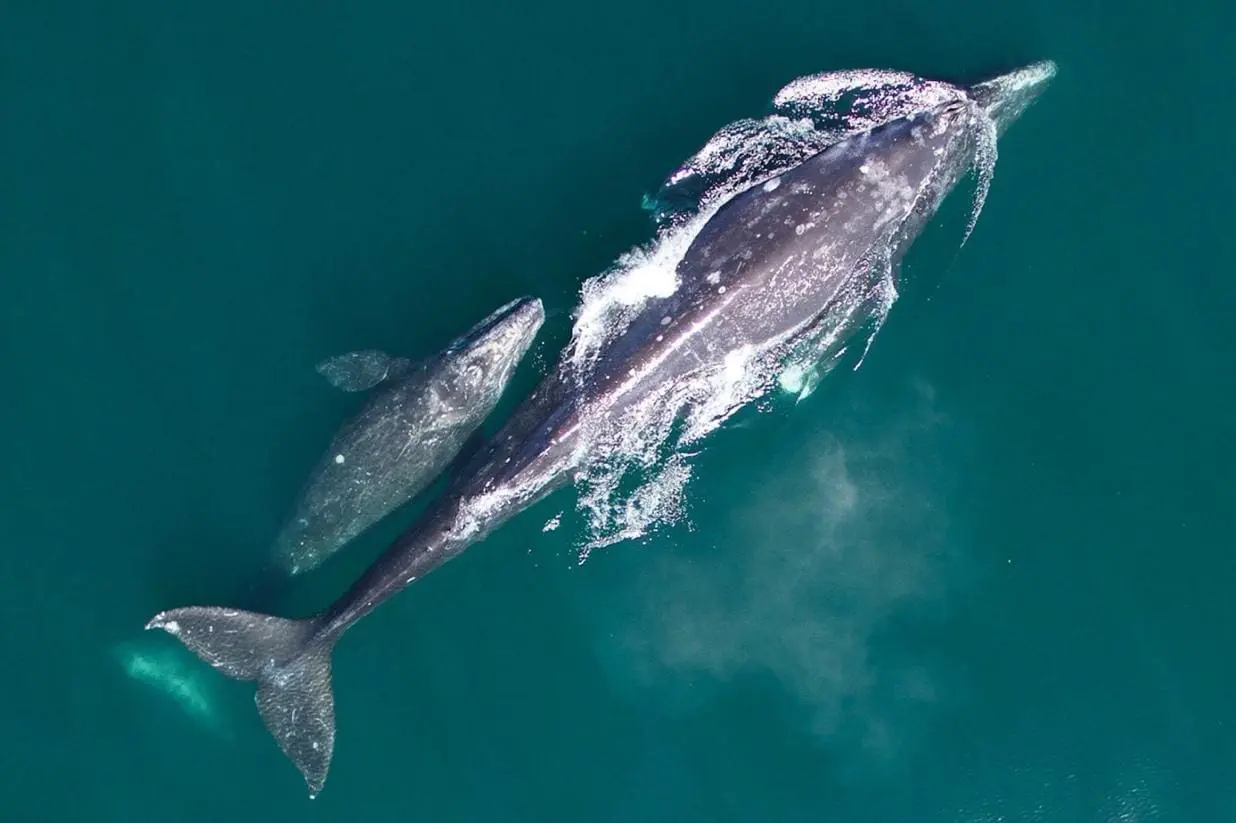
Image: Figure 2 Gray whale mother and calf on northbound migration. Credit: NOAA Fisheries
In addition to flowers blooming, springtime in the Pacific Northwest means migratory whales passing through these waters to their northern feeding grounds. What challenges do our whales face—and what best habits can boaters adopt to help them?
Last summer, I met a friend visiting Oregon for the first time in Astoria. After breakfast at Coffee Girl on Pier 39, watching sea lions and barges, we headed south, stopping in Cannon Beach and Tillamook for cheese curds and ice cream. Approaching Depoe Bay at sunset, I scanned the water for whale blows and, almost immediately, a puff of mist rose into the still September air.
I snagged the closest parking spot along the waterfront. To our delight, four or five gray whales rested at the surface, their blows glowing pink and purple in the fading light. We watched for a long while as they dived and resurfaced, likely feeding on mysid shrimp in the muddy sediment below.
Whales draw many people to the coastal waters of the Pacific Northwest. Not long ago, however, scenes like this were far from guaranteed. By the 1970s, many whale species had been driven to the brink by commercial whaling. After the global moratorium—except in Japan, Norway, and Iceland—populations began to rebound. In the U.S., the Marine Mammal Protection Act of 1972 added another critical layer of protection. Species like humpback and gray whales are now familiar sights along the coast and conservation success stories. Although the situation has improved along the West Coast, our migrating species of whales still face a range of challenges.
Challenges to Pacific Northwest Whales
Ship Strikes and Vessel Noise
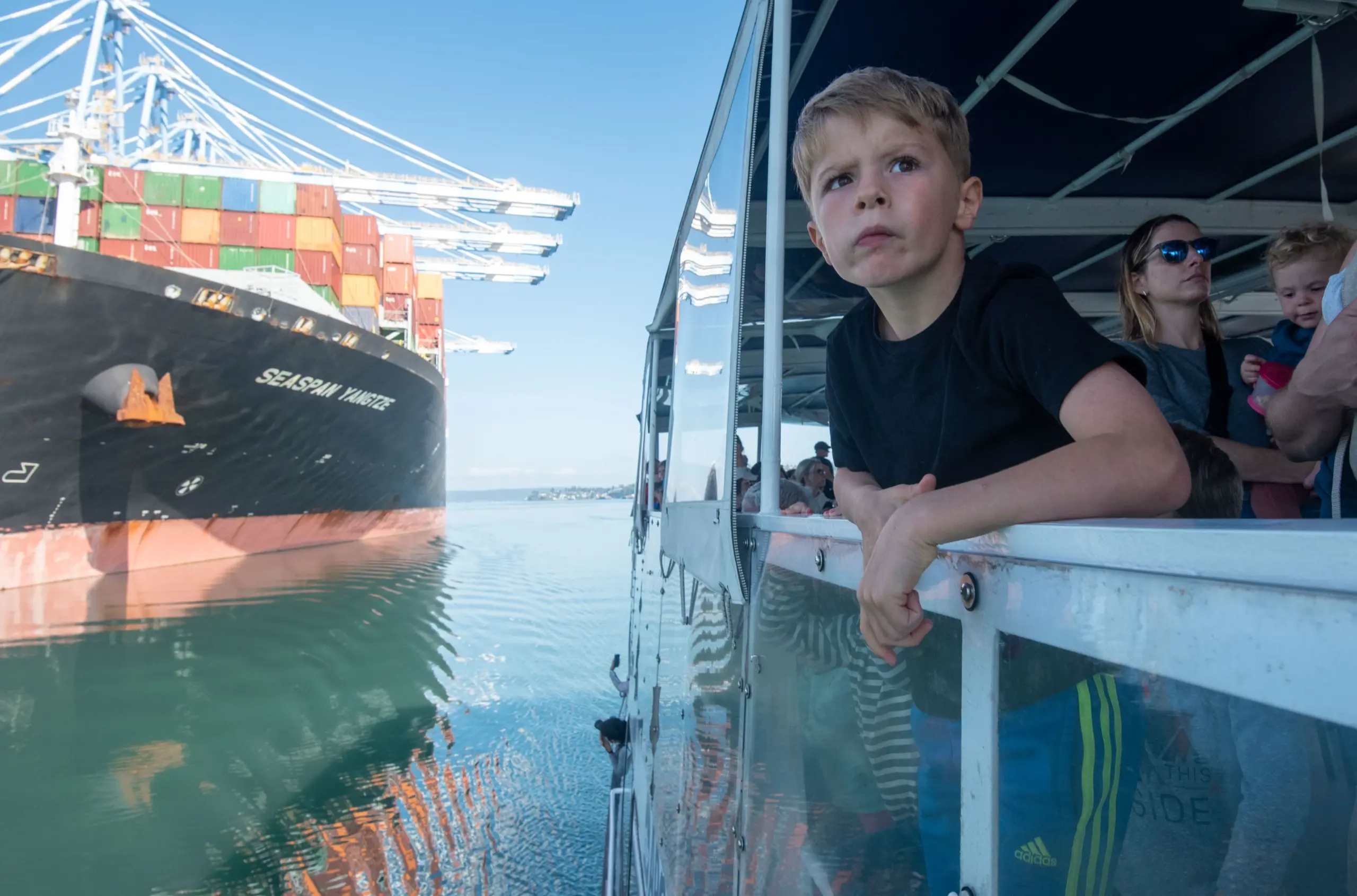
Vessel traffic around the world has increased, and the waters of the Pacific Northwest are no exception. The number of boats at any given time on the ocean has grown dramatically over the past 30 years, increasing the risk of injury or death for marine mammals that must come to the surface to breathe. Gray whales, humpbacks, and other species follow long-established migratory routes that often cross busy shipping lanes, where collisions with barges, cruise ships, and even pleasure vessels can be fatal.
Large shipping barges or cruise ships are not the only vessels with recorded whale strikes: smaller recreational vessels and even tour boats have had their own run-ins with whales. A whale-watching company based out of Vancouver, BC, made “minimal contact” with a humpback whale last October and, in their maneuver to avoid a full collision, ended up injuring several passengers. Much like terrestrial wildlife crossing a busy interstate, small and large vehicles, be they vessels or automobiles, are susceptible to injuring or killing an oblivious animal. The density of whales present, as well as the size and speed of the vessel at the time of the collision, influence the deadliness of the encounter. It’s crucial for captains to be aware and alert of their surroundings, scanning the surface for the possibility of any obstacle in the water, whether it’s log or leviathan.
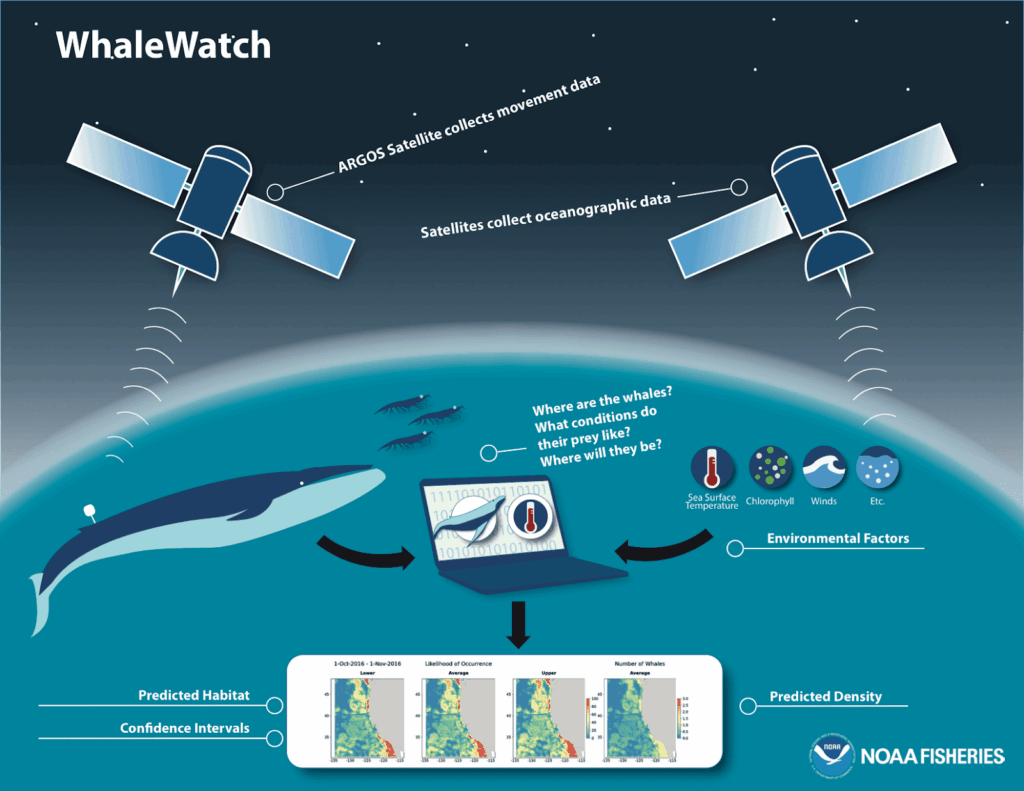
Several strategies are being tested to reduce ship strikes. Systems like Whale Alert crowdsource whale sightings and notify mariners, who can then slow down or adjust course. Acoustic monitoring with hydrophones tracks whale vocalizations, though quiet and reserved whales may go undetected. WhaleWatch uses satellite tags on blue whales to develop predictive models on where animals are likely to be to inform routes for mariners.
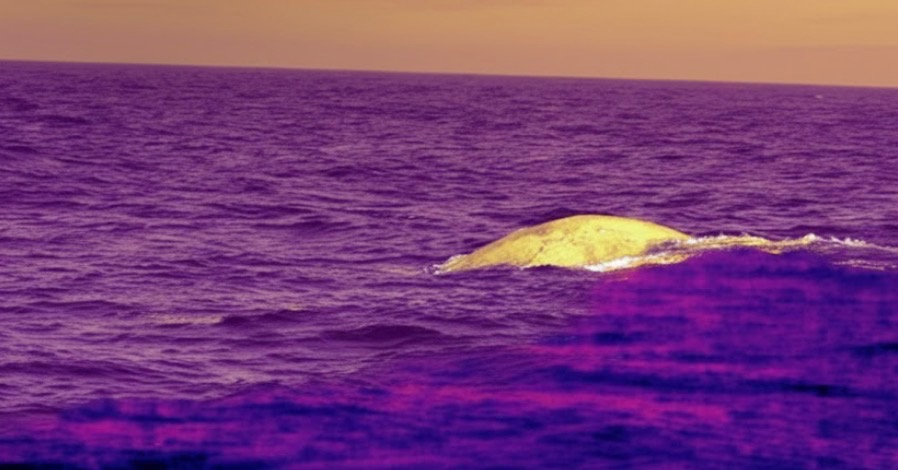
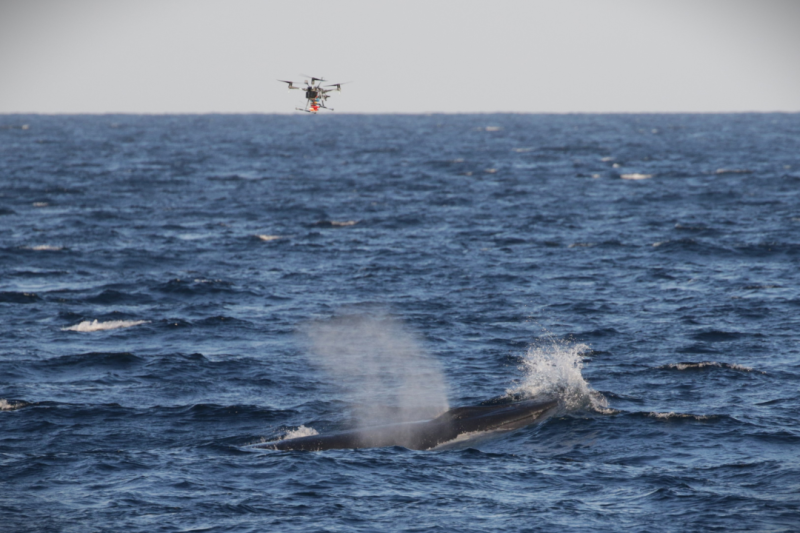
Thermal cameras offer a promising tool for detection. A gray whale is nearly invisible against gray water, but its back and blow appear bright against cold seawater on thermal imaging. Combined with machine learning or automated systems for detection alerts, these cameras could improve monitoring and help prevent collisions, offering a relatively low-tech solution to a serious problem.
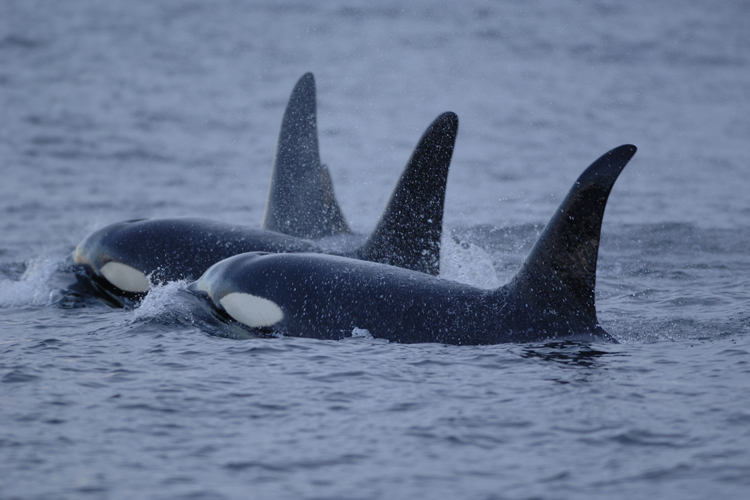
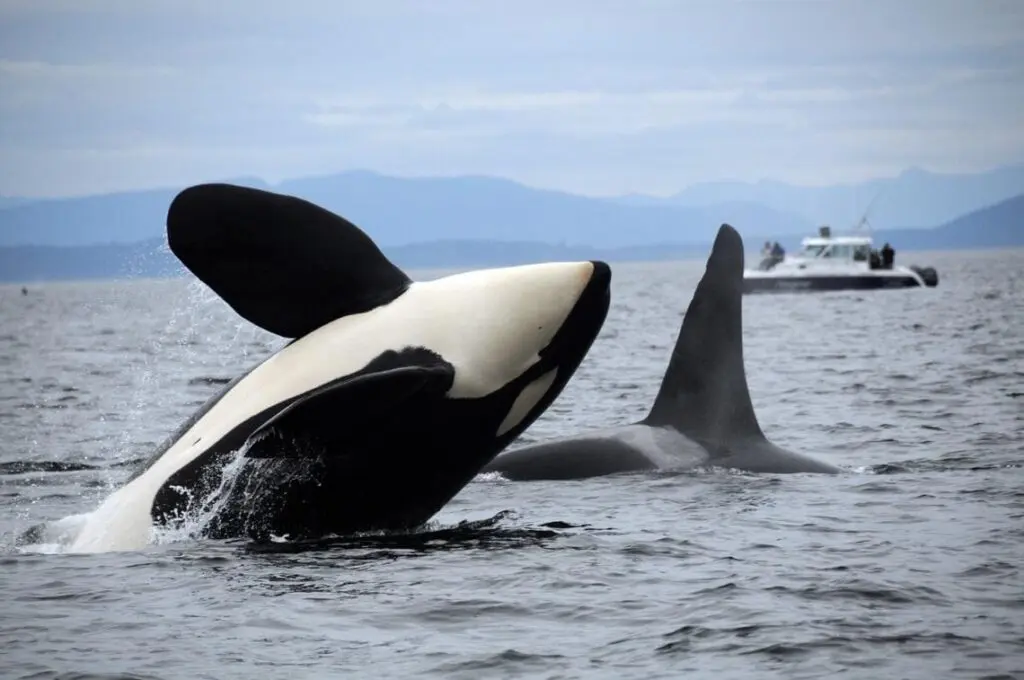
And, of course, there are existing regulations around distances vessels must maintain from whales. In Washington, boaters must stay 1,000 yards away from Southern Resident killer whales (SRKW) and reduce speed to seven knots, and you must stop engines, lower your sails, or stop paddling if you find yourself within 400 yards of an orca. Rules are slightly different in Canadian waters, so boaters should double check what the applicable laws are before heading into orca territory.
More ship traffic puts whales at risk not just from collisions, but also from the added noise that disrupts their underwater environment. For animals like whales and dolphins that rely heavily on their hearing, underwater noise pollution is a significant concern to their health and well-being. Increased human-created sound can raise stress levels in whales, which can disrupt feeding and social behaviors (it’s hard to flirt if you have to keep shouting “what?”).
Programs like Quiet Sound aim to address this issue. Quiet Sound is a coalition of federal and state agencies, the maritime industry, scientists and nongovernmental organizations, that implement a seasonal voluntary slow-down of commercial vessels through Admiralty Inlet and Puget Sound whenever an SRKW is spotted during the fall and winter. Slowing vessels significantly reduces underwater noise levels, which can allow SRKWs to more easily communicate with one another and to hunt. Although preventing vessel/whale collisions is not a direct goal of Quiet Sound, slower vessel speeds are known to reduce the risk of whale strikes and could be an added benefit of the program.
Fishing gear entanglements
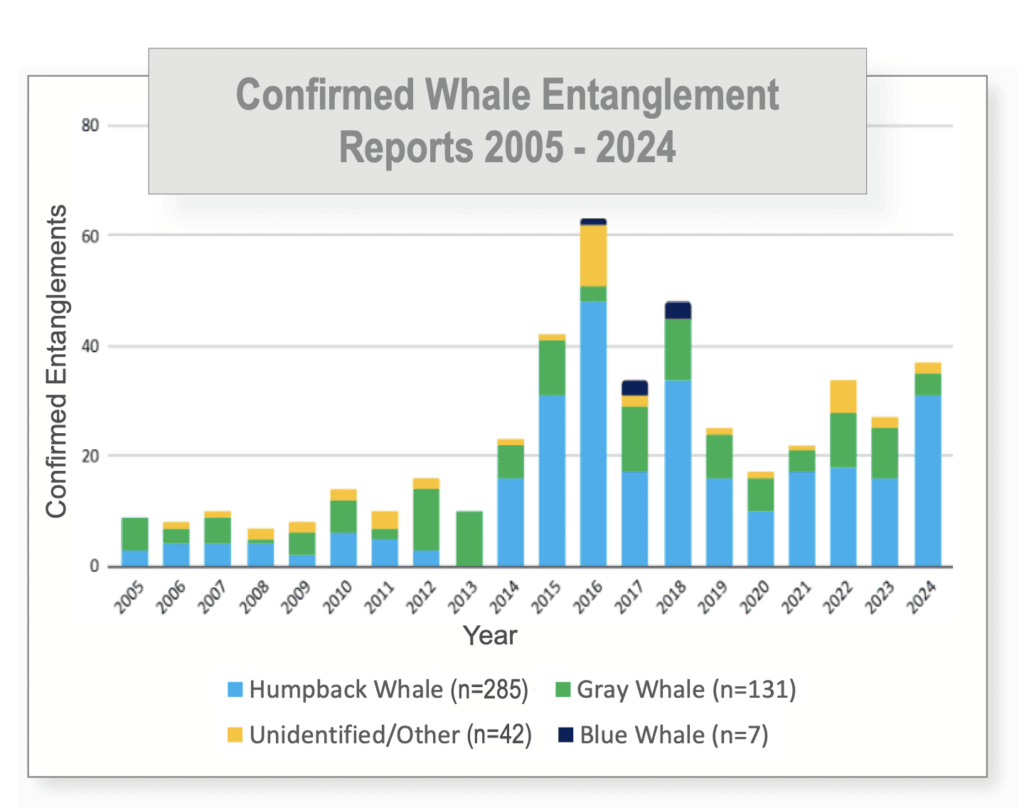
While slowing your roll can help whales out when it comes to collisions or noise pollution, there’s another human-caused threat that is on the rise: Entanglements in fishing gear, particularly fishing lines made up of ropes and buoys attached to crab or lobster pots. Whales can become entangled in fishing gear that is actively in use, or in derelict gear—equipment that has been lost and abandoned. This forgotten gear can “ghost fish,” where it continues to entangle and kill whales but also other marine life like fish, sharks, turtles, seals, and dolphins. These abandoned lines or nets, along with the increased threat of shipping traffic, can turn our coastlines into deadly obstacle courses for whales and other marine life. The derelict gear can also be hazards to navigation for boaters—who wants to wrap their prop in an old crab-pot line?
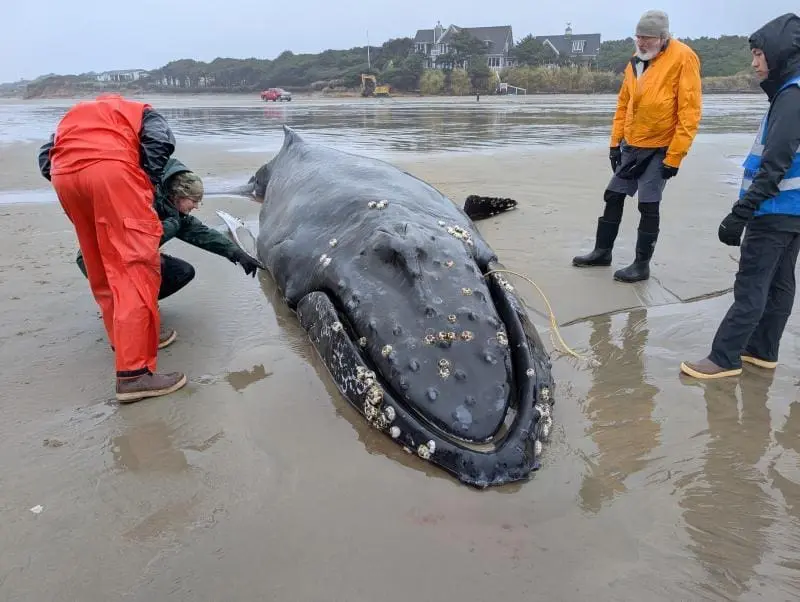
One recent high-profile case of fishing gear entanglement on the West Coast occurred in November, when a young male humpback whale beached itself at San Marine State Park just north of Yachats, OR. The whale was spotted in the surf on the evening of Saturday, November 15, 2025, and videos quickly spread on social media, accompanied by urgent calls for people to help push the animal back into the water.
When the young humpback, later nicknamed Hope, came ashore and died, he was entangled in a crab-pot line. Much of the gear was cut away before it could be fully documented, though it was noted that the gear could be attributed to the 2023-2024 Oregon commercial Dungeness crab fishery, meaning that this line was attached to lost crab gear. Authorities are still waiting on the results of the whale’s necropsy, so it’s still early to say conclusively that the entanglement was the direct cause of this young whale’s death, though it is certainly a plausible theory.
The local community was devastated by the loss of Hope, and his death fueled frustration with the Oregon Dungeness crab fishery. But fishers don’t want to entangle whales any more than anyone else, and many are actively developing solutions to reduce the risk. The Oregon Department of Fish and Wildlife has collaborated with the local fishing industry to come up with creative solutions, including a post-season gear recovery program, which allows fishing vessels to collect derelict crab gear after the seasonal closure of the fishery. A permit allows those that collect the gear to keep, sell, or dispose of the pots or lines; essentially, it’s a finders-keepers law, providing an incentive for fishers to ensure they retrieve their own equipment, lest it be sold back to them by their buddy down the dock.
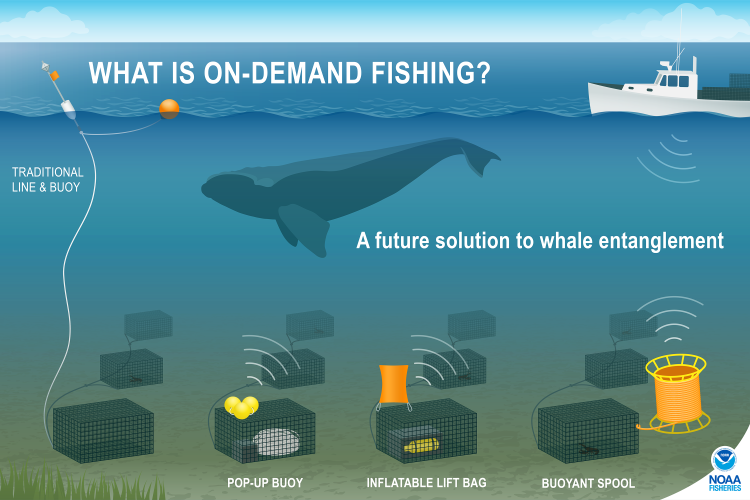
In addition to programs incentivizing collection of abandoned fishing gear, other fishers are looking into more technical solutions. One promising approach is ropeless fishing gear, or pop-up gear. In this system, the line is stored on a spool attached to the crab pot, along with a buoy containing an inflation mechanism similar to an emergency life vest. The pot is deployed with the line contained and the buoy uninflated, allowing the gear to sink without a vertical line in the water. When the pot is ready to be retrieved, the fishing vessel communicates electronically with the gear, inflating the buoy and releasing the line. This greatly reduces the amount of time the line hangs in the water column. While the technology shows considerable promise, its cost remains a major barrier for widespread adoption.
Gray Whale Population Decline – Possible Climate Change Connection
Between 2017 and 2023, a large number of gray whales died, to the extent that scientists labeled this time period an Unusual Mortality Event, or UME. This UME was attributed to changing food availability in the gray whales’ feeding grounds in the Bering Sea and Arctic Ocean, which they migrate to every summer before returning to the waters off of Mexico to breed. Our Pacific Northwest waters are visited in-between as part of their seasonal migration.
Last year, scientists were hopeful that that this UME had come to an end. After studies looking at the estimated population size and calf productivity in 2025, however, it looks as though the gray whale population is still in decline.
Migrating gray whales feed in the Arctic, where they rely on tiny crustaceans called amphipods that thrive on algae beneath sea ice. As the climate warms and Arctic sea ice shrinks, this food web is collapsing, leaving fewer amphipods and leaving whales undernourished on their long migration south. The gray whales, which have been lauded as a conservation success story in the past, are now at their lowest population estimate since the 1970s (about 13,000 whales). Decreasing food availability, possibly due to climate change, is thought to be the culprit.
What’s being done?
Whale conservation on the West Coast relies on strong legal protections, including the Marine Mammal Protection Act of 1972, which helped gray and humpback populations rebound. State measures, seasonal management, scientific research, and monitoring—including aerial surveys, acoustic tracking, and stranding response—also play vital roles. Despite these efforts, challenges remain. Enforcement gaps, limited funding, and cumulative threats from ship traffic, fishing gear, noise, and possibly climate change continue to put pressure on whales.
Boaters help the cause every time they mindfully skipper their vessels during whale season and take all their fishing gear home with them at the end of the day. If you are cruising through a high-traffic area and see whales, consider issuing an alert over the VHF on Channel 16. The consistent little things add up. Scenes like a quiet September evening in Depoe Bay, watching gray whales surface at sunset, could continue to inspire wonder for generations to come.